









Summary
Travel has always been woven into the human story—a way to trade, to meet, to seek, to wonder. Yet in the twenty-first century, that ancient impulse has become one of the most powerful economic and social forces on the planet, raising a question we can no longer avoid: Can we still see the world without destroying the very places we love? This article explores the idea of sustainable travel—not as a rejection of journeying, but as its coming of age. It means meeting the needs of today’s travelers while preserving the nature, culture, economy, and everyday life of a destination for those who come after us. Sustainable travel rests on three steady pillars: the environment, society and culture, and the local economy. It is less about traveling less than about traveling better—through small, everyday choices that carry real weight. In the end, the sustainable traveler is not an owner of a place but a guest within it: someone who goes, sees, takes delight, and returns—while leaving the destination still with something left to give.
Introduction
From the moment human beings took their first steps upon the earth, movement was woven into their very grain. We traveled to trade, to meet other peoples, to go on pilgrimage, to flee drought or war, and at last for that most mysterious of urges—the call of adventure. Across thousands of years, we traced roads, crossed mountains, and parted seas, widening not just the maps but the mind. Yet in this twenty-first century, that ancient impulse has grown into something far larger than a private act; it has become one of the most immense economic and social forces on the planet. Every day, millions of us pour through highways, airports, hotel lobbies, natural wonders, and cultural sites, and this astonishing success now lays a fundamental question at our feet:
Can we still travel without destroying, forever, the very places we love?
The answer lies in an idea called “sustainable travel”—a notion that feels, perhaps today more than ever, like something we cannot afford to ignore. In its simplest form, sustainable travel means this: to see the world, to drink in its beauty, to take joy in it, without stripping away the resources, the nature, the culture, and the texture of local life from those who will come after us. To put it more plainly still, it means not taking so much from a place that the next generation is left with nothing to see, nothing to feel, nothing to fall in love with. That sentence may be the truest definition of a journey that begins not out of consumption, but out of care—and a quiet sense of responsibility.
Why We Need Sustainable Travel

The first reason is the sheer explosion in travel. Over the past few decades, the tourism industry has grown at a breathtaking speed. In 1950, the world recorded only around 25 million international trips. But with rising global incomes, the expansion of air travel, the reach of the internet, and the quiet seduction of social media, that number leapt beyond all expectation. According to the UN World Tourism Organization, by 2019—before the pandemic paused everything—international tourist arrivals had climbed to nearly 1.5 billion. In less than seventy years, cross-border travel had multiplied almost sixty times.
After the COVID crisis, tourism drew breath again, and in 2023 the number of travelers returned to roughly 1.3 billion, or about 88 percent of the 2019 level. For many economies, that growth carries glad tidings. But tucked inside it is another message: billions of human beings are now drawing on the finite resources of an old planet, a planet that does not have infinite room.
The second reason is that travel has become an ordinary act, woven into everyday life. Once, long journeys belonged mostly to a narrow circle—the wealthy, the adventurers, the scholars, the pilgrims. Today, travel has turned into a routine part of existence for great swaths of the world. Low-cost airlines, online booking platforms, social networks, and the swelling of a global middle class have made it easy for millions upon millions to pack their bags and go. Global reports show that before the pandemic, the travel and tourism sector accounted for about 10.4 percent of global GDP and supported close to 330 million jobs. Those figures tell us something: tourism is now a vast and intricate economic order. And every vast order brings vast consequences along with it.
The third reason is the pressure placed on nature and on cities. When a huge crowd descends on a limited place all at once, that place’s capacities are strained to breaking point. You can see the evidence almost everywhere you look. Let me start with Venice—a city I love deeply, but one that today is sinking beneath the weight of its visitors. Venice draws millions of tourists each year. Its historic resident population has shrunk sharply in recent decades, and there is a deepening fear that the city is being turned into a kind of living museum, kept alive only for display. Then there are the coastal areas and islands. Many of them already wrestle with a scarcity of fresh water; the arrival of tourists can multiply water consumption several times over. In many holiday destinations, a single tourist can use two to three times as much water per day as a local resident—especially in hotels with swimming pools, sprawling gardens, and endless laundry services. And then come the fragile natural sites. Coral reefs, national parks, mountain ranges, deserts—all of them have a limited capacity to absorb our presence. Even when we do no direct harm, our mere being there can leave its mark: compacted soil, damaged vegetation, shifts in the behavior of wild creatures, a slow accumulation of waste. These are only a few of the quieter, hidden effects.
The fourth reason is the uneasy tension between our pleasure today and the possibility of a journey tomorrow. The real trouble isn’t travel itself; it begins the moment travel turns into the limitless consumption of a destination—like someone who picks so much fruit from a garden that the tree loses the strength to bear again. Sustainable travel tries to restore that balance: to let us journey now, while still leaving the road open for someone else to walk it tomorrow.
The Concept and Meaning of Sustainable Travel

To see the world without wearing it out. A destination is not merely a beautiful image for social media. Behind every heart-catching view lies an intricate, living system: natural ecosystems, water sources, the culture of a people, a local economy, layers of history and social identity. When we travel somewhere, we step into that living system. A sustainable traveler is someone who tries to be a good guest, not a consumer who simply takes and leaves.
The idea of “sustainable development” first appeared in the landmark report Our Common Future, published in 1987 by the World Commission on Environment and Development. Its famous definition is this:
“Development that meets the needs of the present without compromising the ability of future generations to meet their own needs.”
Sustainable tourism carries that same thought into the world of travel:
journeys that satisfy the needs of today’s travelers while preserving the natural, cultural, and economic riches of a destination for the future.
But there is a deep difference between traveling less and traveling better. Some imagine that sustainable travel means not traveling at all, or taking less pleasure, or enduring a long list of restrictions. That isn’t the truth. The question is not the quantity of travel; it is the manner of it. Two people may visit the same city. One stays in a large international hotel, eats imported food, produces a great deal of waste, and visits only the famous sights. The other chooses a locally owned guesthouse, spends money at small businesses, honors the local culture, and treats the natural world with care. Both have traveled, but the mark they leave on that place is entirely different.
Sustainable travel is not the enemy of comfort or adventure. A responsible journey can still hold wonderful meals, a restful bed, rare experiences, wanderings in nature, and the discovery of unfamiliar cultures. The only difference is this: the pleasure of today must not leave a heavy bill for tomorrow.
The Three Steady Pillars of Sustainable Travel

Sustainable travel rests on three essential pillars: the environment, society and culture, and the economy. If any one of these is overlooked, the whole structure stands incomplete.
The first pillar is the environment. Nature is the very infrastructure of so many of our journeys. Forests, shorelines, mountain ranges, rivers, wild creatures—these are the things that draw millions of us out into the world. But if tourism helps to destroy those very assets, then in the end the tourism industry itself will suffer the wound.
Transport is one of the largest sources of greenhouse gas emissions in travel. Studies suggest that tourism accounts for around eight percent of global greenhouse gas emissions. A large share of that comes from flights, private cars, and ground transport. A single long-haul flight can release hundreds of kilograms of carbon dioxide per passenger.
Many of the world’s most loved destinations lie in fragile zones—rainforests, islands, polar regions, national parks. The loss of a single plant or animal species is not just an environmental sorrow; it can unravel the tourism economy of an entire region.
Hotels and resorts are enormous consumers of water, energy, and food. Solutions like renewable energy, lower water use, recycling, and low-impact building design can ease that pressure in dramatic ways.
Tourism also produces mountains of waste: plastic bottles, food packaging, single-use items, and food scraps. The United Nations has warned that food waste in tourism is one of the serious environmental concerns of our time. A simple choice—carrying a reusable water bottle, for instance—multiplied across millions of travelers, would have an enormous effect.
The second pillar is society and culture. A destination is not just scenery; people are part of the place too. Visitors sometimes look at a town or village only as an “attraction,” while in truth every destination holds human beings, histories, memories, and a distinct way of life. Sustainable travel means seeing the people alongside the places.
One of the dangers of mass tourism is the reshaping of local culture to please the visitor—turning genuine rituals into daily performances, producing cheap, soulless souvenirs meant only for sale, and bending the rhythm of life to satisfy the tourist gaze. Preserving culture means allowing local communities to hold on to their identity.
Tourism is only sustainable when local people benefit from it. Buying from local vendors, hiring guides who were born and raised there, choosing family-run guesthouses, and respecting the social codes of a place—these are all ways of offering that support.
The third pillar is the economy. Tourism should keep wealth inside the destination. One of the troubles with mass tourism is that a great portion of the money may leak away: a hotel owned by a foreign company, food imported from elsewhere, local staff given only narrow, low-wage roles. In such cases, the numbers of tourists are huge, but the real gain for the local community remains meager. A traveler can choose where his or her money flows. Eating at a local restaurant, buying from a native artisan, staying in a family home—these acts strengthen the regional economy and deepen its resilience.
Conventional Tourism vs. Sustainable Travel

Conventional tourism often sets out by asking a single question:
“What can I get from this place?” Sustainable travel asks something else: “How can I experience it without doing it harm?”
Through a consumer’s eyes, a destination is a product; through a sustainable lens, it is a relationship. The sustainable traveler is not merely a visitor; for a short while, he or she becomes a small part of that place.
The Hidden Footprint of Travel

Every journey leaves a mark behind—even when we cannot see it. These marks fall into two kinds: the visible and the hidden. The visible ones are familiar enough: waste (bottles, wrappers, disposable things), water consumed (showers, laundry, swimming pools, hotel services), energy burned (electricity, heating, cooling, transport), and carbon released (above all by planes and cars). The hidden marks, however, often slip out of sight: housing prices that climb steeply in a tourist town, the economic strain on residents from short-term rentals, a culture quietly reshaped until its original identity grows faint, and the quiet pressure on natural resources—where even if not a scrap of litter can be seen, heavy use of water or energy still leaves its silent signature.
Small Choices, Large Consequences
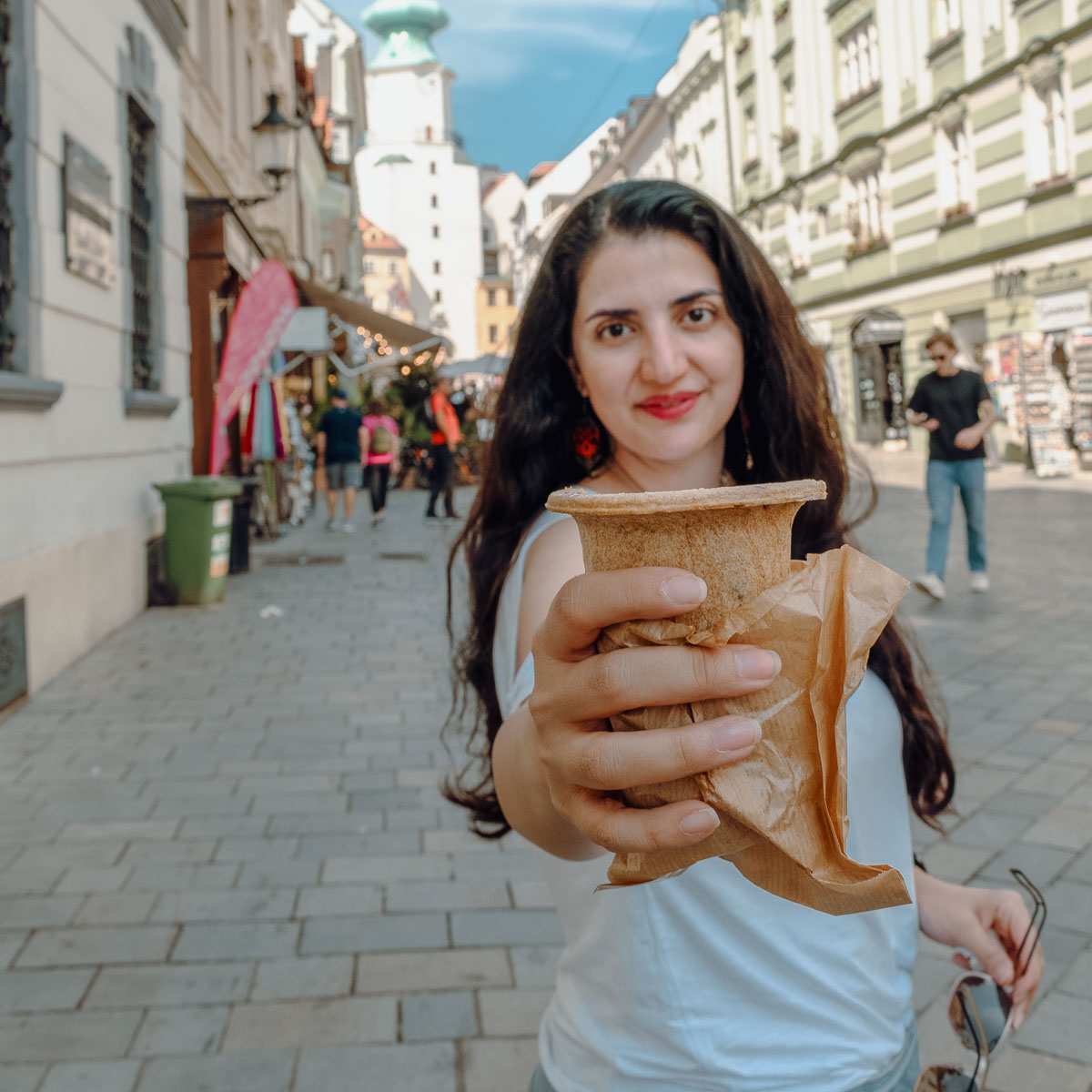
Sustainable travel begins with the smallest, most everyday decisions. For shorter journeys, a train, a bus, a bicycle, or simply your own two feet can be gentler on the earth than a car or a plane. A single reusable bottle, humble as it is, can erase the need for hundreds of plastic ones over time. Turning off lights when you leave the room, hanging up your towel instead of having it changed each day, using water thoughtfully—these are quiet, simple acts, and yet they carry real weight. Every purchase we make is a kind of economic message. Choosing a local product means supporting the people of that place, shortening the journey the goods must travel, and keeping traditional skills alive. Traveling outside the peak season eases the strain on a destination, offers a deeper, calmer experience, and spreads income throughout the year. Perhaps many of these small, simple choices even hold their own quiet economic logic for the traveler himself.
Misconceptions About Sustainable Travel

There is a notion that sustainable travel is only for the wilderness lover, the hiker, the ecologist. But a city trip, a cultural visit, even a business journey can all be done sustainably. Some imagine it means traveling cheaply, yet a responsible journey may well cost more, precisely because it cares about quality and social impact. Others think it implies less comfort; but the aim is not to diminish the quality of your experience—it is to diminish the harm. Then there is the quiet, private suspicion that one person cannot possibly make a difference. But when millions of individual choices gather and align, they have the power to reshape an entire industry. And the belief that luxury and sustainability cannot share a roof? They can. All over the world, high-end hotels are investing in clean energy, cutting waste, and protecting the natural world around them.
Being a Guest in a Place

One of the loveliest metaphors for sustainable travel is this: we are not the owners of a destination; we are its guests. When we are invited into someone’s home, we do not wreck the house, we respect its rules, and we do not consume things without reason. A city, a village, a forest—these, too, are someone’s home. The home of local people. The home of animals. The home of generations still to come.
The Traveler’s Role in the Future of Tourism

The future of tourism is not shaped only by governments and corporations; travelers, too, are powerful decision-makers. Every choice carries a message: the hotel you book, the route you take, the restaurant you sit down in, the way you behave in the natural world. The travel market responds to the choices people make. When more and more travelers place a higher value on sustainability, businesses will have no choice but to change.
From Tourist to Companion on the Road

Perhaps the greatest shift in sustainable travel is a shift in a single word. The ordinary tourist asks:
“What does this place have for me?”
But the responsible traveler asks:
“How can I become a part of this place?”
Sustainable travel is not the end of travel; it is the coming of age of travel. It means discovering the world without destroying it. It means going, seeing, taking delight, and returning—while the place remains beautiful for the one who comes next.
Because the best journey is not the one that takes the most from a destination.
The best journey is the one that, when it is over, leaves the destination still with something left to give.