My Notes on
T H A I L A N D






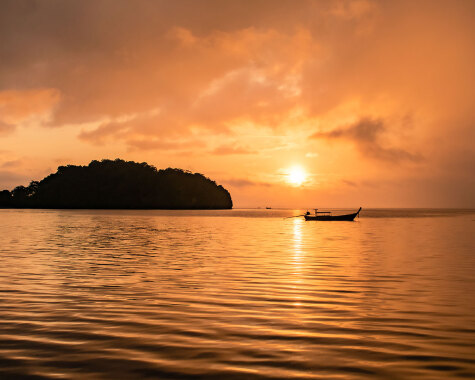
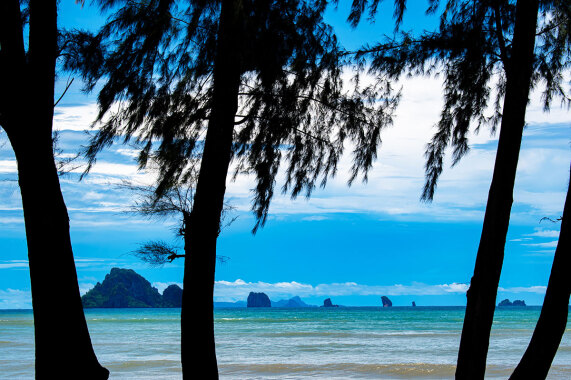
Like a lonely bird without a nest.
Sunthorn Phu
If Thailand Were a Sound, a Scent, a Colour, a Taste
What does Thailand feel like beyond the postcard?
Thailand is not merely the chime of temple bells or the turquoise of tropical seas. Listen more closely, and you hear motorbikes weaving through traffic, vendors calling across crowded markets, and tropical rain drumming on tin roofs. Yet one sound takes me further from the familiar image: the khaen, a bamboo mouth organ whose haunting melodies belong to the musical soul of Isan, Thailand’s northeastern region, where Lao cultural ties run deep.
Thailand’s scent is harder to name. It is steamed rice, bruised basil, lime, chilli, fermented fish, and charcoal smoke. No single dish can contain it. Thai cooking is a conversation between sourness, heat, sweetness, and fragrance. In Isan, the conversation grows smokier, sharper, and more earthy.
Its colours, too, reach beyond the familiar turquoise and jungle green: the wet green of rice fields, the burnished gold of temple roofs, and the rust-red earth of the northeast. Look inland, away from the beaches, and Thailand becomes less a tropical fantasy and more a landscape shaped by soil, stone, forests, and faith.
And the taste? If I had to choose, it would be sour, hot, and salty, with sweetness lingering in the background. But geography always leaves its signature on a country's palate. Isan shares much of its culinary heritage with neighbouring Laos, while southern Thai cuisine reflects centuries of contact with Malay cultures.
Perhaps Thailand is best understood not as a single sensation, but as a country of contrasts—where every sound, scent, colour, and taste reveals another place beneath the one we thought we knew.
Where Rivers Meet Diplomacy
What shaped Thailand’s borders: nature or history?
Thailand cannot be explained by a single line on a map. In the north and west, mountain ranges form natural barriers and feed rivers that sustain the land. At the heart of the country, the Chao Phraya River and its fertile floodplain gave rise to an agricultural and political centre. To the east, the Mekong separates much of Thailand from Laos, while in the south, the country narrows into a long peninsula between the Andaman Sea and the Gulf of Thailand.
But geography tells only half the story. Thailand’s modern borders were also drawn through diplomacy, pressure, and compromise. Once known as Siam, the kingdom navigated the competing ambitions of Britain and France, the colonial powers that surrounded it. During the late nineteenth and early twentieth centuries, Siam surrendered territories and claims in an effort to preserve its independence. Treaties with France in 1893, 1904, and 1907 helped shape the borders we recognise today.
The 1907 agreement, for instance, transferred Battambang, Siem Reap, and Sisophon to French control, while Siam received territories including Trat. Independence, it turned out, sometimes came at the cost of land.
Even the Mekong is more than a natural dividing line. Long before modern borders hardened, communities on both banks shared languages, markets, traditions, and histories. Political boundaries gradually cut across these older connections.
Perhaps Thailand is best understood as a country shaped by two forces: the stubborn geography of rivers and mountains, and the delicate art of diplomacy. Nature drew the first outlines; history decided where the lines would stay.
A Different Kind of Thai
Where does Thailand contradict itself?
Ask travellers to picture Thailand, and a familiar collage appears: Bangkok’s temples, elephants, tropical islands, beach massages, and street food sizzling beneath neon lights. Then there is Isan, the country’s vast northeastern region, where that postcard begins to fade.
Spread across the Khorat Plateau, Isan is largely inland, with broad plains, a relatively dry climate, and a cultural identity deeply connected to neighbouring Laos. Along its eastern edge, the Mekong shapes not only the landscape but also the rhythms of everyday life. Lao-influenced speech and cuisine make this corner of Thailand feel distinct from the country sold to the world.
Here, there are no postcard beaches. International tourists are fewer, the food can be fiercer, and the region’s past reveals another layer of history: Khmer temples stand as reminders of an older cultural world. Cities such as Ubon Ratchathani, Khon Kaen, and Nakhon Ratchasima have their own identities, far removed from the familiar theatre of Bangkok or the southern islands.
Many travellers pass Isan by, imagining a landscape too flat, dry, or uneventful to deserve their time. Yet its appeal lies precisely in what it refuses to perform. The Mekong replaces the sea; village traditions take the place of resort rituals; and daily life unfolds with fewer spectators.
I find Isan a useful reminder that a country is never quite the image it exports. Sometimes, to understand a place, you must travel beyond what made you want to visit it in the first place.
The Thailand Left Off the Map
Which parts of Thailand disappear from its official story?
The familiar map of Thailand follows a well-worn route: Bangkok, Chiang Mai, Phuket, Krabi, Samui. It is a map of temples, mountains, beaches, and islands, polished into a version of the country that travels easily. But somewhere between these celebrated destinations, much of Thailand slips out of view.
In the northeast, Isan’s twenty provinces occupy a vast stretch of the country and are home to roughly 22 million people. Yet the region receives a far smaller share of international tourism. Its everyday life, Lao-influenced culture, and close relationship with the Mekong rarely feature in the Thailand most visitors come looking for.
Further south, another story unfolds in Pattani, Yala, and Narathiwat. Here, the cultural landscape differs markedly from that of central Thailand. Most residents of these three provinces are Malay Muslims, and Patani Malay—often called Yawi locally—remains an important part of the region’s identity. The Jawi script, too, reflects a cultural history extending beyond the boundaries of the modern Thai state.
These are not simply remote corners waiting to be discovered. They are places whose histories and identities complicate the neat picture presented to outsiders.
I find it revealing that a tourist map can be geographically accurate and still tell an incomplete story. Isan in the east and Patani in the deep south remind us that national identity is rarely as uniform as its symbols suggest. To understand Thailand, perhaps we must look not only at where the map directs us, but also at what it leaves in the margins.
Where Thailand Becomes Elsewhere
Which parts of Thailand feel like another country?
In Isan, especially along the Mekong, the border with Laos can feel more political than cultural. Language, food, music, and religious traditions spill across it, reminders that rivers and communities existed long before modern maps. Lao-influenced speech is common in parts of the north, while Khmer heritage grows more visible farther south. In Nong Khai, Nakhon Phanom, and Mukdahan, Thailand reveals a character far removed from its beachside image.
Travel north, into the old kingdom of Lanna, and another Thailand emerges. Chiang Mai is not simply a smaller Bangkok; it was once the centre of a distinct culture with its own architecture, arts, language, and Buddhist traditions. Beyond it, in Nan, Phrae, and Mae Hong Son, the mountains seem to slow the country down, and local identities come into sharper focus.
But perhaps the most striking shift lies in the deep south, in Pattani, Yala, and Narathiwat. Here, Malay language, Sunni Islam, food, dress, and history connect the region more closely to northern Malaysia than to the familiar tourist heartland.
What fascinates me is how one national border can contain such different worlds. In Isan, Lanna, and Patani, the map of Thailand begins to blur—not because these places are less Thai, but because identity has never obeyed borders as neatly as maps do.
What Brings Thais to the Table?
What does everyday conversation reveal about Thailand?
To understand Thailand beyond its temples and beaches, I find it more revealing to watch how people live together. A few ideas keep surfacing: kreng jai, the instinct to avoid imposing on others; sanuk, the pleasure of making life enjoyable; mai pen rai, a relaxed “never mind”; respect for hierarchy; and food as a form of social connection. Yet Thailand is no single personality: Bangkok, Isan, the north, and the south each have their own rhythms.
At a Thai table, food is rarely just a private affair. Dishes are ordered for everyone to share, often with an older family member or the person paying taking the lead. Conversation moves naturally between family, work, school, daily plans—and what to eat next.
It may begin with Kin khao rue yang?—“Have you eaten yet?” More than a question about hunger, it can be a greeting, a small gesture of care. I like this idea: sometimes, asking about a meal is another way of asking how someone is.
In Thailand, food does more than fill the stomach. It gives people a reason to gather, talk, and belong.
Destination Digest
A Word That Softens the Edges
Which Thai phrase can open a door?
If I could learn just one Thai expression before arriving, it would be mai pen rai (ไม่เป็นไร): “Never mind,” “It’s all right,” or “No worries.” But its real meaning lies less in translation than in timing. It can ease a tense moment, dismiss a minor mistake, or suggest that a small inconvenience is not worth damaging a relationship. In a country where keeping social harmony matters, three words can sometimes do what an apology or explanation cannot.
Yet another phrase may prove even more useful: khop khun (ขอบคุณ), “thank you.” In Thai, politeness often comes with a small linguistic gesture at the end of a sentence: khráp (ครับ), traditionally used by male speakers, or khâ (ค่ะ), by female speakers. These particles do more than decorate speech; they help shape its social tone. Their use depends on context, and the polite forms are worth learning even if the rest of a sentence escapes you.
I suspect this is one of travel’s quiet lessons: fluency is not always about knowing more words. Sometimes it is about recognizing the weight of a small one. A carefully placed khráp or khâ, spoken with a smile, will not unlock every door—but it can make a stranger feel that you have arrived with respect, not merely a camera.
The Quiet Art of Welcome
Where does Thai hospitality draw its line?
Thai hospitality often feels gentle rather than grand. It appears in a smile, an offered meal, a helping hand, or the effort to spare someone embarrassment. Its warmth is not always announced; sometimes, it is found in what remains unsaid.
One idea helps explain this: kreng jai, a deep consideration for how one’s words or actions might burden another person. It encourages people to think twice before imposing their needs or discomfort on someone else. Hospitality, then, does not always mean asking repeatedly, “What would you like?” It may mean helping quietly, without making the recipient feel indebted.
But courtesy should not be mistaken for unlimited permission. A smile is not a promise, and kindness does not mean that every request will be accepted. Thai social life places importance on respect, seniority, and avoiding direct confrontation, but boundaries still exist beneath the politeness.
As a traveller, I find this distinction worth remembering: to be welcomed is not to be entitled. Perhaps the most respectful guest is not the one who asks for the most, but the one who notices what is offered—and knows when not to ask for more.
The Small Rules of Being There
Which Thai habits might surprise a visitor?
In Thailand, a greeting can be a gesture of respect. The wai—palms pressed together, head slightly bowed—may express hello, thanks, or farewell. Its form depends on age and status, so there is no need to perform it for everyone; a warm smile and a respectful response often suffice.
The body has its own quiet etiquette. The head is traditionally regarded as the highest part of the body, the feet the lowest. Avoid touching someone’s head or pointing with your feet, especially towards a monk or Buddha image. Shoes, too, have their place: remove them before entering many homes and sacred spaces.
Another lesson is jai yen, literally a “cool heart”—the art of staying calm. Public anger and raised voices rarely help; patience can achieve what confrontation cannot. Bargaining, meanwhile, belongs in certain markets and with some tuk-tuk drivers, not in shops or restaurants with fixed prices. Negotiate with a smile, or simply pay.
I find these small customs revealing. Travel is not just learning how to enter a place, but how not to impose yourself on it. Often, respect begins with noticing what locals never need to explain.
Before the City Wakes
Which ordinary scene tells us more about a country than a museum?
I would choose a table in an ordinary Thai neighbourhood. Not the Grand Palace, Phuket, or Wat Arun, but a few people gathered around shared dishes. In that simple arrangement, a country begins to reveal itself: family ties, hierarchy, hospitality, taste, conversation, and the quiet economics of everyday life.
Thai meals are often ordered for the table rather than for individuals. Everyone reaches for a little of this and a little of that, turning eating into a shared ritual. Even in polished restaurants, food can remain a collective affair. What interests me is how much a culture can disclose without anyone saying a word.
There is another scene I would choose, perhaps even more revealing. At dawn, outside an ordinary home, a Buddhist monk walks past with his alms bowl. Residents offer food as part of tham bun (ทำบุญ), the practice of making merit. It is not merely a religious ceremony reserved for special occasions, but a ritual woven into the morning lives of many Thai Buddhists.
Imagine the street at six: warm rice steaming in the cool air, a bowl held out, a monk passing quietly, the city not yet fully awake. No museum label explains the moment; no monument asks for admiration. Yet here, in a small exchange between giver and receiver, Thailand becomes visible—not as an attraction, but as a way of living.
When Time Is Not Wasted
What do people consider wasted time—and what do they call living?
It is tempting to imagine Thailand as a place where nobody is in a hurry. But modern Thailand, especially Bangkok, is urban, competitive, and relentlessly busy. The city’s pace leaves little room for the postcard fantasy of a life without deadlines.
Still, two Thai concepts offer another way of looking at time. Sanuk (สนุก) means fun, enjoyment, or the pleasure of doing something. It suggests that work need not be stripped of humour, companionship, or the small pleasures that make a day worth living. Eating together, sharing a joke, or turning an ordinary task into a pleasant experience can matter as much as getting things done.
Then there is kreng jai (เกรงใจ), the instinct to consider how your needs or feelings might burden someone else. It asks for a kind of social attentiveness that rarely appears on a productivity chart.
Together, these ideas suggest that a good life is measured not only by what we accomplish, but also by how we treat one another. To an impatient visitor, a long meal or an afternoon of conversation may look like time slipping away. But perhaps the relationship itself is the point.
I find something quietly challenging in that thought. We are so used to asking what an hour has produced that we sometimes forget to ask what it has allowed us to share. Maybe time is not wasted simply because nothing measurable comes of it. Sometimes, being together is the whole purpose.
The Ghost Who Stayed
Which old story still shapes everyday life in Thailand?
Few Thai legends have endured like Mae Nak Phra Khanong. The story tells of Nak, a woman who dies in childbirth but remains at home, held there by her love for her husband, Mak. When he returns from war, he does not realise that his wife is dead—until the truth finally reveals itself.
What fascinates me is not whether the story happened, but how people continue to live with it. At Mae Nak’s shrine at Wat Mahabut in Bangkok, visitors still come to make offerings and ask for help. Among them are men hoping to avoid being selected in Thailand’s military draft. A ghost from an old love story has found a place in a very modern anxiety.
Here, the boundaries between legend, religion, superstition, and ordinary life are less rigid than we might expect. The Thai word phi (ผี), often translated as “ghost,” reaches beyond the spirits of the dead to include supernatural beings and forces associated with places and nature. Their presence can be felt in spirit houses outside buildings, in offerings, and in small rituals woven into daily routines.
I find something revealing in this coexistence. Modernity has changed Thailand, but it has not necessarily banished its unseen world. Perhaps progress does not always mean leaving old beliefs behind; sometimes, it means making room for them in new lives. In Thailand, the past may be less a memory than a presence—one that, like Mae Nak, has never quite gone home.
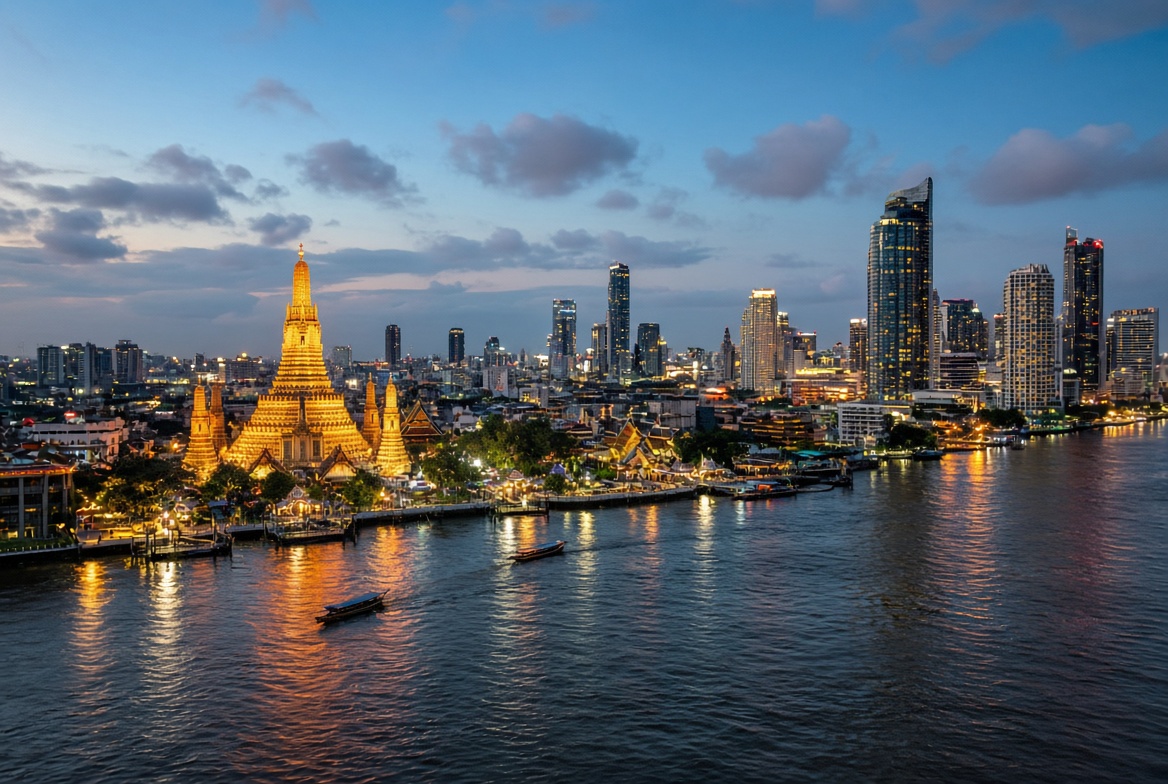
Cities of Thailand so far

Heroes from the Margins
Which local heroes rarely make it into the history books?
Thailand’s lesser-known heroes often stand somewhere between history and legend. Khun Phan, born Khun Phantharakratchadech, was a southern Thai police officer remembered not merely as a lawman, but as a fearless fighter whose reputation became entangled with magic, sacred amulets, and popular ideas of justice. He belongs to the imagination of the south, where the line between state authority and the people’s own sense of right can grow complicated.
Another figure reaches further back: Khun Phaen, the charismatic hero of Khun Chang Khun Phaen, one of Thailand’s great folk epics. Emerging from oral storytelling, the tale weaves together love, war, social class, everyday life, and supernatural powers. Unlike the royal grandeur of the Ramakien, it brings us closer to ordinary Siamese lives. Its memory still lingers in places such as Suphan Buri and Kanchanaburi, through local landmarks, images, rituals, and music.
I find these figures revealing because neither belongs entirely to official history. One is a modern regional legend; the other, a folk hero carried across generations. Both remind me that a country’s imagination is rarely shaped by its capital alone. Sometimes, to understand a nation, we must listen to the stories told far from its centre.
The Histories Beneath the Streets
What silenced events still shape Thailand’s towns and cities?
On 6 October 1976, students and activists at Bangkok’s Thammasat University were attacked in a massacre that remains one of Thailand’s most painful political memories. For decades, public remembrance was constrained by silence, conflicting accounts, and the difficulty survivors faced in speaking openly. Beneath Bangkok’s temples, shopping malls, and bright streets lies another city: one shaped by struggles over democracy and the cost of remembering.
Further south, Patani carries a different, equally complicated history. For many Malay Muslims, it evokes a cultural and political past that does not fit neatly into the official national story. Haji Sulong, a religious leader who called for greater local autonomy and recognition of Malay language and Islamic institutions, disappeared in 1954. His memory lives on in local art, poetry, and museums—forms of remembrance that preserve histories often left at the margins.
I find these places compelling because a landscape can hold more than one past. Thailand’s southern conflict cannot be reduced to a simple contest between the nation and its Muslim population; its roots lie in layered histories, identities, and political choices. Sometimes, to understand a town, we must listen not only to what its monuments celebrate, but also to what its people have struggled to remember.
Thailand Before Arrival
What should you watch, read, or hear before visiting Thailand?
I would begin with five works, not as a guidebook, but as ways of looking beyond the familiar postcard.
Apichatpong Weerasethakul’s Uncle Boonmee Who Can Recall His Past Lives leads into the forests of Isan, where memory, spirits, and nature quietly overlap. His Tropical Malady begins as a love story before dissolving into a mythical journey through the jungle. Both suggest that, in Thailand, the natural and supernatural worlds may be closer than they seem.
For a lighter encounter with the same unseen world, watch Pee Mak, a comic retelling of the Mae Nak ghost legend. Here, fear becomes affection, friendship, and laughter—a reminder that folklore is not only something to believe in, but something to reinvent.
Then read Four Reigns by Kukrit Pramoj. Through the life of Phloi, the novel follows Siam’s transformation across four reigns, from the old royal order towards modern Thailand. Its nostalgic, conservative perspective is worth keeping in mind: no single novel can contain a country.
Finally, listen to Carabao’s Made in Thailand, a playful critique of consumerism and the fascination with foreign goods, and explore Luk Thung, whose songs carry the voices of rural life, migration, work, and love.
I like the idea of arriving with these works already inside me. They will not explain Thailand; they may help me notice what I would otherwise pass by.
In Thailand, mai pen rai—“never mind” or “it’s all right”—does not always mean that everything is fine. Depending on tone and context, it can soothe tension, close a conversation, or quietly suggest that an issue should be left alone. The mistake is to assume that no problem exists simply because nobody wants to argue about it.
Then there is farang, a common word for foreigners, especially Westerners. It can be neutral, but it also appears in humour that turns the tourist gaze around. In Rattawut Lapcharoensap’s Sightseeing, visitors become the objects of observation, not the people doing the observing. I like this reversal: while we study Thailand, Thailand is quietly studying us.
Even fear has its own cultural language. Ghosts such as Mae Nak, Krasue, and Phi Pop inhabit Thai folklore and cinema, where ancient anxieties mingle with modern life. Supernatural horror sits alongside everyday concerns about bad luck, karma, social embarrassment, and losing face.
Perhaps the real joke is that we arrive believing we are the ones interpreting the country. Yet our habits, assumptions, and bewilderment may be just as entertaining to the people who live there. Travel becomes more interesting when we can laugh not only at what we find strange, but at ourselves.
Who Gets the Last Laugh?
Which Thai jokes might a visitor fail to understand?
The View, and the Place Beyond It
Is every famous destination worth the journey?
Maya Bay is undeniably beautiful. Its turquoise water and towering limestone cliffs look almost too perfect to be real. The problem is not the bay itself, but the pressure of tourism on such a small, fragile place. If all you want is to see the famous view, it delivers. But if you hope to experience southern Thailand at a slower pace, it would not be my first choice. Sometimes, a place can become so popular that the experience of being there gets lost in the effort to see it.
Instead, I would look towards the Trang Islands, particularly Koh Muk, Koh Kradan, and their neighbours along the Andaman coast. Less developed than many of Thailand’s better-known islands, they offer pale beaches, green interiors, and a quieter rhythm, with little of the nightlife that draws crowds elsewhere. Here, the day need not be organised around a famous viewpoint or a boatload of visitors. There is room to wander, linger, and let the landscape reveal itself without competing for attention.
The difference, perhaps, is between travelling to witness a picture and travelling to inhabit a place. Maya Bay is a view people cross the world to see; Trang is somewhere you may still feel you have travelled. I would choose the latter—not because it is untouched or undiscovered, but because it leaves more space for the unexpected. The best journeys do not always lead to the places everyone recognises. Sometimes, they begin where the crowds thin out.
Tha Kha, Before the Crowds
Which place do locals keep for themselves?
Some places become famous because they welcome visitors. Others remain interesting because they have not entirely rearranged their lives to accommodate them. In Thailand, Tha Kha Floating Market is a good example of the latter.
Amphawa is lively and charming, but Tha Kha feels closer to a village market than a stage set for tourists. Here, sellers bring the produce of their gardens and farms by boat: coconuts, chillies, garlic, onions, guavas, pomelos and palm sugar. The market has traditionally followed the lunar cycle, opening on particular days rather than performing for visitors every morning.
What interests me is not simply that Tha Kha is quieter or less crowded. It is the subtle difference between a place that has learned to entertain tourists and one where tourists happen to step into a life already in progress. In the first, you may feel like the intended audience; in the second, you are a passing observer, allowed a brief glimpse of an ordinary world.
Perhaps this is what I look for when I travel: not a secret place untouched by outsiders, but somewhere that still belongs to its own people. A market is more revealing when its rhythms are shaped by local needs, the harvest and the moon rather than by the arrival of tour buses.
If I had to choose, I would go to Tha Kha to experience and Amphawa to see. The distinction may seem small, but sometimes the best journeys begin where a destination stops performing.
Thailand, Between the Stops
When does the road become the destination?
Some journeys are measured by the places we reach; others by everything that happens between them. In northern Thailand, the Mae Hong Son Loop belongs to the second kind. Linking Chiang Mai with Pai, Mae Hong Son and Mae Sariang before returning to the starting point, this winding mountain route passes through forests, valleys, farming villages and distant horizons.
The point is not simply to arrive in Mae Hong Son. The road itself is the destination. With every bend, the familiar, urban face of Thailand gradually gives way to a quieter landscape. For anyone who wants to read a country through the window of a car, this is a journey worth taking slowly, with room for unexpected stops. A flight might save time, but it cannot offer the same gradual passage through the land.
For a shorter journey, consider travelling from Bangkok to Samut Songkhram. The transition unfolds through canals, coconut groves, floating markets and the villages around Mae Klong. Though relatively close to the capital, this region reveals another Thailand, shaped by waterways, small-scale agriculture and the making of coconut sugar.
Along the way, Maeklong Railway Market offers an unusual encounter: a train passes directly through the market, and vendors fold back their awnings to let it through before returning to business as usual.
What draws me to these routes is the way geography becomes a story. One reveals the mountainous north; the other, the watery, agricultural lowlands. Neither is merely a transfer between two points on a map. Sometimes, the most revealing part of travelling is not where we arrive, but how the world changes along the way.
Our Stories from Thailand
-
The Instagram picture and the fragile truth behind it
-

24 Easy and Quick Tips for Stunning Travel Portraits
-

The Art of Enough: Finding Joy in Simple Photography
-

Explore Magnificent Photographs: 20 Handpicked Online Galleries
-
Beyond Stereotypes: Unveiling the Enchantment of Iran
-
Sunken courtyards of Kashan
-
The Old Weaver's Hidden Smile
-
One Lens, One Pen: The Hatching of "Roam & Record"
Cities Best Served Locally
Where does a local specialty become a place’s identity?
If I had to name an unofficial capital of breakfast in southern Thailand, I would choose Trang. Many travellers treat it as a gateway to the islands, a place to pass through on the way to somewhere more famous. But Trang has a life of its own, best discovered early in the morning, over dim sum, roti, coffee and the Chinese-Malay flavours that shape its food culture. Old cafés and familiar breakfast tables reveal a city whose identity extends well beyond its beaches.
Further east, Chanthaburi offers another kind of culinary capital. Its fertile landscape supplies durian and mangosteen, while the coast brings crab and seafood to tables shaped by Chinese-Thai traditions. Yet what interests me most is not any single dish, but the communities that keep these tastes alive.
At Khanom Plaek, a historic neighbourhood beside Nong Bua Canal, old wooden houses and unusual local sweets tell stories that a monument rarely can. Recipes have passed from one generation to the next, preserving traces of the area's Chinese heritage in the simplest of forms: ingredients, techniques and flavours remembered by hand.
These places suggest a different way of travelling. We often cross countries in search of famous buildings, celebrated viewpoints or landmarks we recognise from photographs. But sometimes the more revealing destination is a breakfast table or a neighbourhood bakery, where a place explains itself without trying to impress us.
I like the idea of an anti-attraction: somewhere you visit not to see a celebrated object, but to encounter a living culture. In Trang and Chanthaburi, food is more than something to taste. It is a way into the local world.
The Hour Changes Everything
When does a place reveal its other self?
In Thailand, when you visit a place can matter as much as where you go. The right hour, season or unexpected shower can turn an ordinary stop into something worth remembering.
In Bangkok, try the old neighbourhoods and local markets between 5:30 and 7:30 a.m., before the heat and crowds arrive. Soft light, monks, street food and the first movements of the city offer a quieter world—and a better hour for street photography.
At Mae Klong Railway Market, timing is the attraction itself. As a train approaches, vendors pull back their awnings and move their goods, then return to business as if nothing extraordinary has happened. Arrive at the wrong time, and you may miss the whole performance.
In northern Thailand, November to January brings cooler mornings, especially in the mountains, where mist and cold air offer a striking contrast to Bangkok's lingering warmth.
And at Khao Sok, rain need not ruin the experience. It can deepen the greens, thicken the mist and make the forest feel almost otherworldly. Of course, heavy rain can also bring hazards, so flexibility and local advice matter.
I like travelling when a place is not quite behaving as expected. Sometimes, the secret is simply to arrive early; sometimes, it is to let the weather have its way. A destination is never just one place. It changes with the hour, the season and the sky.
Crossing Thailand Within
Where does Thailand begin to feel like another country?
Some borders have no checkpoints. You cross them through a change in language, food, architecture or the rhythm of everyday life. In Thailand, the journey from Bangkok to Isan may be the most revealing. Travel east through Nakhon Ratchasima towards Khon Kaen or Nong Khai, and Central Thai culture gradually gives way to a world shaped by the Mekong and its close ties to Laos. Sticky rice replaces ordinary steamed rice as a staple; fermented fish, sharp sourness and fiery salads define the table. Even the language begins to sound different.
Head north, beyond Chiang Mai towards Nan or Mae Hong Son, and you enter the old Lanna world: mountain landscapes, distinctive architecture, herbal flavours and a cultural heritage shaped by neighbouring Laos, Myanmar and southern China.
In the far south, around Pattani, Yala and Narathiwat, Malay language, Muslim traditions and the legacy of the historic Patani region reveal another side of the country, distinct from its familiar central image.
Not every cultural crossing is so dramatic. East of Bangkok, Chanthaburi trades the capital's urban sprawl for fruit orchards, coastal life and old wooden shophouses along the Chantaboon Waterfront, where traces of trading and migration remain visible.
These are the borders I find worth crossing. Not lines that divide a country, but transitions that reveal how many worlds can live within one. Sometimes, to understand a place, you must travel beyond the version you thought you knew.
A Country on the Tongue
When does food become a map of the land?
Some dishes make little sense outside the landscape that created them. In northeastern Thailand, khao niao (sticky rice), som tam (green papaya salad) and pla ra (fermented fish) form more than a meal; they tell the story of Isan, a region shaped by a hot, often dry plateau and deep cultural ties with Laos. Fermentation, once essential for preserving food, remains part of its distinctive taste. Here, rice is not simply a staple. It is geography made edible.
Travel north into the old Lanna region, and another culinary world emerges. Khanom chin nam ngiao, rice noodles served in a tomato-rich broth with meat, reflects northern traditions and their connections with neighbouring cultures, including those of Myanmar and Laos. Herbs, local vegetables and the ingredients of the uplands give northern Thai cooking a character quite different from the fiery flavours of the south. To eat this dish in Chiang Mai is to taste something of the region's history and terrain.
Farther south, gaeng tai pla offers a more uncompromising encounter: a powerful curry made with fermented fish innards and vegetables, intensely savoury and often fiercely hot. For someone whose idea of Thai food begins and ends with Pad Thai or green curry, it can be a revelation.
What interests me is how these dishes resist the idea of a single Thai cuisine. Climate, geography, migration and the need to preserve food have shaped different tastes across the country. Sometimes, the quickest way to understand a region is not to visit its monuments, but to sit down at its table and discover what the land has taught its people to eat.
Food in Its Own Time
When is a dish simply part of everyday life?
Not every local dish is meant to be discovered, photographed or celebrated as an attraction. Some belong to particular hours, the small routines that hold a city together. In Thailand, jok, a thick rice porridge served with meat, egg and ginger, is above all a breakfast food. To a visitor, it may be just another Thai dish; to someone beginning the day, it is something warmer and more familiar. Seek it out late at night, and you may still find a bowl, but miss something of its place in daily life.
Khao man gai—chicken served with rice cooked in chicken broth, accompanied by a dipping sauce and soup—belongs to another everyday rhythm. Simple, filling and widely available, it is the kind of meal people turn to between errands, during a workday or when they need something dependable without ceremony. Its appeal lies not in novelty, but in how naturally it fits into the city.
Then there is kanom krok, little coconut pancakes sold at street stalls and local markets. Their charm is inseparable from where and when you eat them: the morning bustle, the heat rising from the griddle, the brief pause before the day gathers speed. In a tourist restaurant, the same food might arrive as an item on a menu. At a market stall, it becomes part of a living scene.
I find this distinction revealing. A country's food culture is not only a collection of recipes; it is also a timetable. Breakfast, lunch and an afternoon snack each have their own habits. Sometimes, to taste a place properly, you must arrive at the right hour.
The Hands Behind the Souvenir
What survives when a craft loses its makers?
Thai silk is more than something beautiful to take home. In the northeastern region of Isan, Mudmee silk, a form of ikat weaving, carries a geography of its own. Threads are dyed before weaving, allowing patterns to emerge as the cloth takes shape. The knowledge lives in the hands of artisans and in rural communities where the tradition continues across generations. Buy a well-made piece, and you take home more than a pattern: you carry a fragment of Isan's cultural memory.
In southern Thailand, krajood weaving turns rush plants into mats, baskets and bags. Its value lies partly in its usefulness. These are objects made to be handled, carried and lived with, rather than left behind glass in a souvenir shop.
But the greater threat to traditional crafts is not always their sudden disappearance. It is the breaking of the chain that passes knowledge from one generation to the next. When younger people leave villages for city jobs, and craftwork offers less reliable income than industrial or service employment, a skill preserved for centuries can fade within a single generation.
I find this one of travel's quieter responsibilities: to recognise the hands behind what we admire. A craft survives not simply because tourists buy it, but because its makers can afford to keep making it—and someone is willing to learn. Sometimes, the most meaningful souvenir is one that helps an old skill find a future.
Objects That Keep a Place Alive
What can I bring home that keeps me connected to a country?
A small piece of Mudmee silk, rather than another elephant figurine.
Light enough to carry, useful enough to live with, and rooted in a particular region, this traditional ikat weaving of northeastern Thailand has something many souvenirs lack: a story. Its patterns can become part of your home, framed on a wall, placed on a desk, or woven into an interior. Buy directly from an artisan or local cooperative, and the connection deepens. You are no longer simply buying an object; you are meeting, however briefly, the hands and traditions behind it.
If you love ceramics, consider a small bowl of Sangkhalok ware, associated with the historic kingdom of Sukhothai. Unlike mass-produced plastic souvenirs, traditional Thai ceramics carry traces of a place's artistic past. A well-made bowl can remain in your home for years, quietly recalling a journey each time you use it.
Or bring back tea from the mountainous north. Unlike an ornament destined to gather dust in a cupboard, tea asks to be opened. You boil the water, let the leaves steep, and suddenly the memory returns—not as a photograph, but as a scent, a taste, a moment recovered.
I have come to think that the best souvenirs are not necessarily the most beautiful or expensive. They are the ones that continue to participate in our lives after the journey ends. A piece of silk, a handmade bowl, a packet of tea: each offers a different way to keep a country close. The point is not to possess a fragment of Thailand, but to let something of it remain with you.
The Smell That Stays
Which taste or smell will bring Thailand back to you years later?
If I had to choose one smell, it would be Thai basil mingling with charcoal smoke and fermented fish. It might not be love at first sniff, especially for a first-time visitor. But perhaps that is why it stays. Thailand certainly smells of lemongrass and coconut milk, yet these have become familiar shorthand for an imagined tropics. The more telling scent rises from a morning market: a hot wok, garlic, chilli, fish sauce, and smoke drifting between food stalls.
For a single taste, I would choose som tam with pla ra, the fermented fish seasoning common in Isan cuisine. Sour, fiery, salty, funky, with a hint of sweetness, it tastes like a landscape shaped by its own traditions. If the heat is too much, say mai phet—“not spicy.”
And then there is a quieter combination: fish sauce, lime, and chilli. Three simple ingredients, repeated in countless Thai dishes. Years later, you may forget the name of a meal or the street where you ate it. But catch that sharp, salty fragrance again, and Thailand may return in an instant—not as a picture, but as a memory you can almost taste.
Outside the Postcard
Where does Thailand contradict its own tourist image?
If Thailand is sold as white beaches, cocktails, resorts, and long-tail boats, Koh Tarutao tells another story. Part of Tarutao National Park in the southern province of Satun, near Malaysia, it offers forests, caves, rugged hills, and beaches that feel less like resort scenery than a world of their own. Its past as a penal settlement adds another layer to the landscape. Here, an island becomes more than a place to relax; it becomes geography, history, and wilderness.
For mountains, I would look to Nan, in northern Thailand, far from the familiar Chiang Mai circuit. Its winding rural roads connect hills, temples, coffee-growing communities, and villages shaped by a distinct local history. Nan is not simply another version of a better-known destination. Its appeal lies in the feeling that you have entered a place with its own rhythm, rather than followed a route already mapped by tourism.
And for a small town that opens a door into another culture, there is Dan Sai, in Loei province. Its Phi Ta Khon festival fills the streets with elaborate masks, costumes, dancing, and a blend of Buddhist ritual and local belief. To outsiders, it may seem like a curious spectacle; to the community, it belongs to a living spiritual tradition.
Further south, Satun reveals a different Thailand, shaped by Malay-Muslim heritage in its food, clothing, and everyday life. These places remind me that a country is never one story. Sometimes, to understand it better, you have to travel beyond the image it has made of itself.
Beyond the Ten Best Sights
What kind of traveller finds paradise in Thailand?
Thailand is paradise for the traveller who sees food as geography. Learn to recognise the sharp, fermented flavours of Isan, the gentler dishes of the north, and the fiery curries of the south, and the country begins to unfold as several places rather than one.
It rewards those willing to look beyond familiar routes. Behind the famous beaches and crowded cities lies a vast network of small towns, rural landscapes, and quieter communities. The curious traveller will always find another road to follow.
Thailand also suits those who believe the journey matters as much as the destination: the Mae Hong Son Loop, the roads from Nan to Phrae, the coast around Trat, or the slower route from Bangkok towards Samut Songkhram. Heat, humidity, and sudden rain are part of the experience, not merely inconveniences to escape.
Most of all, Thailand is for those more interested in everyday life than monuments: a market at dawn, a local breakfast, a passing train, a neighbourhood temple, or an old wooden house. For me, these ordinary scenes often reveal more than a checklist of the country's ten greatest sights. The best traveller here is not the one who sees the most, but the one who learns to notice.
The Wrong Kind of Paradise
Who might find Thailand a disappointing mistake?
Thailand may be the wrong choice if you expect a postcard beach that stays perfect all day, every day. Heat, humidity, monsoon rain, and crowds are part of the bargain. The tropical dream has its weather, its inconveniences, and its less photogenic hours.
If crowds exhaust you, think carefully before visiting Bangkok, Phuket, Pattaya, or the better-known islands during peak season. Even Koh Samet, a relatively easy escape from Bangkok, can feel entirely different on a weekend, when residents and expatriates arrive in search of the sea. The same beach that seems peaceful on a weekday may become a crowded stretch of sand by Saturday.
But there is another misconception worth leaving behind: that authenticity means emptiness. A local market is not less genuine because it is busy; it may be busy precisely because local people still depend on it. At Tha Kha, in morning markets, and during village festivals, everyday life does not pause to preserve a traveller's sense of discovery.
I would hesitate to call Thailand a disappointment simply because it refuses to match an imagined paradise. The real mistake is arriving with a picture so fixed that the country has no room to surprise you. Thailand rewards curiosity, but it cannot promise solitude, perfect weather, or a staged version of authenticity at every turn.
A Calendar Written in Rain
Which festivals belong to Thailand’s real calendar, not just its tourist one?
Songkran and Loi Krathong no longer need introducing. To find a more intimate side of Thailand, I would look towards festivals still tied to farming, Buddhist belief, the seasons, and the rhythms of village life.
In Isan, the northeastern region, Bun Bang Fai, the Rocket Festival, sends homemade rockets into the sky in the hope of bringing rain. Beneath the noise, colour, and apparent madness lies a simple truth: farmers depend on the weather, and a good harvest is never entirely in their hands. For me, that is what makes the festival worth understanding. It is not merely a spectacle; it is a community expressing its hopes to the sky.
In Dan Sai, Loei province, Phi Ta Khon brings together colourful masks, dancing, mischief, spirits, and Buddhist ceremony. Though increasingly known to visitors, it remains rooted in local belief and communal ritual. Few celebrations reveal Thailand’s ability to hold reverence and humour together so naturally. Fear, faith, play, and the need to belong share the same streets.
Then there are buffalo races, held in some communities as part of local festive traditions. Here, the celebration grows from the world people actually inhabit: their animals, livelihoods, and shared identity.
These festivals remind me that a country's calendar is not made only of events promoted abroad. Some dates matter because they help a community ask for rain, honour its beliefs, or simply gather as itself. To encounter Thailand through them is to see culture not as a performance arranged for visitors, but as a living part of everyday life.
The Sound of Thailand
Lost in the Desert Sky
Keyhan Kalhor
Flower’s Reward
Mehran Mobini
Konj-e-Kharabat
Gholam Hossein Fathi
Keep Roaming
Contact@roamandrecord.com
We are waiting for your kind messages