My Notes on
C Z E C H I A
The Taste of Silence
How does a place reveal its soul?
How does a place reveal its soul?
To map the sensory geography and true soul of the Czech Republic is, for me, to trace a seamless tapestry of contrasts. As the world’s first "Sound-Friendly Country," it speaks in the resonant silence of its pine woods and the dawn chorus of birds. The very earth breathes the bitter tang of hops, lavender, and resin—a fragrant echo of historical dampness and quiet solitude.
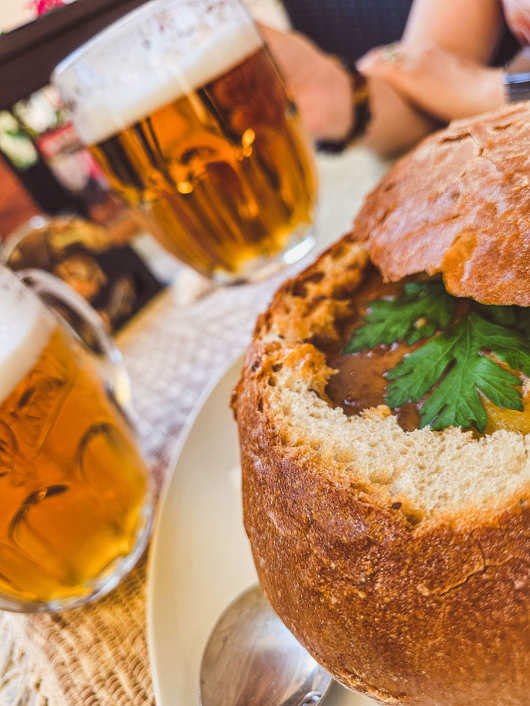
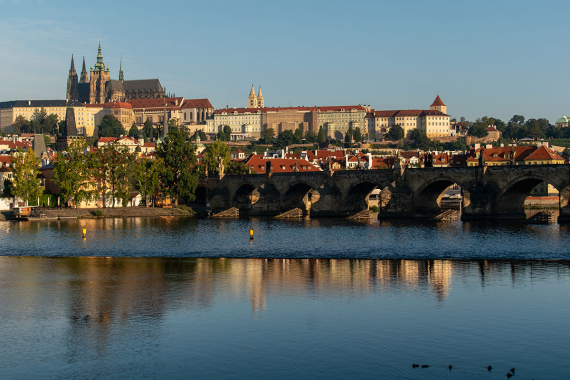
On the horizon, the austere gray of communist panelák blocks yields to the golden gleam of Prague’s spires and the lush green of rolling hills. Ultimately, this terrain is tasted: the crisp bite of beer, the warm spice of gingerbread, and the dry, lingering finish of Moravian wine.
On the horizon, the austere gray of communist panelák blocks yields to the golden gleam of Prague’s spires and the lush green of rolling hills. Ultimately, this terrain is tasted: the crisp bite of beer, the warm spice of gingerbread, and the dry, lingering finish of Moravian wine.
Mountains, Gates, and Memory
Where do the Czech lands begin—and where do they open?
Where do the Czech lands begin—and where do they open?
The Czech Republic is shaped as much by its borders as by what lies within them. The Sudetes rise along the north and northeast, forming much of the frontier with Poland and carrying Sněžka, the country’s highest peak. To the east, the Carpathians mark the way toward Slovakia, while the ancient Bohemian Massif gathers much of the west and south into its old, stony embrace.
The Morava River traces part of the southern edge. Yet perhaps the most revealing boundary is not a wall but an opening: the Moravian Gate, a natural corridor between the Sudetes and the Carpathians, where armies, merchants, and ideas have passed for centuries. Here, geography has never simply divided the land; it has also shown the way through it.
The Morava River traces part of the southern edge. Yet perhaps the most revealing boundary is not a wall but an opening: the Moravian Gate, a natural corridor between the Sudetes and the Carpathians, where armies, merchants, and ideas have passed for centuries. Here, geography has never simply divided the land; it has also shown the way through it.
Ghosts on the Map
What is missing from the map?
What is missing from the map?
When I trace the modern map of the Czech Republic, I am struck by a profound absence: the Sudetenland. Though its physical boundaries were erased in 1945 with the expulsion of its German population, this historical fault line remains deeply etched into the national memory. Geographers aptly call it a "phantom border."
Even eight decades after the war, this invisible line still dictates the rhythm of daily life, casting long shadows over economic data, unemployment, education, and the ballot box. It stands as a silent monument to a displaced people and the unresolved complexities of the Czech soul.
Yet, it is not only the ghosts of the past who are missing; in the official story the country tells itself, present-day minorities like the Roma and the Vietnamese are also quietly relegated to the margins, overlooked in the grand narrative of who they truly are.
Even eight decades after the war, this invisible line still dictates the rhythm of daily life, casting long shadows over economic data, unemployment, education, and the ballot box. It stands as a silent monument to a displaced people and the unresolved complexities of the Czech soul.
Yet, it is not only the ghosts of the past who are missing; in the official story the country tells itself, present-day minorities like the Roma and the Vietnamese are also quietly relegated to the margins, overlooked in the grand narrative of who they truly are.
The Prague Paradox
What happens when a city refuses to fit the story we've written for it?
What happens when a city refuses to fit the story we've written for it?
Contrary to the tired clichés of "Eastern Europe" and its communist architecture, Prague stands apart—its historic core miraculously spared by the war, a living showcase of Romanesque, Gothic, Renaissance, and Baroque grandeur.
Geographically, the city sits farther west than Vienna, and culturally, it has always belonged to the heart of Central Europe, bound more closely to Austria and southern Germany than to any of its eastern neighbors.
Geographically, the city sits farther west than Vienna, and culturally, it has always belonged to the heart of Central Europe, bound more closely to Austria and southern Germany than to any of its eastern neighbors.
Where One Country Becomes Many
How can one country contain so many different worlds?
How can one country contain so many different worlds?
The Czech Republic is a country of quiet geographical surprises. In the east, Moravia rolls into vineyards and golden hills, so reminiscent of Tuscany that it has earned the nickname “the Tuscany of Czechia”—and produces around 96 percent of the country’s wine. Along the Slovak border, Slovácko feels almost like a country within a country, shaped by its blended dialects, folk music, and traditional dress.
Farther north, the sandstone formations of Bohemian Paradise create another unexpected world: a miniature Grand Canyon, or perhaps a fragment of southwestern China, tucked into the Czech landscape. Traveling through these regions, I find myself repeatedly forgetting how small the country is—and how many landscapes a single place can hold.
Farther north, the sandstone formations of Bohemian Paradise create another unexpected world: a miniature Grand Canyon, or perhaps a fragment of southwestern China, tucked into the Czech landscape. Traveling through these regions, I find myself repeatedly forgetting how small the country is—and how many landscapes a single place can hold.
Destination Digest
The Unsmall Talk
What do Czechs talk about when they talk?
What do Czechs talk about when they talk?
Czechs don’t do small talk; they’d rather get to the heart of things. Safe openings: food, which never fails; weather, especially the dramatic kind—“too hot,” or “rain at last”; and transport, where a delayed train or a bad road can instantly unite a room in collective complaint. Complaining is a national art form—they even complain about how much they complain.
Money is taboo at the family table; ask “what did it cost?” and the air turns to ice. Politics only comes up if you’re trying to figure out who stopped speaking to whom back in 2013. Religion stays mostly in the shadows. And if you ask “How are you?” be ready for a real answer—here it is not a polite noise.
Money is taboo at the family table; ask “what did it cost?” and the air turns to ice. Politics only comes up if you’re trying to figure out who stopped speaking to whom back in 2013. Religion stays mostly in the shadows. And if you ask “How are you?” be ready for a real answer—here it is not a polite noise.
The Grammar of Welcome
How do we unlock a culture?
How do we unlock a culture?
When I seek to unlock the quiet doors of the Czech heart, I find that a few native syllables serve as my master key. I always begin with the formal grace of "Dobrý den" (Good day), softening it with the gentle rhythm of "Děkuji" (Thank you) and "Prosím" (Please). In a culture that guards its inner sanctum, I’ve learned this polite choreography is not mere etiquette; it is the offering of deep respect.
Yet, when the ice thaws, I hear the informal "Ahoj" slip effortlessly between friends, carrying a sudden, genuine warmth. For me, the shift to a first-name basis is a quiet milestone of trust, a threshold usually crossed only when initiated by a woman or an elder. It is a subtle yielding, an invitation to step inside.
And if I truly wish to win their affection, I know the final key is turned at the dining table. A heartfelt "Děkuji moc za jídlo" (Thank you very much for the meal) does more than praise the food; it honors the hearth, the hospitality, and the shared humanity of the moment.
Yet, when the ice thaws, I hear the informal "Ahoj" slip effortlessly between friends, carrying a sudden, genuine warmth. For me, the shift to a first-name basis is a quiet milestone of trust, a threshold usually crossed only when initiated by a woman or an elder. It is a subtle yielding, an invitation to step inside.
And if I truly wish to win their affection, I know the final key is turned at the dining table. A heartfelt "Děkuji moc za jídlo" (Thank you very much for the meal) does more than praise the food; it honors the hearth, the hospitality, and the shared humanity of the moment.
The Door, Left Ajar
When does Czech hospitality become an invitation—and when does it remain a boundary?
When does Czech hospitality become an invitation—and when does it remain a boundary?
Czech hospitality has an intriguing contradiction: 19.6 percent of people describe it as “very high,” while the same share consider it not hospitable at all. Perhaps this says something about the Czech way of keeping warmth close and boundaries clear.
Being invited into a Czech home is relatively rare unless you have formed a genuinely close relationship. If you are invited, arrive on time and bring a small gift—flowers or chocolates for the host. At the door, take off your shoes and accept the slippers offered to you. These small rituals matter; punctuality, in particular, is a quiet form of trust.
A dinner invitation does not necessarily mean you have been given the whole evening. Czechs often prefer meeting in a restaurant to entertaining at home, and at parties, food may not always be carefully divided among guests. Yet there is one area where hospitality seems almost boundless: drinks. In a Czech home, an invitation will often come with juice, wine, or something stronger. Perhaps this is where the door opens a little wider.
Being invited into a Czech home is relatively rare unless you have formed a genuinely close relationship. If you are invited, arrive on time and bring a small gift—flowers or chocolates for the host. At the door, take off your shoes and accept the slippers offered to you. These small rituals matter; punctuality, in particular, is a quiet form of trust.
A dinner invitation does not necessarily mean you have been given the whole evening. Czechs often prefer meeting in a restaurant to entertaining at home, and at parties, food may not always be carefully divided among guests. Yet there is one area where hospitality seems almost boundless: drinks. In a Czech home, an invitation will often come with juice, wine, or something stronger. Perhaps this is where the door opens a little wider.
Travelers notice it at once. On trams and the metro, silence holds; a raised voice feels like a transgression. Czechs don’t smile at strangers—a neutral face is focus, not unfriendliness; a smile is a gift kept for people they know.
Blow your nose loudly in public, and no one turns a hair. Step into a home, and the slipper rule is absolute: you take off your shoes even to retrieve something you forgot. In restaurants, service can be slow and unceremonious; it isn’t rudeness but a culture that refuses to perform warmth as a transaction.
Blow your nose loudly in public, and no one turns a hair. Step into a home, and the slipper rule is absolute: you take off your shoes even to retrieve something you forgot. In restaurants, service can be slow and unceremonious; it isn’t rudeness but a culture that refuses to perform warmth as a transaction.
The Slipper Rule
Which daily habits feel strangest to a visitor?
Which daily habits feel strangest to a visitor?
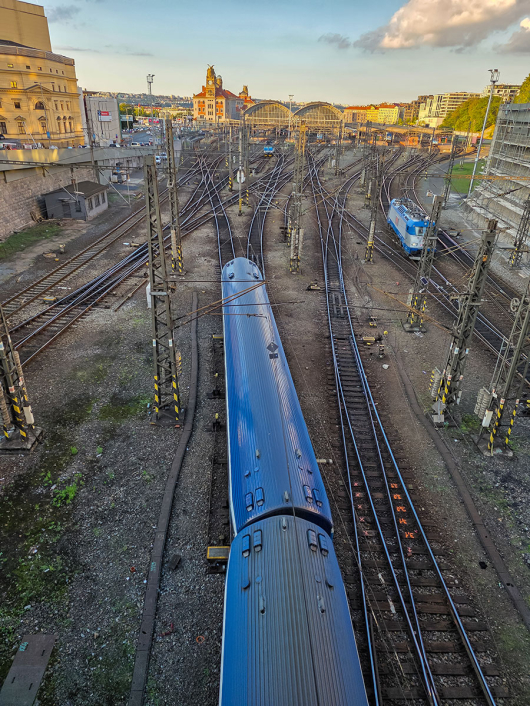
If a museum preserves the past, where does the living soul of a nation breathe? For me, it is found not behind glass, but in the uncurated theater of the everyday. At Prague’s Main Station, the city’s pulse beats in a seamless blur of hurrying travelers, steaming cafés, and the warm, yeasty scent of bakeries.
By Saturday morning, that rhythm shifts to the riverbanks at the Náplavka farmers' market. Here, the city sheds its formality. Locals gather by the water, cradling fresh blooms, savoring the rich comfort of fried langoš or grilled sausages, and sharing a quiet coffee—or perhaps an early beer—watching the Vltava slip by.
Yet, the most revealing stage of all is the cemetery. On Dušičky, or All Souls' Day, a quiet paradox unfolds. Though the Czechs are among the most secular people on earth, they still flock to these gardens—tucked seamlessly into the city streets—bearing candles and flowers. Pausing after the day's work, they linger for a few stolen minutes with those they have lost. Standing among the headstones, I realize the careful tending of these graves tells us far more about the living than it ever could about the dead.
By Saturday morning, that rhythm shifts to the riverbanks at the Náplavka farmers' market. Here, the city sheds its formality. Locals gather by the water, cradling fresh blooms, savoring the rich comfort of fried langoš or grilled sausages, and sharing a quiet coffee—or perhaps an early beer—watching the Vltava slip by.
Yet, the most revealing stage of all is the cemetery. On Dušičky, or All Souls' Day, a quiet paradox unfolds. Though the Czechs are among the most secular people on earth, they still flock to these gardens—tucked seamlessly into the city streets—bearing candles and flowers. Pausing after the day's work, they linger for a few stolen minutes with those they have lost. Standing among the headstones, I realize the careful tending of these graves tells us far more about the living than it ever could about the dead.
The Unmuseums
Where does a nation's soul truly reside?
Where does a nation's soul truly reside?
Cities of Czechia so far
The Art of Doing Nothing
What does a Czech consider a life well spent?
What does a Czech consider a life well spent?
For many Czechs, wasting time can look surprisingly like overtime. A strong preference for shorter working hours, generous holidays, and a life beyond the office reflects a simple philosophy: work should serve life, not quietly consume it.
Real life begins, perhaps, at the weekend—and often somewhere beyond the city, in a chata or chalupa, the country cottage that has become almost a kind of Czech secular religion. There, time slows down: picking mushrooms, tending a garden, walking through the woods, or simply sitting with people one loves.
It is a modest idea, but one I find increasingly compelling: work to live, rather than live to work. In the Czech imagination, the weekend is not an interruption to life. It is where life returns.
Real life begins, perhaps, at the weekend—and often somewhere beyond the city, in a chata or chalupa, the country cottage that has become almost a kind of Czech secular religion. There, time slows down: picking mushrooms, tending a garden, walking through the woods, or simply sitting with people one loves.
It is a modest idea, but one I find increasingly compelling: work to live, rather than live to work. In the Czech imagination, the weekend is not an interruption to life. It is where life returns.
The Sleepers Under the MountainWhich collective myth still shapes a nation’s behavior today?
The legend of the Knights of Blaník still stirs in the Czech unconscious. An army sleeps beneath the mountain, waiting for the darkest hour to rise and save the nation.
Every November 17th, the anniversary of the Velvet Revolution, the Velvet Carnival brings the myth to life—citizens in cardboard armor march through Prague's streets, a quiet reminder that democracy needs imagination, not just institutions. What the old story really offers is hope: the belief that when things look bleakest, people can wake up and act together.
Every November 17th, the anniversary of the Velvet Revolution, the Velvet Carnival brings the myth to life—citizens in cardboard armor march through Prague's streets, a quiet reminder that democracy needs imagination, not just institutions. What the old story really offers is hope: the belief that when things look bleakest, people can wake up and act together.
The Unwritten Spring
Who is the hero of the shadows?
Who is the hero of the shadows?
When I search for the true heroes of the Czech spirit, I find they rarely appear in the official annals of history. Instead, I am drawn to Pérák, the "Spring Man." He is no figure of marble or bronze, but a phantom of the urban imagination, born in the suffocating darkness of the Nazi occupation during the Second World War.
Picture a masked figure with glowing red eyes, bounding effortlessly over the slate rooftops of Prague and leaping across the Vltava River on the strength of coiled springs hidden beneath his boots. To the terrified citizens of the time, he was not merely a myth; they believed him to be a flesh-and-blood inventor or acrobat. This thrilling whisper was passed down from generation to generation, a secret shared in hushed tones.
Yet, as I reflect on his legacy, I realize Pérák transcends the boundaries of a mere ghost story. In the bleakest chapters of their history, he became the ultimate embodiment of the Czech genius for unofficial resistance and subversive humor. He was the spring in their step when the world was trying to crush them, a testament to a people who could still dream of flight while their feet were pinned to the ground.
Picture a masked figure with glowing red eyes, bounding effortlessly over the slate rooftops of Prague and leaping across the Vltava River on the strength of coiled springs hidden beneath his boots. To the terrified citizens of the time, he was not merely a myth; they believed him to be a flesh-and-blood inventor or acrobat. This thrilling whisper was passed down from generation to generation, a secret shared in hushed tones.
Yet, as I reflect on his legacy, I realize Pérák transcends the boundaries of a mere ghost story. In the bleakest chapters of their history, he became the ultimate embodiment of the Czech genius for unofficial resistance and subversive humor. He was the spring in their step when the world was trying to crush them, a testament to a people who could still dream of flight while their feet were pinned to the ground.
In northern Bohemia, the story of Most is a quiet history with an almost unimaginable consequence. Once one of the region’s grand historic towns, it was largely demolished in the 1960s and 1970s to make way for coal mining. A medieval city disappeared into an enormous open-pit mine.
The communist regime built a new Most beside the void, replacing centuries of memory with concrete and brutalist geometry. Today, its stark architecture seems to carry more than the scars of mining: it reflects the bitter legacy of communist urban planning, the expulsion of the German population, and the troubled treatment of the Roma.
Most reminds me that landscapes are never merely natural. Sometimes an entire city can become the footprint of an ideology—and a reminder of what happens when progress forgets what it is erasing.
The communist regime built a new Most beside the void, replacing centuries of memory with concrete and brutalist geometry. Today, its stark architecture seems to carry more than the scars of mining: it reflects the bitter legacy of communist urban planning, the expulsion of the German population, and the troubled treatment of the Roma.
Most reminds me that landscapes are never merely natural. Sometimes an entire city can become the footprint of an ideology—and a reminder of what happens when progress forgets what it is erasing.
The City That Was Moved
What buried history still shapes the Czech landscape?
What buried history still shapes the Czech landscape?
Entering Through the Back Door
What should you read, watch, or walk before you go?
What should you read, watch, or walk before you go?
Start with The Good Soldier Švejk. Jaroslav Hašek’s black comedy is the quickest way into the Czech mind—how a small man survives big powers by playing dumb, and somehow wins.
Then sit with Milan Kundera’s The Unbearable Lightness of Being. It will teach you the weight of history here, the strange lightness that follows invasion and loss. If you want to see that same bitter humor on screen, watch Jiří Menzel’s Closely Watched Trains—an Oscar-winning film about desire and resistance in wartime, told with a shrug and a smile.
But the truest preparation may be walking. Follow the old Romantic poet K. H. Mácha’s path up to Sněžka. On that trail, you begin to feel what Czechs mean by homeland—not a flag, but a landscape that holds their memory.
Then sit with Milan Kundera’s The Unbearable Lightness of Being. It will teach you the weight of history here, the strange lightness that follows invasion and loss. If you want to see that same bitter humor on screen, watch Jiří Menzel’s Closely Watched Trains—an Oscar-winning film about desire and resistance in wartime, told with a shrug and a smile.
But the truest preparation may be walking. Follow the old Romantic poet K. H. Mácha’s path up to Sněžka. On that trail, you begin to feel what Czechs mean by homeland—not a flag, but a landscape that holds their memory.
When I ask what myth the Czechs hold dear that remains invisible to the outsider, I am often met with a gentle, knowing smile. They believe, quietly but profoundly, in the myth of the "quiet, unobtrusive Czech." This is not mere modesty; it is a deep inheritance from Praotec Čech, the legendary Father of the Nation, who is said to have led his people to a peaceful, fertile haven. To be Czech, in their own eyes, is to be a quiet custodian of the land, entirely unbothered by the loud posturing of the world.
Yet, this quietude finds its truest expression in the deep woods through chataření, or cottage culture. For me, this is the secret heartbeat of the country. To the Czechs, authentic life is not lived in the grand capitals, but in modest wooden cabins hidden among the pines. Here, they retreat from the clamor of the city and the heavy hand of politics to forage for mushrooms and tend their gardens. It is, in essence, an unofficial national religion. Born in the suffocating grip of the communist era, when the state demanded everything, the forest cabin became a sacred sanctuary—a quiet rebellion where a people could finally breathe, plant, and simply be.
Yet, this quietude finds its truest expression in the deep woods through chataření, or cottage culture. For me, this is the secret heartbeat of the country. To the Czechs, authentic life is not lived in the grand capitals, but in modest wooden cabins hidden among the pines. Here, they retreat from the clamor of the city and the heavy hand of politics to forage for mushrooms and tend their gardens. It is, in essence, an unofficial national religion. Born in the suffocating grip of the communist era, when the state demanded everything, the forest cabin became a sacred sanctuary—a quiet rebellion where a people could finally breathe, plant, and simply be.
The Quiet Haven
What myth defines them?
What myth defines them?
Our Stories from Czechia
-
24 Easy and Quick Tips for Stunning Travel Portraits
-
The Art of Enough: Finding Joy in Simple Photography
-
Explore Magnificent Photographs: 20 Handpicked Online Galleries
-
Beyond Stereotypes: Unveiling the Enchantment of Iran
-
Sunken courtyards of Kashan
-
The Old Weaver's Hidden Smile
-
One Lens, One Pen: The Hatching of "Roam & Record"
The Joke Beneath the Smile
What do Czechs laugh at—and what lies beneath the laughter?
What do Czechs laugh at—and what lies beneath the laughter?
To understand the Czech national temperament, it helps to meet Jára Cimrman: a fictional genius who supposedly invented, discovered, and pioneered almost everything, only to be forgotten by history. Through this beloved comic character and the theatre built around him, Czechs laugh at a fear that is perhaps more serious than the joke itself—the fear of being erased from history.
Their humor is often self-deprecating, quietly absurd, and remarkably resilient. Behind it lies a long familiarity with authority and foreign rule, sharpened by the experience of communism. When history becomes too heavy, irony becomes a way of carrying it.
Perhaps the spirit is best captured by the famous line associated with Švejk: “I respectfully report that I couldn’t care less.” It is more than indifference. It is a small, knowing smile in the face of power—a way of refusing to let history have the last laugh.
Their humor is often self-deprecating, quietly absurd, and remarkably resilient. Behind it lies a long familiarity with authority and foreign rule, sharpened by the experience of communism. When history becomes too heavy, irony becomes a way of carrying it.
Perhaps the spirit is best captured by the famous line associated with Švejk: “I respectfully report that I couldn’t care less.” It is more than indifference. It is a small, knowing smile in the face of power—a way of refusing to let history have the last laugh.
The Postcard and the AlternativeWhich famous sights disappoint, and which quiet places reward the journey?
Český Krumlov may be beautiful, but it has become a crowded, costly theme park for day-trippers. The Sedlec Ossuary in Kutná Hora is a short, deflating stop. Ještěd Tower feels tired up close, and Old Town Square and Charles Bridge are where Prague turns into a scramble. Even trdelník, sold as old Czech tradition, is Hungarian by origin and tourist by invention.
Go instead to Telč, with its Renaissance facades and unhurried air—a better Krumlov. Tábor is cheaper and more local. Písek has the country's oldest stone bridge and a slow rhythm. Jindřichův Hradec, with one of the largest castle complexes in Czechia, feels almost empty. And Olomouc, in the east, offers the history of Prague without the crowds. I would trade the famous for these, every time.
Go instead to Telč, with its Renaissance facades and unhurried air—a better Krumlov. Tábor is cheaper and more local. Písek has the country's oldest stone bridge and a slow rhythm. Jindřichův Hradec, with one of the largest castle complexes in Czechia, feels almost empty. And Olomouc, in the east, offers the history of Prague without the crowds. I would trade the famous for these, every time.
The Unmapped City
Where do the locals hide?
Where do the locals hide?
To truly know a city, I have found, one must look away from its grand avenues and seek the quiet corners its residents keep for themselves. Tucked behind the castle, the pastel houses of Nový Svět feel less like a city district and more like an untouched village, glowing in quiet defiance of the crowds. Just steps from the throng of the Charles Bridge, Vojanovy Sady offers a profound stillness; here, free-roaming peacocks wander through the city’s oldest garden as if time itself has paused.
For the unvarnished rhythm of daily life, I wander into the neighborhoods of Žižkov and Karlín, where the air hums with the warmth of local pubs and cafes, or seek refuge in the leafy sanctuary of the Malešice Botanical Garden. Yet, this secret geography extends beyond the capital. In Brno, I discovered Kamenná Čtvrť, a modest workers' colony lovingly reclaimed by artists. Walking its unpaved paths, immersed in a fiercely bohemian spirit, I felt I had finally stepped off the tourist map and into the very heartbeat of the country.
For the unvarnished rhythm of daily life, I wander into the neighborhoods of Žižkov and Karlín, where the air hums with the warmth of local pubs and cafes, or seek refuge in the leafy sanctuary of the Malešice Botanical Garden. Yet, this secret geography extends beyond the capital. In Brno, I discovered Kamenná Čtvrť, a modest workers' colony lovingly reclaimed by artists. Walking its unpaved paths, immersed in a fiercely bohemian spirit, I felt I had finally stepped off the tourist map and into the very heartbeat of the country.
The Road Is the Journey
When does the road become the destination?
When does the road become the destination?
In Czechia, some roads are too beautiful to be treated simply as ways of getting somewhere. In South Moravia, the country’s own “Czech Tuscany,” the road from Brno winds through rolling vineyards and wine villages such as Mikulov, Pavlov, and Znojmo, before reaching the Podyjí National Park and the Pálava Hills. The distances are short enough to move, in a single day, from a historic city to vineyards, villages, and wild landscapes.
South Bohemia offers another kind of road: a slow circle through centuries of landscape and architecture. Beginning in Písek, with its 13th-century stone bridge, it leads to Zvíkov Castle and Český Krumlov, passes through the UNESCO village of Holašovice, with its Baroque farmsteads, and continues into the primeval Boubín Forest, before reaching Prachatice and Třeboň.
I like these journeys because there is no need to hurry toward the end. Here, the road itself becomes a destination—and the spaces between places become the part worth remembering.
South Bohemia offers another kind of road: a slow circle through centuries of landscape and architecture. Beginning in Písek, with its 13th-century stone bridge, it leads to Zvíkov Castle and Český Krumlov, passes through the UNESCO village of Holašovice, with its Baroque farmsteads, and continues into the primeval Boubín Forest, before reaching Prachatice and Třeboň.
I like these journeys because there is no need to hurry toward the end. Here, the road itself becomes a destination—and the spaces between places become the part worth remembering.
A nation's soul rarely stays within its official borders. Plzeň is where the country drinks—the birthplace of pilsner, home to Pilsner Urquell, and still the quiet authority on what beer should be.
Drive south and the landscape shifts. South Moravia, around Mikulov and Znojmo, is the real wine country—ninety-six percent of Czech grapes grow here, and the villages carry that slow, sun-warmed rhythm. Brno, by contrast, pulses with student energy and a restless arts scene; if Prague is the face, Brno is the heartbeat.
And when the noise gets too much, there is Rejvíz, deep in the Jeseníky Mountains—where mist sits on the peat bogs and you remember that silence is also a kind of capital. Prague may hold the government, but these places hold the country.
Drive south and the landscape shifts. South Moravia, around Mikulov and Znojmo, is the real wine country—ninety-six percent of Czech grapes grow here, and the villages carry that slow, sun-warmed rhythm. Brno, by contrast, pulses with student energy and a restless arts scene; if Prague is the face, Brno is the heartbeat.
And when the noise gets too much, there is Rejvíz, deep in the Jeseníky Mountains—where mist sits on the peat bogs and you remember that silence is also a kind of capital. Prague may hold the government, but these places hold the country.
The Other Capitals
Where does a country's true character live, beyond its political capital?
Where does a country's true character live, beyond its political capital?
The Quiet Hour
When does a place reveal itself?
When does a place reveal itself?
I have learned that a place reveals its truest self not at the peak of its fame, but in the quiet margins of the day. In Český Krumlov, I slip through the streets before nine in the morning or linger past six in the evening, when the tide of day-trippers has ebbed and the cobblestones belong, at last, to the locals and to me.
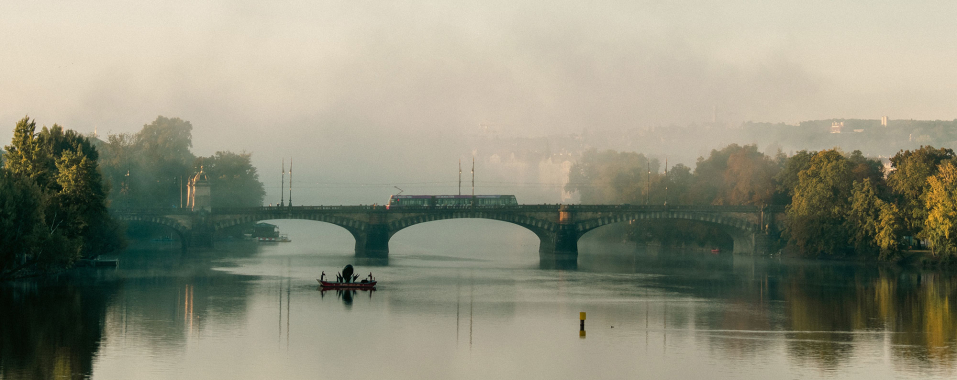
Bohemian Switzerland is an altogether different country in autumn. When October mist drapes itself over the sandstone arches and the trails fall silent, the landscape achieves a hush that summer's forest of selfie sticks could never permit—though winter, too, holds its own austere enchantment. For something truly otherworldly, I seek out Rejvíz at dawn, when a thick fog blankets the bog and the world dissolves into a scene more Nordic than Central European.
In Písek, the river speaks most clearly in the cool stillness of late autumn or early spring, freed from the weight of crowds. And at Svatý Jan pod Skalou, winter strips the landscape to its bones, lending it an almost mystical air—a place where the veil between the seen and the unseen grows beautifully thin.
Bohemian Switzerland is an altogether different country in autumn. When October mist drapes itself over the sandstone arches and the trails fall silent, the landscape achieves a hush that summer's forest of selfie sticks could never permit—though winter, too, holds its own austere enchantment. For something truly otherworldly, I seek out Rejvíz at dawn, when a thick fog blankets the bog and the world dissolves into a scene more Nordic than Central European.
In Písek, the river speaks most clearly in the cool stillness of late autumn or early spring, freed from the weight of crowds. And at Svatý Jan pod Skalou, winter strips the landscape to its bones, lending it an almost mystical air—a place where the veil between the seen and the unseen grows beautifully thin.
In Czechia, some foods seem to belong to a particular landscape—or to a particular kind of life. Třeboň Carp is inseparable from the ponds of South Bohemia, where centuries-old fishponds have made carp not merely a local staple but a quiet expression of the region’s landscape and sustainable food traditions.
In Moravia, Olomouc Cheese, or Tvarůžky, tells a different story. Its pungent, fermented character grew out of Moravian working-class life: inexpensive, low in fat, and once a practical source of nourishment for farmers and laborers. Today, it survives as a proudly distinctive local taste, still most at home in the region’s traditional pubs.
I find something revealing in these foods. One comes from the water and the landscape; the other from work and necessity. Both taste, in their own way, like the places that made them.
In Moravia, Olomouc Cheese, or Tvarůžky, tells a different story. Its pungent, fermented character grew out of Moravian working-class life: inexpensive, low in fat, and once a practical source of nourishment for farmers and laborers. Today, it survives as a proudly distinctive local taste, still most at home in the region’s traditional pubs.
I find something revealing in these foods. One comes from the water and the landscape; the other from work and necessity. Both taste, in their own way, like the places that made them.
A Taste of Place
What does Czech food reveal about place and class?
Meals That Mean Something
What foods do locals reserve for private moments, not public display?
What foods do locals reserve for private moments, not public display?
Some dishes never become attractions because they belong to specific moments in local life. In early winter, rural families still gather for the pig slaughter feast—zabijačka—turning every part of the animal into blood sausage, klobása, and liver dishes. It's not a show; it's an old ritual of resourcefulness and community.
Christmas Eve brings fried carp with potato salad, preceded by fish soup and Christmas bread. Scales from the carp are tucked under plates—an old gesture for luck and money in the year ahead.
And in Pardubice, gingerbread is still baked from centuries-old recipes, not mass-produced for souvenir shops. These are foods that carry meaning precisely because they're not for sale.
Christmas Eve brings fried carp with potato salad, preceded by fish soup and Christmas bread. Scales from the carp are tucked under plates—an old gesture for luck and money in the year ahead.
And in Pardubice, gingerbread is still baked from centuries-old recipes, not mass-produced for souvenir shops. These are foods that carry meaning precisely because they're not for sale.
I would skip the tourist-shop Trdelník and the matryoshka dolls—neither tells much of the Czech story—and look instead for things made with a deeper sense of place. Hand-cut Bohemian crystal, from a small workshop in Vinohrady or the historic Moser tradition, carries something of the country’s long relationship with glass. Czech garnet, mined in northern Bohemia, is another; look for a certificate of authenticity from Granát Turnov.
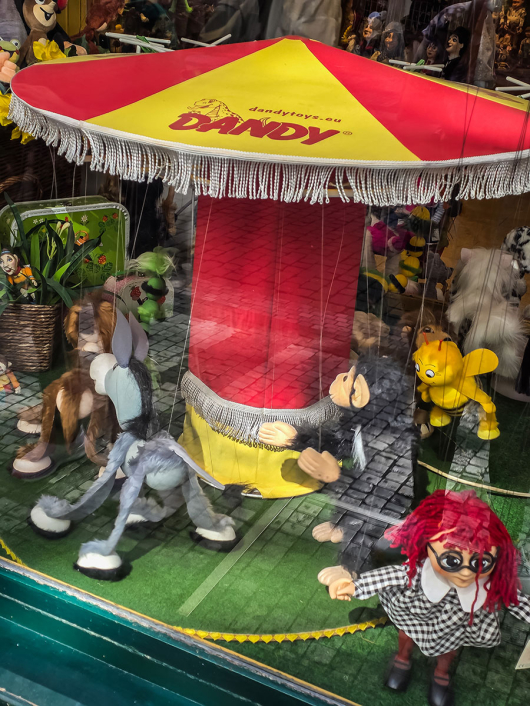
Then there are wooden marionettes, where craftsmanship becomes something closer to art; Becherovka, the herbal liqueur from Karlovy Vary, perhaps enjoyed in the local Beton cocktail; and Modrotisk, the indigo-dyed textiles whose hand-blocked patterns preserve an older visual language.
I prefer souvenirs that do not simply say I was here. They quietly say this place stayed with me.
Then there are wooden marionettes, where craftsmanship becomes something closer to art; Becherovka, the herbal liqueur from Karlovy Vary, perhaps enjoyed in the local Beton cocktail; and Modrotisk, the indigo-dyed textiles whose hand-blocked patterns preserve an older visual language.
I prefer souvenirs that do not simply say I was here. They quietly say this place stayed with me.
Things That Remember
What can I bring home that keeps the journey alive?
What can I bring home that keeps the journey alive?
The Artisan's Breath
What survives the modern age?
What survives the modern age?
When I trace the artisanal soul of the Czech Republic, I find myself walking a fragile fault line between heritage that breathes and crafts quietly fading into memory. On the sunlit side of this divide, the legacy of Vamberk lace—woven for four centuries and fiercely protected—still thrives in the quiet intimacy of family workshops. The luminous glory of Bohemian crystal continues to catch the light in the Crystal Valley and the storied kilns of Moser, while the ancient, rhythmic stamp of indigo block printing still breathes life into the textiles of Strážnice.
Yet, just beyond this light, the shadows are lengthening. I watch as the delicate, exacting art of hand-blown glass in small, independent studios slowly dims; the younger generation seems reluctant to inherit such a punishing trade. Similarly, the earthy craft of traditional ceramics is being pushed to the margins. Crushed beneath the relentless weight of mass production and cheap imports, it survives now only in the stubborn hands of a few devoted village artisans—a quiet testament to a world slipping, almost imperceptibly, away.
Yet, just beyond this light, the shadows are lengthening. I watch as the delicate, exacting art of hand-blown glass in small, independent studios slowly dims; the younger generation seems reluctant to inherit such a punishing trade. Similarly, the earthy craft of traditional ceramics is being pushed to the margins. Crushed beneath the relentless weight of mass production and cheap imports, it survives now only in the stubborn hands of a few devoted village artisans—a quiet testament to a world slipping, almost imperceptibly, away.
The Loop Beyond Prague
Where can one day reveal a country's other life?
Where can one day reveal a country's other life?
Leave Prague heading east and you enter a quieter country. Perched above the Sázava River, Český Šternberk Castle has stayed in the same noble family for over 770 years—not a museum piece, but a home that carries its history lightly.
Nearby, Kutná Hora was once among Europe's wealthiest cities, built on silver. Skip the famous bone church and walk instead beneath the soaring ribs of St. Barbara's Cathedral; it speaks of a time when this town rivaled Prague itself. Then Nymburk, with its stout brick walls, carries the trace of Dutch settlers who left their mark on Bohemia centuries ago.
The loop ends where you least expect it—Milovice. A former Soviet military base has been given back to nature. Wild horses graze the open plain alongside European bison and aurochs-like cattle, as if the land has exhaled after decades of holding its breath. In one day, you see how this country endures: in stone, in faith, and finally in grass.
Nearby, Kutná Hora was once among Europe's wealthiest cities, built on silver. Skip the famous bone church and walk instead beneath the soaring ribs of St. Barbara's Cathedral; it speaks of a time when this town rivaled Prague itself. Then Nymburk, with its stout brick walls, carries the trace of Dutch settlers who left their mark on Bohemia centuries ago.
The loop ends where you least expect it—Milovice. A former Soviet military base has been given back to nature. Wild horses graze the open plain alongside European bison and aurochs-like cattle, as if the land has exhaled after decades of holding its breath. In one day, you see how this country endures: in stone, in faith, and finally in grass.
The Frayed Edges
What lies beyond the map
What lies beyond the map
To find the true edges of a nation, I have learned, one must step off the paved paths of its official story. In the Czech Republic, it is the marginal and the forbidden that shatter the postcard clichés of gentle green hills and gothic spires.
Take the Brdy military zone. Once a strictly forbidden army enclave, it has now bloomed into a post-military Eden, where rare flora and silent trails reclaim the earth. Yet, the ghost of the Cold War lingers at Javor 51; though officially abandoned, this mysterious bunker remains fiercely guarded, a secret the state is not yet ready to whisper.
The landscape itself rebels against the familiar. In Moravia, the Hranice Abyss plunges over 137 meters into the earth—the world’s deepest flooded sinkhole—shattering the tranquil image of Bohemian hills with a dizzying descent into the dark. Further north, along the Polish border, the Adršpach-Teplice Rocks rise like ancient, petrified giants. Wandering through its narrow canyons and hidden lakes, I felt I had stepped into a mythic realm carved by time.
Finally, in Czech Silesia, around Opava and the Hlučín region, the borderland reveals its beautiful, tangled complexity. Here, Czech, Polish, German, and Silesian identities engage in a perpetual, quiet dialogue with collective memory, proving that a nation's true heart often beats loudest at its frayed edges.
Take the Brdy military zone. Once a strictly forbidden army enclave, it has now bloomed into a post-military Eden, where rare flora and silent trails reclaim the earth. Yet, the ghost of the Cold War lingers at Javor 51; though officially abandoned, this mysterious bunker remains fiercely guarded, a secret the state is not yet ready to whisper.
The landscape itself rebels against the familiar. In Moravia, the Hranice Abyss plunges over 137 meters into the earth—the world’s deepest flooded sinkhole—shattering the tranquil image of Bohemian hills with a dizzying descent into the dark. Further north, along the Polish border, the Adršpach-Teplice Rocks rise like ancient, petrified giants. Wandering through its narrow canyons and hidden lakes, I felt I had stepped into a mythic realm carved by time.
Finally, in Czech Silesia, around Opava and the Hlučín region, the borderland reveals its beautiful, tangled complexity. Here, Czech, Polish, German, and Silesian identities engage in a perpetual, quiet dialogue with collective memory, proving that a nation's true heart often beats loudest at its frayed edges.
Where the Margins Begin
Where does Czechia’s alternative culture live?
Where does Czechia’s alternative culture live?
Some of Czechia’s smaller towns and rural edges offer quiet doorways into worlds that exist beyond the mainstream. Near Hražďovice, ArtMill, an old mill turned refuge for regenerative arts, has grown into a queer-led community shaped by permaculture and a deliberately independent spirit.
That instinct has deeper roots. During the dark years of Normalization, the village of Nová Víska became a gathering place for young counterculture movements. On the outskirts of Prague, the abandoned Squat Milada was later transformed into a squatted communal space and cooperative workplace built around an egalitarian ideal.
And in the small town of Tišnov, an affinity community continues to cultivate its own identity, quietly pushing against conventional ways of living and thinking. I find these places revealing: sometimes the most interesting culture is not found in the center, but just beyond it.
That instinct has deeper roots. During the dark years of Normalization, the village of Nová Víska became a gathering place for young counterculture movements. On the outskirts of Prague, the abandoned Squat Milada was later transformed into a squatted communal space and cooperative workplace built around an egalitarian ideal.
And in the small town of Tišnov, an affinity community continues to cultivate its own identity, quietly pushing against conventional ways of living and thinking. I find these places revealing: sometimes the most interesting culture is not found in the center, but just beyond it.
A Country for the Quiet Traveler
Who belongs here, and who should stay away?
Who belongs here, and who should stay away?
The Czech Republic is paradise for those who travel to slow down. If you want calm and affordability, Olomouc, Brno, and Telč deliver what Prague withholds. Hikers find their rhythm in Bohemian Switzerland and Bohemian Paradise—sandstone and pine, not crowds. Beer and wine people are home in Plzeň, where pilsner was born, and in the vineyards of South Moravia. History lovers drown happily in castles, medieval squares, and UNESCO towns.
But the country is a mistake for those who never leave Prague and judge the whole nation by the Charles Bridge. It disappoints visitors who expect warm hospitality and easy smiles, or who bring young children with no plan beyond the main squares. And if you don't like walking, you'll miss what this landscape was made for.
I think the truth is simple: the Czech Republic rewards patience and refuses to perform. Come as you are, but leave your hurry at the border.
But the country is a mistake for those who never leave Prague and judge the whole nation by the Charles Bridge. It disappoints visitors who expect warm hospitality and easy smiles, or who bring young children with no plan beyond the main squares. And if you don't like walking, you'll miss what this landscape was made for.
I think the truth is simple: the Czech Republic rewards patience and refuses to perform. Come as you are, but leave your hurry at the border.
The Sound of Czechia
Lost in the Desert Sky
Keyhan Kalhor
Flower’s Reward
Mehran Mobini
Konj-e-Kharabat
Gholam Hossein Fathi
Keep Roaming
Contact@roamandrecord.com
We are waiting for your kind messages