

Writing about memories from the distant past is never easy, especially for someone like me, whose memory has never been particularly reliable. But some memories have a curious way of sticking around. They settle in and refuse to leave, perhaps for the rest of our lives.
The morning after our wedding, I could barely drag myself out of bed. I was exhausted. Now, don't let your imagination run wild! The hairdresser had decorated my wife's hair with what seemed like an endless number of hairpins and clips, and I'd spent several hours trying to remove every last one of them. I think it was close to five in the morning when I finally managed to pull out the very last pin.
The first thing I did after waking up was call my friends. They had really gone all out to make our wedding party special, and I owed them a big thank-you.
When Hossein answered, he could barely get a word out. Knowing what an early riser he was, I immediately began to worry.
"I can't move!"
That didn't exactly put my mind at ease. I started wondering if he'd had some kind of accident.
"My whole body aches!"
I was just about ready to get up, ask him which hospital he was in, and rush over when he added:
"I think I overdid it on the dance floor!"
What a relief! And to be fair, he had every reason to complain. He really had overdone it. During the party, he'd unleashed dance moves I'd never seen from him in all the fifteen years we'd known each other. And the best part? He wasn't drunk, nor had he taken anything. He'd done all of it perfectly sober, in his usual state of mind.
Well, at least nothing serious had happened to him. That, in itself, was something to be thankful for!
I'd planned everything for our honeymoon well in advance. But the trip wasn't until the following day, and for now, we had breakfast to attend to — though not at our own home. According to a tradition still observed in some Iranian families, the newlyweds have their first breakfast after the wedding at the bride's parents' house. And what a breakfast her mother had laid out for us! Cheese, several kinds of homemade jam, an omelette, and freshly baked bread.
After breakfast, I headed to the office to get a few things in order. After all, I was about to take a week off work. My colleagues weren't expecting to see me. They all assumed our honeymoon would begin that very day.
Most people tend to choose the usual romantic suspects for their honeymoon: Bali, the Maldives, Venice, Paris, Rome, Santorini, or perhaps Thailand. But we had something a little more avant-garde in mind: the desert!
The following morning, we boarded a plane at the airport and left Tehran behind, heading for Yazd. It was both the first and the last time I'd ever fly to Yazd. Until then, I'd always made the journey by car.
I'd also arranged in advance for a local guide to join us during our few days in Yazd and show us around this desert city.
A lot of people have trouble with their names, especially during their teenage years. They wish they had a different one. I never did. I was quite happy with my name, but it did cause me plenty of trouble. Just not the kind of trouble most people have with theirs.
My name is Faez. It's not a particularly common name for boys in Persian. Not unheard of, exactly, but certainly unusual. It's actually a girl's name, with just a slight variation in spelling: Faeze.
Throughout my life, people have often mistaken my name for a woman's. At first, I used to go to great lengths to correct them. But somewhere along the way, I simply gave up.
And it seemed this little problem wasn't going to leave us alone, not even on our honeymoon!
When we landed in Yazd, our local guide was waiting for us in the airport arrivals hall. The moment he spotted us, his face lit up with such excitement that I began to wonder if he knew me from somewhere. My job had taken me to almost every corner of Iran, and I'd met plenty of people along the way, but his face meant absolutely nothing to me.
He seemed almost ridiculously cheerful. I felt too awkward to ask what had made him so happy, especially during our very first encounter. He picked up our suitcase, and we followed him to the car.
Once we were on the road, he kept glancing at me in the rear-view mirror, wearing the same big smile. Being polite, I smiled back. But when we pulled up outside the hotel and were about to get out, he could no longer contain himself. He finally explained the reason for all that excitement:
"When the travel agency sent me the guests' names, I thought I was picking up two women. And you know how it usually goes with two women? They're often two older ladies who love to complain about everything and find fault with every little thing. So when I saw that my guests were actually a young married couple, it made my day! I was over the moon!"
Well, this time, my rather feminine name had solved someone else's problem!
This trip turned out to be less of a chance to relax and unwind and more of a full-blown adventure. Every morning, we'd get up at six and spend the day exploring one attraction after another with our guide, often staying out until midnight. He was a patient man, and we were the sort of travellers who were more than happy to go along with his plans.
On our last day, he admitted that he'd had a wonderful time with us. Since he wasn't going to get an extra tip for saying so, I decided to believe him!
We spent two days exploring the city, wandering through the old streets and discovering the historic heart of Yazd.
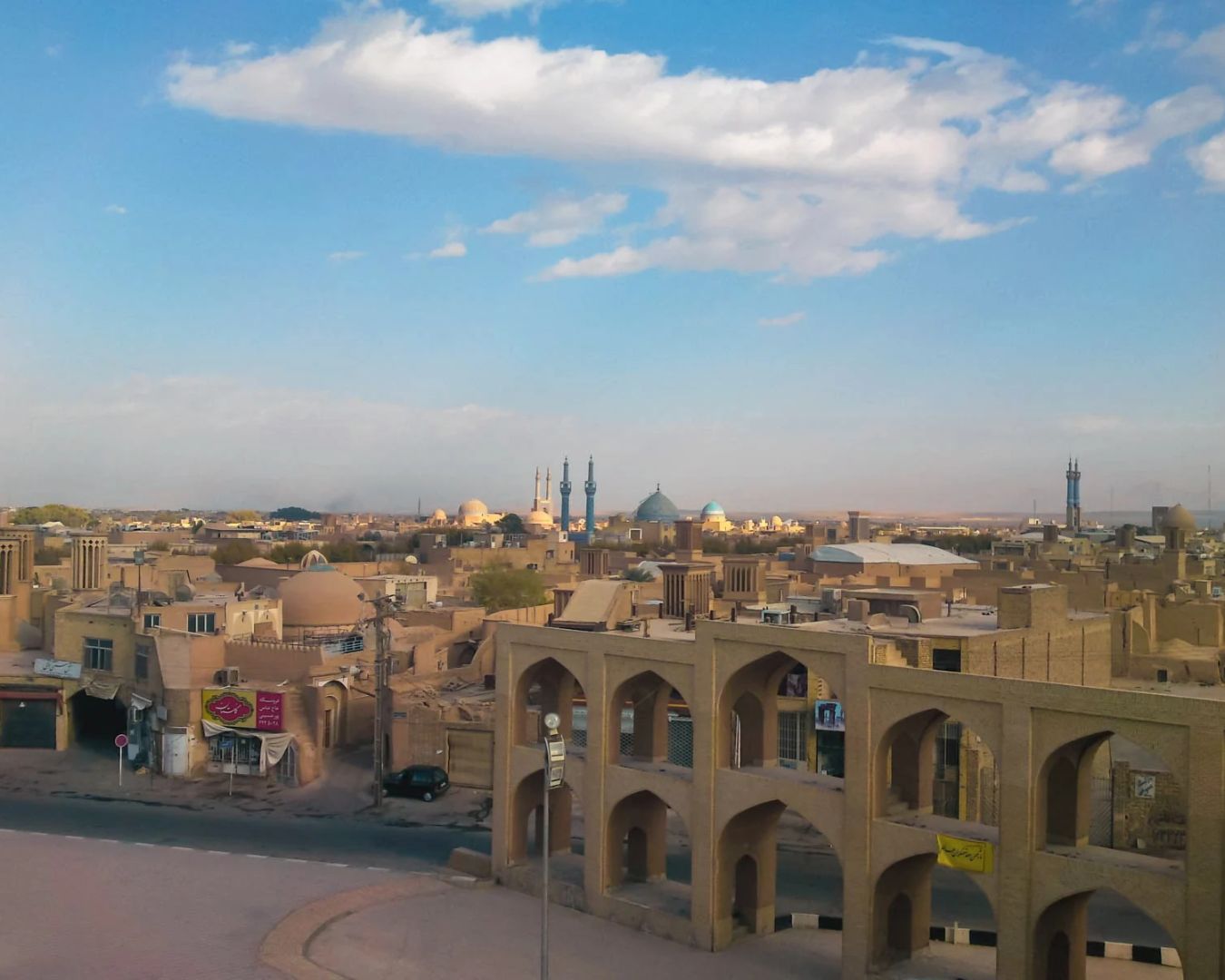
We visited Amir Chakhmaq Square, one of the city's best-known landmarks and an unmistakable symbol of Yazd. The square dates back to the Timurid era, around the ninth century of the Islamic calendar. Back then, getting up to the rooftop of the Amir Chakhmaq complex wasn't something everyone could do. But our guide managed to pull a few strings, and we got to admire the city from above. Yazd is a fairly low-rise city, which makes seeing it from a higher vantage point all the more special.
We also saw the Nakhl of Amir Chakhmaq, an enormous wooden structure made from heavy tree trunks. During the mourning ceremonies of Muharram, local people carry it through the streets of Yazd. It's believed to be at least 450 years old.
Standing beside it gave me a rather special feeling. My wife, meanwhile, kept giving me suspicious sideways glances, just in case I decided to touch something! I couldn't help pointing out: "Really? Hundreds of people carry this enormous thing around the square, and the one thing we need to worry about is my palm touching it?"
Not far from there, we visited the Yazd Water Museum, housed in an old traditional mansion. Today, it tells the story of how people in this desert region managed to find, store and distribute water. Yazd and the surrounding towns are dotted with old water reservoirs and qanats (underground aqueducts). Some of these ancient water systems still leave water specialists amazed.
Whenever I see people in the streets and alleys of Tehran wasting water for no good reason, I find it hard to believe they're descendants of the very people who once considered water sacred and treated every last drop with extraordinary respect.
We also visited the Jameh Mosque of Yazd, a building that feels like a history book in its own right. The mosque stands on the remains of a Sassanid-era fire temple, and its foundations date back to the period when the Buyid dynasty ruled parts of Iran. It was later expanded and completed over several centuries, particularly during the Timurid era. In a way, it's a living account of how Persian architecture evolved after the arrival of Islam.
I find it almost impossible to take my eyes off its tilework. Among all those intricate patterns, you can spot plenty of symbols rooted in ancient pagan traditions. Interestingly, my wife's name has a connection of sorts to some of these ideas too: Pegah, meaning the first light of dawn, when the sun begins to rise.
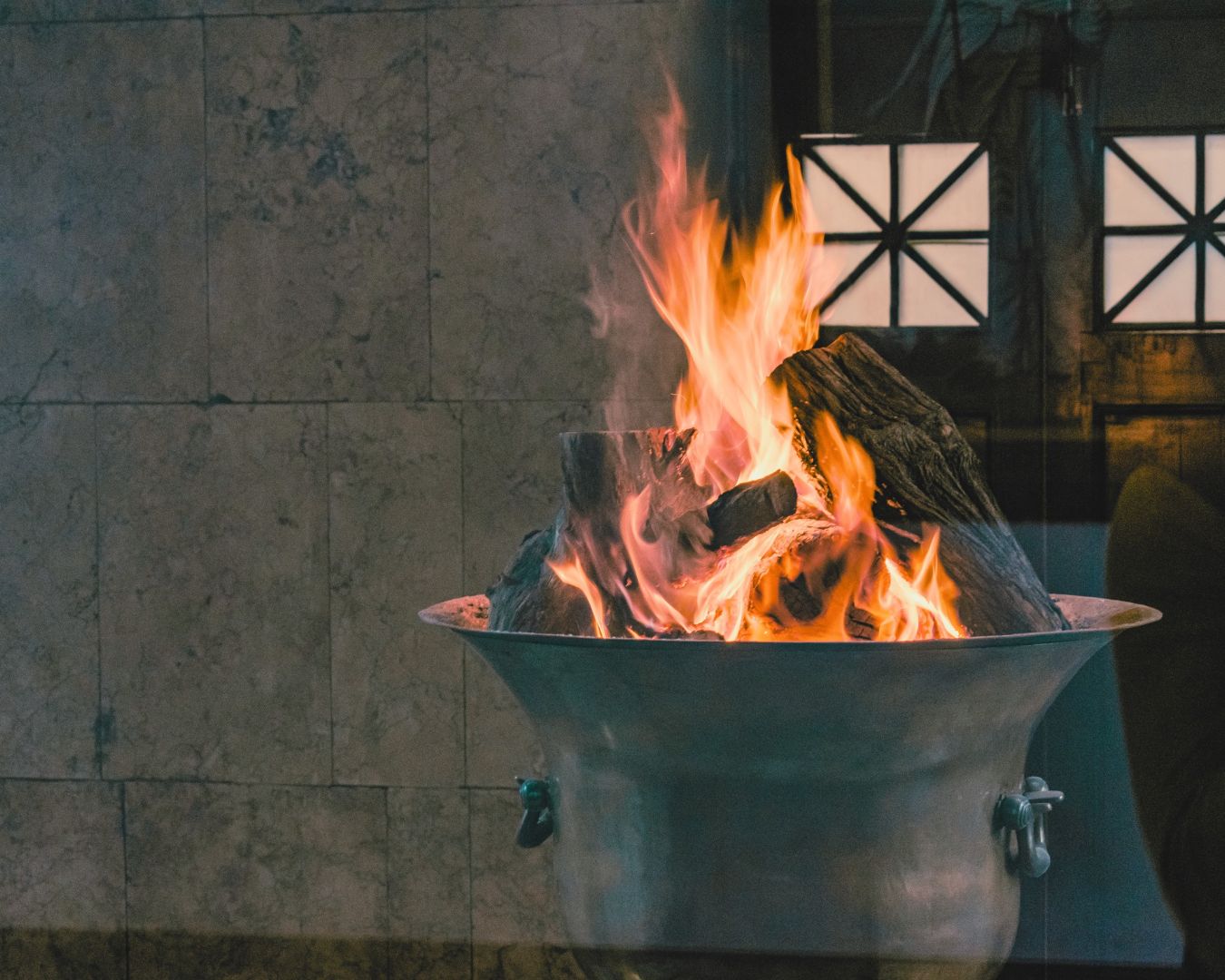
We also visited the Yazd Fire Temple. The present building is just over a century old, but the sacred fire kept inside is said, according to Zoroastrian tradition, to have been burning continuously for more than 1,500 years.
Then there was Dowlat Abad Garden, one of nine Persian gardens recognised as UNESCO World Heritage Sites. Rising above its main pavilion is the tallest windcatcher in the world, a remarkable example of traditional Persian architecture.
We also visited the Zoroastrian Towers of Silence, once used by Zoroastrians for the exposure of their dead. It's a rather extraordinary story, but I'll save that for another time.
Alexander's Prison, the Yazd Termeh Museum, the Six-Windcatcher Water Reservoir, the Lariha House, the Tehraniha House, Malek-o-Tojjar House, and plenty of other places were on our list too. So many, in fact, that I've now forgotten the names of some of them!
We made a day trip to Ardakan, devoted another day to Meybod, and spent yet another visiting Chak Chak, a sacred pilgrimage site for Zoroastrians. You could think of it as something like Mecca for Zoroastrians. That, too, has a fascinating story behind it, which I'll leave for another post.
And then we set aside an entire day for one thing:
The desert.
In fact, when we first started looking for a honeymoon destination, the desert was our first choice. To me, the desert is the very embodiment of peace: silence given a physical form across the face of the earth. I think it's the most beautiful natural landscape on the planet.
If we could take words like silence, tranquillity, peace of mind, stillness, and every other word that suggests a gentle kind of motionlessness, hand them over to Mother Nature, and ask her to turn them into something tangible, I can't imagine the result being anything other than a desert.
This time, we were up at five in the morning. We left so early that we even missed the hotel breakfast, which was no small sacrifice. The table had been laden with local delicacies: all sorts of jams, different combinations of dates, tahini with grape molasses, delicious local breads, and traditional Iranian tea. But there was no choice. We had a long journey ahead, and a trip into the desert wasn't something you could afford to be casual about when it came to timing.
Our first stop was the village of Garmeh, a place that Maziar had brought back to life. He had returned from France, drawn home by his love for his native land.
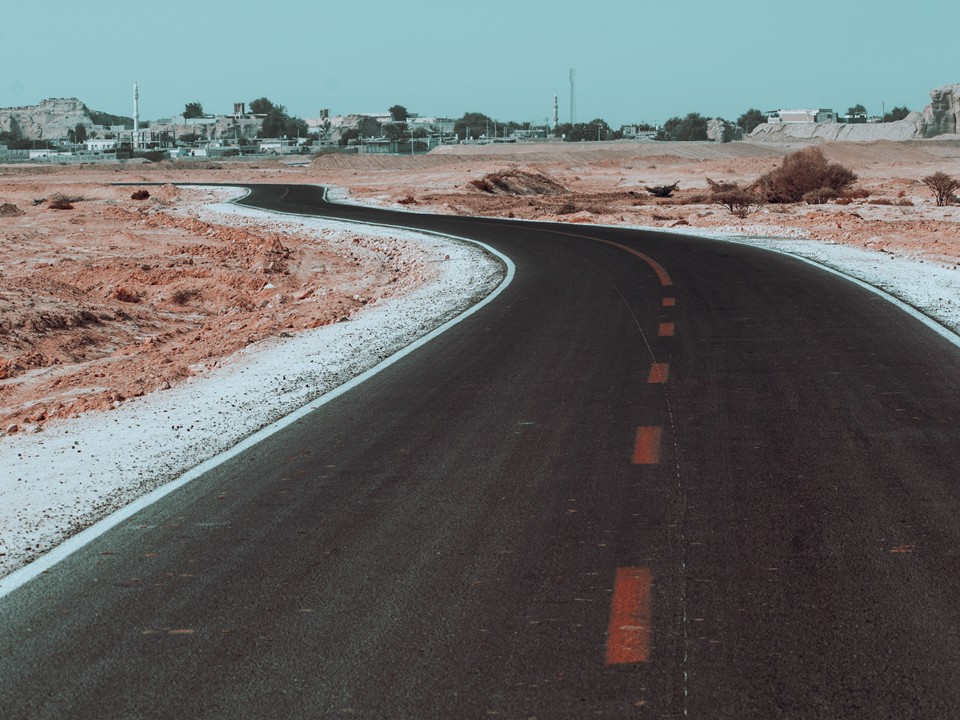
The road was quiet and almost empty. Although our guide was doing the driving, I couldn't bring myself to close my eyes. Everything about the desert fascinated me. Before reaching Garmeh, we stopped several times along the way to get out and experience some of its beauty up close.
Every time we had to get back into the car and I took a little too long to say goodbye to the landscape, all I got in return was another disapproving look from our guide!
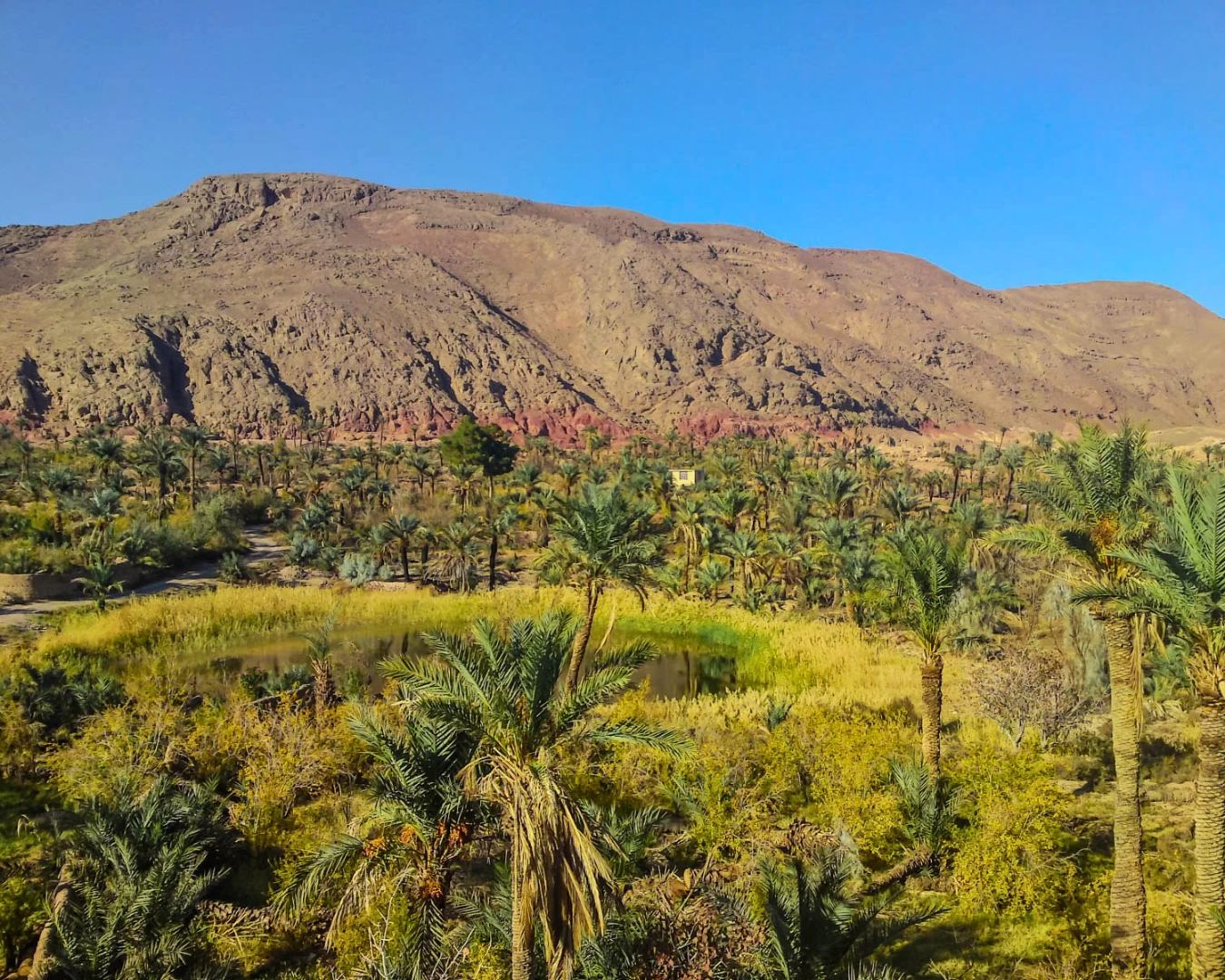
At last, we arrived in Garmeh. The village was almost deserted, with very few people still living there. There were hardly any jobs or businesses left, and most of the younger generation had moved to the cities. Only a handful of families remained, looking after the date palm groves.
Things may have changed since then. With the village now attracting more tourists, some families might even have moved back. Tourism can be tempting, after all. It brings money and, perhaps, a new lease of life to places like this.
I've returned to the desert many times since our honeymoon, but I've never gone back to Garmeh. Somehow, I don't want to tamper with the particular magic of that first visit by trying to recreate it.
Before heading to Maziar's guesthouse, my wife and I decided to take a little walk around the village. Back then, foreign visitors seemed to outnumber Iranian tourists in Garmeh. I should admit that I have absolutely no statistics to back this up! My only evidence was two children we ran into during our walk. They spotted us from a distance, waved enthusiastically, and greeted us with a hearty "Hello!" instead of the usual Persian "Salam".
Not wanting to disappoint them, we answered in English too! They seemed much more interested in talking to my wife, though. I just kept butting in every now and then, as if to remind them that I was there too!
We also stopped for a chat with one of the village farmers. He was determined to give us a lif-e khorma — a whole bunch of fresh dates still attached to the stem. In the end, we somehow managed to convince him that we had no way of taking them with us.
At the far end of our walk, we came across a spring bubbling up in the middle of the desert. The villagers had built a small channel to carry its water towards the gardens.
Had our guide not called to check on us, we might well have spent the rest of the day wandering around the village. But lunchtime had arrived, and there was no getting around it. We had to head back.
Besides us, four other guests were staying with Maziar, and we were all going to have lunch together.
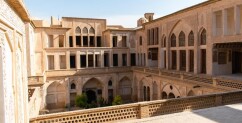
It was an old mud-brick house, perhaps one of the earliest examples of an eco-lodge in Iran. At its centre was a small, covered courtyard, with guest rooms built around it and on the upper floor.
Next to the courtyard was a cosy sitting area for guests. It served as a dining room, but also as a place to sit back, drink tea and enjoy some fruit.
In the middle of the room, on a beautiful red Persian handwoven carpet, sat a fruit bowl filled with several large, split-open pomegranates. The samovar was gently bubbling away, with a white porcelain teapot decorated in traditional Qajar-style patterns resting on top.
Freshly brewed Iranian tea.
Lunch was rice with eggplant stew. The moment I heard what was on the menu, I felt as if all my wishes had come true! I'm crazy about eggplants. I even eat them raw. But that particular stew turned out to be one of the most delicious dishes I've ever tasted. To this day, it's still comfortably the best stew I've ever had. Nothing else has come close.
An elderly woman had prepared the meal. She might have been Maziar's mother, though I never got around to asking.
Once we'd finished lunch and enjoyed our customary after-lunch tea, we set off for the next village: Mesr.
The sand dunes were a constant presence throughout the journey, while the breeze kept putting on a little show, sending ripples of sand dancing down their slopes. We stopped several more times and wandered off into the dunes. But the moment we got a little too far from the car, our guide's voice would ring out, rather like an alarm going off! To be fair, he had a schedule in mind and was determined to fit everything into the day.
Mesr is the last village before you reach the open desert. These days, the road running through it has become something of a gathering spot for desert explorers and off-road enthusiasts. The village isn't quite as untouched as Garmeh, but the Mesr Desert itself is truly captivating.
They had arranged a camel ride for us so we could watch the sunset from the dunes. I climbed onto the camel in front, while my wife took the one behind me. But just as the camels began to rise, my wife took flight and came crashing down onto the sand in a spectacular landing! Two local children playing nearby burst out laughing.
Luckily, the camel's owner got the animal to kneel again, and my wife eventually managed to climb aboard. Off we went, riding through the dunes and taking in the scenery. Along the way, my camel also managed to eat almost half of my wife's green scarf! Well, it was green, after all. The poor creature probably mistook it for a leaf or something.
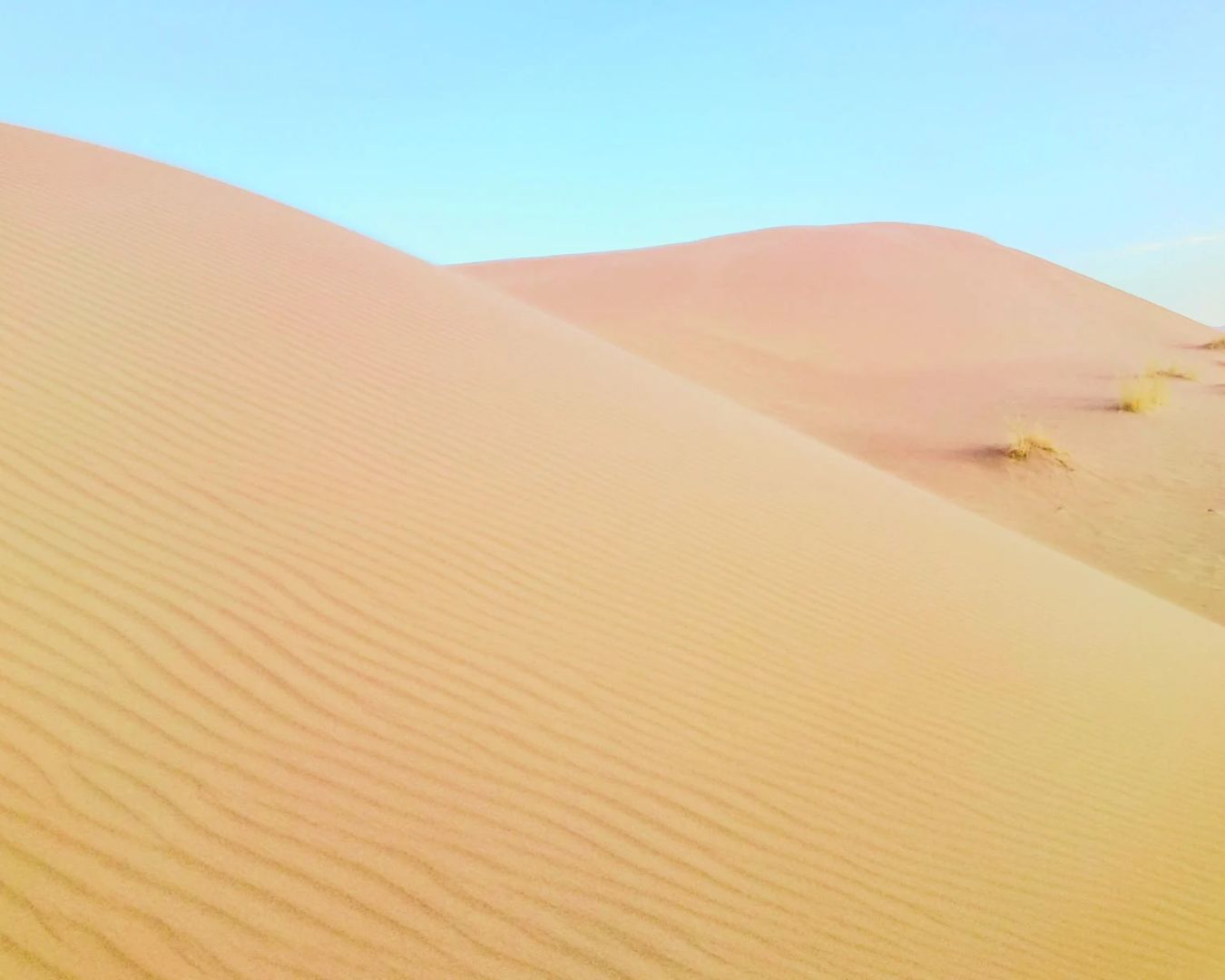
We spent the sunset among the dunes, and as darkness began to settle in, we climbed back into the car and headed for Yazd.
The road had disappeared into complete darkness. There wasn't much traffic. Every now and then, a car would appear from the opposite direction and pass us by. Somewhere along the way, our driver suddenly pulled onto the dirt shoulder and stopped. He hadn't said a word about it beforehand.
We got out of the car. He switched off the headlights. There were no approaching vehicles, either behind us or coming from the opposite direction. Just absolute darkness and an almost overwhelming silence.
A few seconds later, he asked us to look up.
And that's when we saw the most extraordinary sight of our lives.
The desert sky, on a night the moon had yet to visit. Millions upon millions of stars were scattered across the heavens, shining like tiny lights. The Milky Way seemed only a few hundred metres away. I wanted to reach up and pick a star. It almost seemed possible. As if there was hardly any distance between us and those distant lights.
The beauty of it was almost overwhelming. I stood there with my head tilted back, simply staring. I couldn't help thinking that perhaps there was a reason so many mystics had emerged from the deserts of Iran. A night sky like this, all on its own, seemed enough to set anyone on the path to spiritual discovery.
I only wished I knew the names of the stars and constellations. But back then, and even now, I'm hardly an expert on the night sky. So I started making up names of my own, moving my gaze from one cluster to another: a rose, a drop of water, a turtle, half a waterfall. I could have stood there for the rest of my life, just looking up.
I found myself longing for the sky above my own city, Tehran, where even a handful of stars are difficult to make out through the layers of air pollution.
I could have summed up our entire honeymoon in that one star-filled sky. Throughout those moments, my wife's hand was my only connection to the earth. I could feel its warmth while, at the same time, imagining her soul soaring and dancing among the stars.
I was completely lost in the stars and my rather poetic thoughts when, all of a sudden, someone grabbed my hand and pulled me towards them. It was our guide. Less than a second later, I heard the deafening roar of a truck passing right beside us. I hadn't even noticed it approaching.
And just like that, everything fell apart. The dream, the poetry, the magic of the moment. The truck had torn right through our little pocket of peace!
Our feet may be firmly planted on the ground, but the sky is right above our heads. Once the noise, artificial lights and pollution of our cities are out of the way, we're really not that far from the heavens.
Perhaps if we learned to live a little more slowly, and gently raised our hands towards the sky, carefully enough not to wake the sleeping stars, we might even be able to pick one for ourselves!