My Notes on
C H I N A

A Sense Called China
If a country is never just one color or one taste, but a relentless collision of all of them, how do we ever truly hold it in a single sense?
If a country is never just one color or one taste, but a relentless collision of all of them, how do we ever truly hold it in a single sense?
What I received from China is far more intricate than any single feeling I’ve had in a Western country, like Italy. If China were a sense, its sounds, smells, colors, and tastes would never hold still in isolation. In the ear, the layered clamor of the floating morning markets along the Yangzi mingles with the ring of electric bicycles and the clipped announcements crackling from high-speed rail platforms.
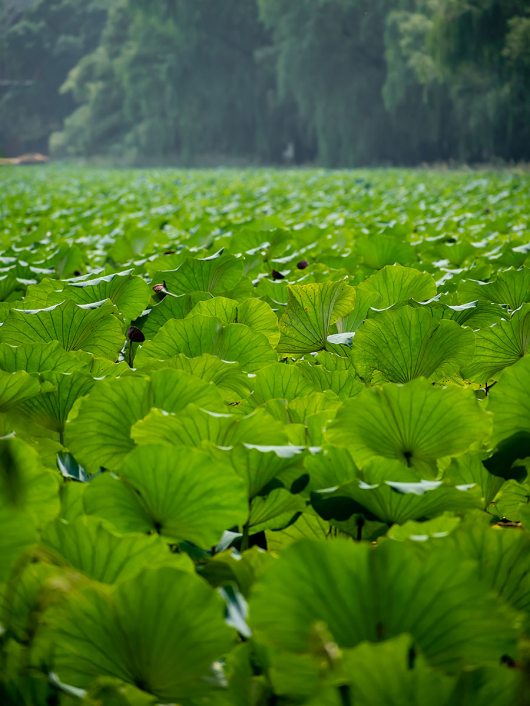
In the nose, the sharp, fermenting perfume of Anhui’s famously stinky fish drifts into the resinous scent of camphor and the earthy depths of Pu’er tea, winding through Yunnan’s narrow backstreets. Before the eyes, traditional lacquer-red wrestles with the cyberpunk grey of concrete and the jade green of terraced rice paddies. On the tongue, the deep, numbing umami of Sichuan pepper settles softly against the gentle, milky sweetness of steamed desserts.
In the nose, the sharp, fermenting perfume of Anhui’s famously stinky fish drifts into the resinous scent of camphor and the earthy depths of Pu’er tea, winding through Yunnan’s narrow backstreets. Before the eyes, traditional lacquer-red wrestles with the cyberpunk grey of concrete and the jade green of terraced rice paddies. On the tongue, the deep, numbing umami of Sichuan pepper settles softly against the gentle, milky sweetness of steamed desserts.
The City That Refuses the PostcardWhere does a country most dramatically betray its own tourist image?
Tourists come looking for ancient temples and the hush of village life. Chongqing, though, is thirty-two million people packed into a cyberpunk metropolis that doesn't care what you expected.
A train slices through the middle of an apartment block, roads stack on top of each other like forgotten shelves, and the thick Yangtze fog wraps it all in something dystopian—yet stubbornly, impossibly alive. It's the China that shrugs off the postcard.
A train slices through the middle of an apartment block, roads stack on top of each other like forgotten shelves, and the thick Yangtze fog wraps it all in something dystopian—yet stubbornly, impossibly alive. It's the China that shrugs off the postcard.
The Dividing Line
How does a single invisible line shape two entirely different ways of life?
How does a single invisible line shape two entirely different ways of life?
The Hu Line—a crooked, invisible stroke running from Heihe to Tengchong—splits China in two. East of it: the smaller piece, but pulsing with life. Ninety-four percent of the people crowd into forty-three percent of the land, shoulder to shoulder, drawing breath from the same cramped air.
But the west—the west belongs to mountains and desert and silence. Fifty-seven percent of the soil holds only six percent of the people, scattered nomads and quiet caravans. This line doesn't just divide land and water; it separates two fates: one bound to cities and density, the other loosed into vastness and wandering.
But the west—the west belongs to mountains and desert and silence. Fifty-seven percent of the soil holds only six percent of the people, scattered nomads and quiet caravans. This line doesn't just divide land and water; it separates two fates: one bound to cities and density, the other loosed into vastness and wandering.
Where the Map Starts to Lie
What happens when a country's edges feel like somewhere else?
What happens when a country's edges feel like somewhere else?
Some corners of China don't feel like China at all. In Yanji, Jilin Province, bilingual Chinese-Korean signs crowd the streets, kimchi and bibimbap steam from roadside stalls, and the architecture carries a whiff of Seoul—or Pyongyang, depending on the light.
Farther west, Manzhouli sits on the Inner Mongolian border like a Russian frontier town that lost its way: onion domes, a Matryoshka square, Slavic faces at every turn. And down south, Xishuangbanna dissolves into rainforest, Theravada temples, and night markets strung with lanterns—Thailand or Laos, almost, but not quite. These are the places where the map lies, where borders blur and the idea of "China" becomes a matter of interpretation.
Farther west, Manzhouli sits on the Inner Mongolian border like a Russian frontier town that lost its way: onion domes, a Matryoshka square, Slavic faces at every turn. And down south, Xishuangbanna dissolves into rainforest, Theravada temples, and night markets strung with lanterns—Thailand or Laos, almost, but not quite. These are the places where the map lies, where borders blur and the idea of "China" becomes a matter of interpretation.
Destination Digest
The Grammar of Small Gestures
How do small phrases and rituals unlock a culture's deeper codes?
How do small phrases and rituals unlock a culture's deeper codes?
In morning markets and food queues, conversation drifts toward the quality of homemade versus factory-prepared meals, the daily fluctuation of ingredient prices, and the quiet work of guanxi—those local networks of connection that smooth over life's small frictions. In this culture, mànmàn lái—"take it easy, don't rush"—is one of the keys that opens doors.
In a world wound tight with time and work, those two words create instant empathy; the other person's guard drops before they even notice. Another phrase, bù hǎo yìsi—"excuse me, sorry"—works like gold in crowded spaces, a small coin of courtesy that buys you passage through the thickest human traffic. And in hospitality, the ritual is simple: the host fills, and fills again. An empty cup or plate is a quiet failure.
Yet even this warmth has its boundary, called kèqi—politeness with a measure of restraint. To refuse an offer outright can read as disrespect; but to lean in too warmly can bruise the already fragile membrane of privacy that public life barely allows. The trick, I've come to feel, is learning the exact weight of each gesture—when to accept, when to decline, when to simply let the cup be filled and say nothing at all.
In a world wound tight with time and work, those two words create instant empathy; the other person's guard drops before they even notice. Another phrase, bù hǎo yìsi—"excuse me, sorry"—works like gold in crowded spaces, a small coin of courtesy that buys you passage through the thickest human traffic. And in hospitality, the ritual is simple: the host fills, and fills again. An empty cup or plate is a quiet failure.
Yet even this warmth has its boundary, called kèqi—politeness with a measure of restraint. To refuse an offer outright can read as disrespect; but to lean in too warmly can bruise the already fragile membrane of privacy that public life barely allows. The trick, I've come to feel, is learning the exact weight of each gesture—when to accept, when to decline, when to simply let the cup be filled and say nothing at all.
The Dance of Close Quarters
Where does a society reveal its truest rhythm?
Where does a society reveal its truest rhythm?
For a traveler fresh to China, grasping the country's social codes means leaving a few assumptions at the border. The "personal bubble" so sacred in the West barely exists here; being jostled in a queue or pressed shoulder-to-shoulder in the metro isn't rudeness—it's simply what eighty million people in motion require.
This physical fluidity spills into speech and the art of the bargain too. In traditional markets, haggling isn't war; it's a social dance, opened with a smile and an absurdly low offer, both sides knowing the steps. But if you want to feel the true pulse of this society, skip the museums and find a morning market instead.
Before sunrise, steam from dumpling pots rises through the shouts of vendors arguing over the price of greens, while old folks move through their tai chi, slow as breath, in the corner. Tradition and modernity, poverty and patience—all of it in a single frame. I stood there once, in that swirl, and felt the city breathe.
This physical fluidity spills into speech and the art of the bargain too. In traditional markets, haggling isn't war; it's a social dance, opened with a smile and an absurdly low offer, both sides knowing the steps. But if you want to feel the true pulse of this society, skip the museums and find a morning market instead.
Before sunrise, steam from dumpling pots rises through the shouts of vendors arguing over the price of greens, while old folks move through their tai chi, slow as breath, in the corner. Tradition and modernity, poverty and patience—all of it in a single frame. I stood there once, in that swirl, and felt the city breathe.
The Art of Lying Flat
What does it mean to truly live when every unhurried moment feels like falling behind?
What does it mean to truly live when every unhurried moment feels like falling behind?
In today's China, the line between "wasting time" and "living" cuts through the tension between the 996 work culture and the Tang ping movement. On one side, 996 still casts its shadow over much of the economy—treating any slowdown on the fast track as time squandered.
On the other, a younger generation has chosen a quiet resistance, lying flat against the weight of material pressure, insisting that life isn't measured in accumulation but in tea in the park, in small unhurried moments, in stepping off a race that never ends.
On the other, a younger generation has chosen a quiet resistance, lying flat against the weight of material pressure, insisting that life isn't measured in accumulation but in tea in the park, in small unhurried moments, in stepping off a race that never ends.
What draws me back to China isn't what it shows the world, but what it hides. Beneath the official stories, in the country's unseen layers, lie the forces that shape its soul. On the most personal level, there is the old virtue of chi ku—"eating bitterness"—a quiet belief that enduring hardship is itself a moral victory, written into the long hours and uncomplaining backs of an older generation.
In the bones of its cities, that same resilience hardens into resistance against the flattening machine of progress: the residents of the "nail houses," officially dismissed as obstacles, have become in local memory fragile monuments to the individual who refuses to be erased.
And deeper still, in the folds of the land, lies the silent legacy of the Third Front Construction, a Cold War gamble that buried factories in impassable mountains—leaving behind industrial ghost towns and abandoned tunnels that whisper a truer, more hidden China, the one no tour will ever take you to.
In the bones of its cities, that same resilience hardens into resistance against the flattening machine of progress: the residents of the "nail houses," officially dismissed as obstacles, have become in local memory fragile monuments to the individual who refuses to be erased.
And deeper still, in the folds of the land, lies the silent legacy of the Third Front Construction, a Cold War gamble that buried factories in impassable mountains—leaving behind industrial ghost towns and abandoned tunnels that whisper a truer, more hidden China, the one no tour will ever take you to.
What China Hides
What shapes China's soul when no one is looking?
What shapes China's soul when no one is looking?
Before you go looking for the hidden layers of China, I'd suggest packing three things. Watch Jia Zhangke's Still Life—a film at once brutal and poetic about old towns drowning behind the Three Gorges Dam, where ordinary people search for meaning in the rubble of "progress."
Read Yu Hua's To Live, which shows how everyday people have weathered history's great storms not through heroics, but through sheer endurance and a stubborn grip on daily life.
And listen to Zhao Lei's "Chengdu," whose acoustic guitar and nostalgic lyrics capture the ache of migration and the longing for a simplicity modern China has left behind. These aren't tourist tips; they're keys to a deeper journey.
Read Yu Hua's To Live, which shows how everyday people have weathered history's great storms not through heroics, but through sheer endurance and a stubborn grip on daily life.
And listen to Zhao Lei's "Chengdu," whose acoustic guitar and nostalgic lyrics capture the ache of migration and the longing for a simplicity modern China has left behind. These aren't tourist tips; they're keys to a deeper journey.
What to Carry Before You Go
How do we prepare ourselves to see the China beneath the surface?
How do we prepare ourselves to see the China beneath the surface?
Cities of China so far
Standing in the Cinema
What happens when a society's race leads nowhere but into itself?
What happens when a society's race leads nowhere but into itself?
Beneath the official talk of "cultural homogeneity," the real China has never been one thing. It is a continent of incompatible subcultures—the linguistic and mental distance between someone from Guangzhou and someone from Harbin is wider than the gap between a Frenchman and a German, leaving the traveler with an illusion of oneness.
But the fissure isn't only geographic. It lives in the national psyche, where the story of relentless growth collides with the grinding reality of neijuan—involution. There's a bitter national joke that captures it perfectly: everyone in the cinema stands up to see better, and in the end, all anyone gets is a sore neck. That's the nakedest picture of a generation's deepest fear.
They no longer laugh at the system; they laugh bitterly at the queue, at the endless race against their own peers—a race that brings no progress, only the quiet dread of being trapped in a cycle of instability and performative effort.
But the fissure isn't only geographic. It lives in the national psyche, where the story of relentless growth collides with the grinding reality of neijuan—involution. There's a bitter national joke that captures it perfectly: everyone in the cinema stands up to see better, and in the end, all anyone gets is a sore neck. That's the nakedest picture of a generation's deepest fear.
They no longer laugh at the system; they laugh bitterly at the queue, at the endless race against their own peers—a race that brings no progress, only the quiet dread of being trapped in a cycle of instability and performative effort.
Off the Beaten Path
What does it take to find the China that hasn't been polished for display?
What does it take to find the China that hasn't been polished for display?
If you want to taste the real China, you have to earn it. The Badaling section of the Great Wall, with its crowds, heavy restorations, and full commercial veneer, has long since surrendered its soul. Far better to head to Shaxi in Yunnan—a quiet, untouched remnant of the old Tea Horse Road, where ancient China still breathes without the tourist gloss of places like Lijiang.
In Shanghai, locals have kept the sleepy, non-commercial lanes of the Former French Concession for themselves: tucked away from the noise of Nanjing Road, they hold indie bookshops, tiny theaters, and cafés that belong to artists and writers, not tour groups.
And if you believe the road itself is the destination, take the G318 from Chengdu to Lhasa—two thousand kilometers of mountain highway, climbing through four-thousand-meter passes and deep valleys, where the slow shift of landscape and culture turns the journey into something epic in its own right, not merely a way to get somewhere.
In Shanghai, locals have kept the sleepy, non-commercial lanes of the Former French Concession for themselves: tucked away from the noise of Nanjing Road, they hold indie bookshops, tiny theaters, and cafés that belong to artists and writers, not tour groups.
And if you believe the road itself is the destination, take the G318 from Chengdu to Lhasa—two thousand kilometers of mountain highway, climbing through four-thousand-meter passes and deep valleys, where the slow shift of landscape and culture turns the journey into something epic in its own right, not merely a way to get somewhere.
Crossing the Invisible Line
What happens to our expectations when we step past China's hidden borders?
What happens to our expectations when we step past China's hidden borders?
In the hidden layers of China lie truths that unravel every assumption a traveler carries. If you're searching for the country's real, non-political capital, skip the megacities and head to Jingdezhen—the thousand-year-old city of ceramics, where independent workshops and quiet cafés have made it a gathering place for young artists and the true pulse of modern Chinese creativity. Even nature demands you abandon expectations.
Tourists pray for clear skies at Huangshan or Zhangjiajie, never realizing that these peaks come alive in rain and fog—when thick mist transforms the mountains into a living ink wash painting, and the sea of clouds rolls in like something from an old scroll. But the deepest wonder lies in crossing China's internal borders, where an invisible line changes everything. In Linxia, the Han world gives way to the Hui Muslim minority; the language absorbs Arabic and Persian words, Buddhist temples yield to mosques, and the air fills with the scent of halal noodles. The same pure transformation awaits in the northeast, in Yanji, where bilingual signs, distinct architecture, and the aroma of kimchi and cold noodles throw you straight into the heart of Korean culture.
Tourists pray for clear skies at Huangshan or Zhangjiajie, never realizing that these peaks come alive in rain and fog—when thick mist transforms the mountains into a living ink wash painting, and the sea of clouds rolls in like something from an old scroll. But the deepest wonder lies in crossing China's internal borders, where an invisible line changes everything. In Linxia, the Han world gives way to the Hui Muslim minority; the language absorbs Arabic and Persian words, Buddhist temples yield to mosques, and the air fills with the scent of halal noodles. The same pure transformation awaits in the northeast, in Yanji, where bilingual signs, distinct architecture, and the aroma of kimchi and cold noodles throw you straight into the heart of Korean culture.
In China, certain foods and drinks belong so deeply to a season, a class, or a moment that removing them from their context feels almost like a kind of violence. Take huangjiu, the yellow wine of Jiangnan—in Shaoxing, it is drunk only in winter or around the autumn equinox, served warm beside a plate of mitten crab, and it belongs to classical literature and the older generation, not to the young.
Baijiu, by contrast, is never just a drink at a business table; it is an instrument—a way of testing loyalty, building guanxi, and enforcing the unspoken hierarchy of power over dinner. Some foods only make sense in the setting that gave them life. Reganmian—Wuhan's hot dry noodles—is a worker's meal, eaten standing up, in five minutes, at a street stall before the day begins; serve it in a polished, tourist-friendly restaurant and the soul of the dish evaporates.
Even tanghulu, those skewers of candied fruit, only truly exists in the bone-biting cold of winter—bite into one on a warm day and a local would find it not just meaningless, but mildly wrong.
Baijiu, by contrast, is never just a drink at a business table; it is an instrument—a way of testing loyalty, building guanxi, and enforcing the unspoken hierarchy of power over dinner. Some foods only make sense in the setting that gave them life. Reganmian—Wuhan's hot dry noodles—is a worker's meal, eaten standing up, in five minutes, at a street stall before the day begins; serve it in a polished, tourist-friendly restaurant and the soul of the dish evaporates.
Even tanghulu, those skewers of candied fruit, only truly exists in the bone-biting cold of winter—bite into one on a warm day and a local would find it not just meaningless, but mildly wrong.
The Right Season for Everything
What do foods lose when they're taken out of the world that made them?
What do foods lose when they're taken out of the world that made them?
What Survives
Which crafts endure, and which fade?
Which crafts endure, and which fade?
In China today, I keep stumbling upon a quiet fault line — between crafts that pulse with new life and those slipping, almost imperceptibly, into memory. In Jingdezhen and Yixing, the old kilns and clay workshops hum again; a younger generation of independent artists has taken up ancient techniques and married them to a spare, modern eye, so that tradition feels less like a relic than a living conversation.
But wander into the paper-carving studios of Sichuan or the ateliers where handmade paper umbrellas are still coaxed into being, and the silence tells a different story. The masters are aging out, no apprentices are arriving, and these delicate arts are quietly dissolving into soulless, factory-stamped souvenirs — all shape, no breath.
But wander into the paper-carving studios of Sichuan or the ateliers where handmade paper umbrellas are still coaxed into being, and the silence tells a different story. The masters are aging out, no apprentices are arriving, and these delicate arts are quietly dissolving into soulless, factory-stamped souvenirs — all shape, no breath.
To carry a fragment of China’s soul homeward, I always look past the mass-produced trinkets, seeking instead the objects that tether me to the culture's deep roots. I might have my name carved—whether in Chinese characters or the flowing script of Persian—onto a piece of semi-precious Shoushan stone; this personal chop becomes my signature in a millennia-old lineage of identity.
I might also bring home a tin of genuine loose-leaf tea, perhaps the bright grace of spring Longjing or the earthy depths of aged Pu'er, holding a liquid distillation of Chinese tranquility. Yet, I have found that the most enduring souvenirs never make it into a suitcase. They are etched directly into the senses: the electric, buzzing numbness of mala on the tongue, which transcends mere heat to become an entirely new way of tasting; the intoxicating perfume of autumn osmanthus in Hangzhou, drifting through the steam of rice cakes and fresh tea; or, far to the north, the sharp, comforting scent of charcoal smoke and roasting sweet potatoes on a snowy street. These are the invisible keepsakes that linger long after the journey ends.
I might also bring home a tin of genuine loose-leaf tea, perhaps the bright grace of spring Longjing or the earthy depths of aged Pu'er, holding a liquid distillation of Chinese tranquility. Yet, I have found that the most enduring souvenirs never make it into a suitcase. They are etched directly into the senses: the electric, buzzing numbness of mala on the tongue, which transcends mere heat to become an entirely new way of tasting; the intoxicating perfume of autumn osmanthus in Hangzhou, drifting through the steam of rice cakes and fresh tea; or, far to the north, the sharp, comforting scent of charcoal smoke and roasting sweet potatoes on a snowy street. These are the invisible keepsakes that linger long after the journey ends.
What We Carry Home
What is the truest souvenir of a journey?
What is the truest souvenir of a journey?
Our Stories from China
-
24 Easy and Quick Tips for Stunning Travel Portraits
-

The Art of Enough: Finding Joy in Simple Photography
-
Explore Magnificent Photographs: 20 Handpicked Online Galleries
-

Beyond Stereotypes: Unveiling the Enchantment of Iran
-
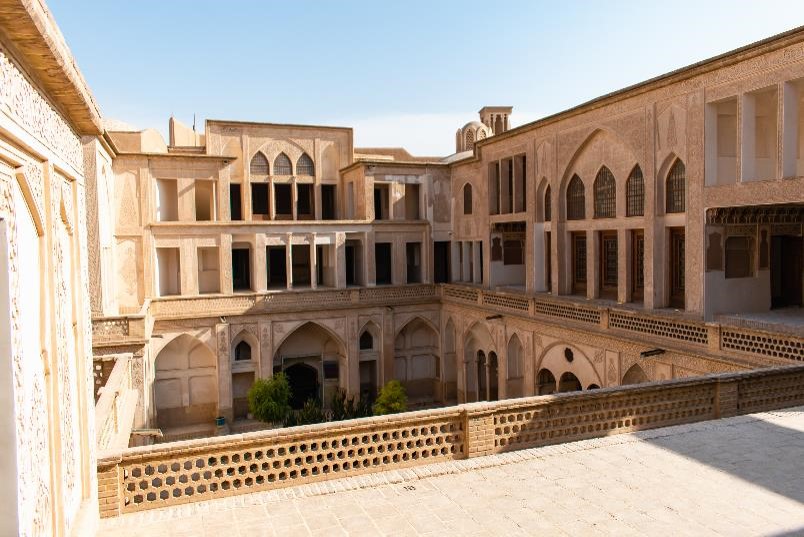
Sunken courtyards of Kashan
-
The Old Weaver's Hidden Smile
-
One Lens, One Pen: The Hatching of "Roam & Record"
The Unmapped China
What lies beyond the official narrative?
What lies beyond the official narrative?
To glimpse the parallel Chinas that quietly subvert the official narrative, I often suggest a short detour to Yanji. Without crossing a single border, you are suddenly plunged into the vibrant heart of Korean culture, where bilingual neon signs and the sharp, comforting tang of kimchi and cold noodles entirely reset the rhythm of life. Yet, if I am seeking a starker, more profound contrast, I travel to Mohe.
Perched at China’s northernmost edge, with its pristine forests and winters that plunge to fifty below, it offers an absolute, ringing silence—a quiet rebuke to the neon frenzy of the cyberpunk megacities, proclaiming its calm, untouched beauty far from the industrial clamor. Far to the south, in the village of Shaxi, I find a living portal to the ancient Tea Horse Road. Its old caravanserais have been gently repurposed, now serving as sanctuaries for independent artists, folk musicians, and wanderers who have fled the relentless rush of modernity.
Perched at China’s northernmost edge, with its pristine forests and winters that plunge to fifty below, it offers an absolute, ringing silence—a quiet rebuke to the neon frenzy of the cyberpunk megacities, proclaiming its calm, untouched beauty far from the industrial clamor. Far to the south, in the village of Shaxi, I find a living portal to the ancient Tea Horse Road. Its old caravanserais have been gently repurposed, now serving as sanctuaries for independent artists, folk musicians, and wanderers who have fled the relentless rush of modernity.
For the meticulously organized, endlessly curious, and thoroughly digital traveler, I’ve found China to be nothing short of a paradise. It perfectly rewards those of us who revel in flawless infrastructure—the silent blur of high-speed trains, the elegant frictionlessness of integrated apps, the profound peace of solo wandering, and a dizzying tapestry of climates and cuisines.
Yet, if your spirit leans toward pure improvisation, if you seek to slip the bonds of digital surveillance, or if you dream of wandering entirely off the grid, China can feel like a beautiful trap. Daily life here is inextricably woven into a digital ecosystem of WeChat and Alipay; to attempt a journey without these tools, or without a plan, is to find oneself utterly paralyzed.
Yet, if your spirit leans toward pure improvisation, if you seek to slip the bonds of digital surveillance, or if you dream of wandering entirely off the grid, China can feel like a beautiful trap. Daily life here is inextricably woven into a digital ecosystem of WeChat and Alipay; to attempt a journey without these tools, or without a plan, is to find oneself utterly paralyzed.
The Frictionless Trap
Can you truly wander off the grid?
Can you truly wander off the grid?
The Sound of China
Lost in the Desert Sky
Keyhan Kalhor
Flower’s Reward
Mehran Mobini
Konj-e-Kharabat
Gholam Hossein Fathi
Keep Roaming
Contact@roamandrecord.com
We are waiting for your kind messages