My Notes on
M A L A Y S I A


Harmony, in a Single Bite
How does a nation hold so many contradictions in one breath?
How does a nation hold so many contradictions in one breath?
Try to hold Malaysia in your hand, and it slips through the senses. There is the wet, luminous green of rainforests that have stood for a hundred and thirty million years—a green so deep it feels prehistoric. That density is cut through by the fierce, sweetly rotting tang of durian, and the soft, earthy hush of rain soaking into the soil at dusk.
The soundscape shifts just as quickly: the polyglot murmur of night markets, bargaining in a dozen tongues, overlaid with the haunting electric crackle of the adhan from mosque speakers. On your tongue, the sharp, sugary chaos of Char Kway Teow and Nasi Lemak—spice and coconut, heat and sweetness—coexisting on a single plate, defiantly.
This is Malaysia: not a single note, but a deliberate, harmonious fracture. Malay, Chinese, Indian, and Indigenous—not just cultures, but threads pulled so tight they form a single, restless fabric. Yet what the sensory riot often misses is the fleeting human quietude beneath it all—the brief, knowing nod between a Malay hawker and a Chinese regular over a bowl of noodles, or the sudden, collective silence that falls over the street the instant the downpour stops. It is in that gap, between the noise and the hush, that the country truly draws its breath.
The soundscape shifts just as quickly: the polyglot murmur of night markets, bargaining in a dozen tongues, overlaid with the haunting electric crackle of the adhan from mosque speakers. On your tongue, the sharp, sugary chaos of Char Kway Teow and Nasi Lemak—spice and coconut, heat and sweetness—coexisting on a single plate, defiantly.
This is Malaysia: not a single note, but a deliberate, harmonious fracture. Malay, Chinese, Indian, and Indigenous—not just cultures, but threads pulled so tight they form a single, restless fabric. Yet what the sensory riot often misses is the fleeting human quietude beneath it all—the brief, knowing nod between a Malay hawker and a Chinese regular over a bowl of noodles, or the sudden, collective silence that falls over the street the instant the downpour stops. It is in that gap, between the noise and the hush, that the country truly draws its breath.
The Embrace of the Sea
How do physical boundaries connect rather than divide?
How do physical boundaries connect rather than divide?
We tend to think of borders as lines drawn in the dust, but Malaysia was shaped by water. The South China Sea does not merely divide the nation; it acts as a constructive embrace, cleaving the country into two distinct souls: the bustling, historic heart of Peninsular Malaysia and the wild, ancient expanse of East Malaysia on Borneo. On the peninsula, the Titiwangsa Mountains rise like a jagged spine, keeping the eastern and western coasts in a quiet, rugged dialogue. Far across the sea in Borneo, Mount Kinabalu pierces the clouds. At over 4,000 meters, it is far more than a geological boundary; it is a sacred, living ancestor, a mythical guardian where the spirits of the departed rest.
Yet, the most vital of these borders is the Strait of Malacca. Far from keeping the world at bay, this bustling maritime artery has always been a great converging point. It is here that the winds of global trade have blown for millennia, weaving Malay, Chinese, Indian, and indigenous threads into a single, vibrant tapestry. These physical boundaries, I’ve come to realize, are not walls meant to keep us apart, but doorways that let the world in.
Yet, the most vital of these borders is the Strait of Malacca. Far from keeping the world at bay, this bustling maritime artery has always been a great converging point. It is here that the winds of global trade have blown for millennia, weaving Malay, Chinese, Indian, and indigenous threads into a single, vibrant tapestry. These physical boundaries, I’ve come to realize, are not walls meant to keep us apart, but doorways that let the world in.
Beyond the Towers
What lies beyond Malaysia’s familiar image?
What lies beyond Malaysia’s familiar image?
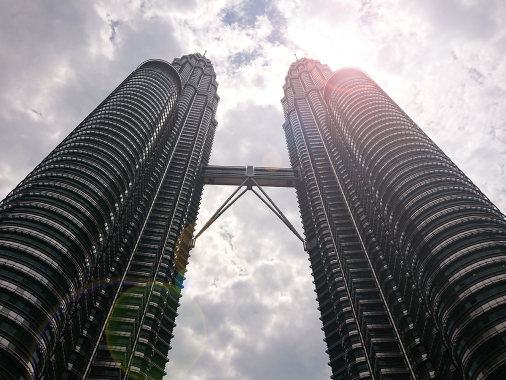
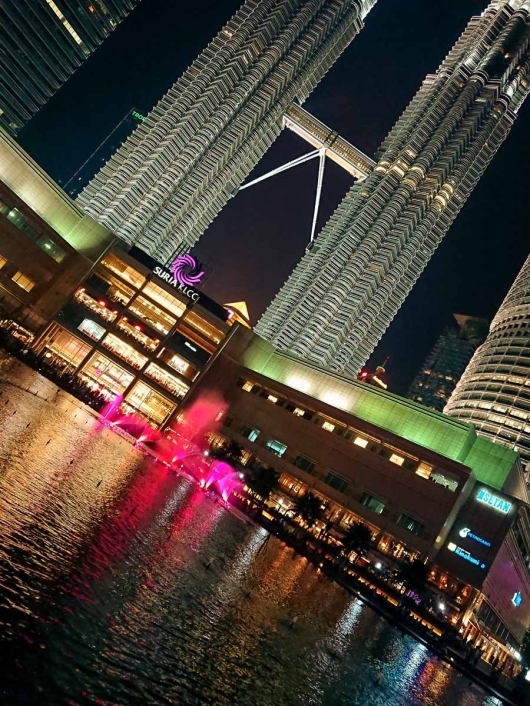
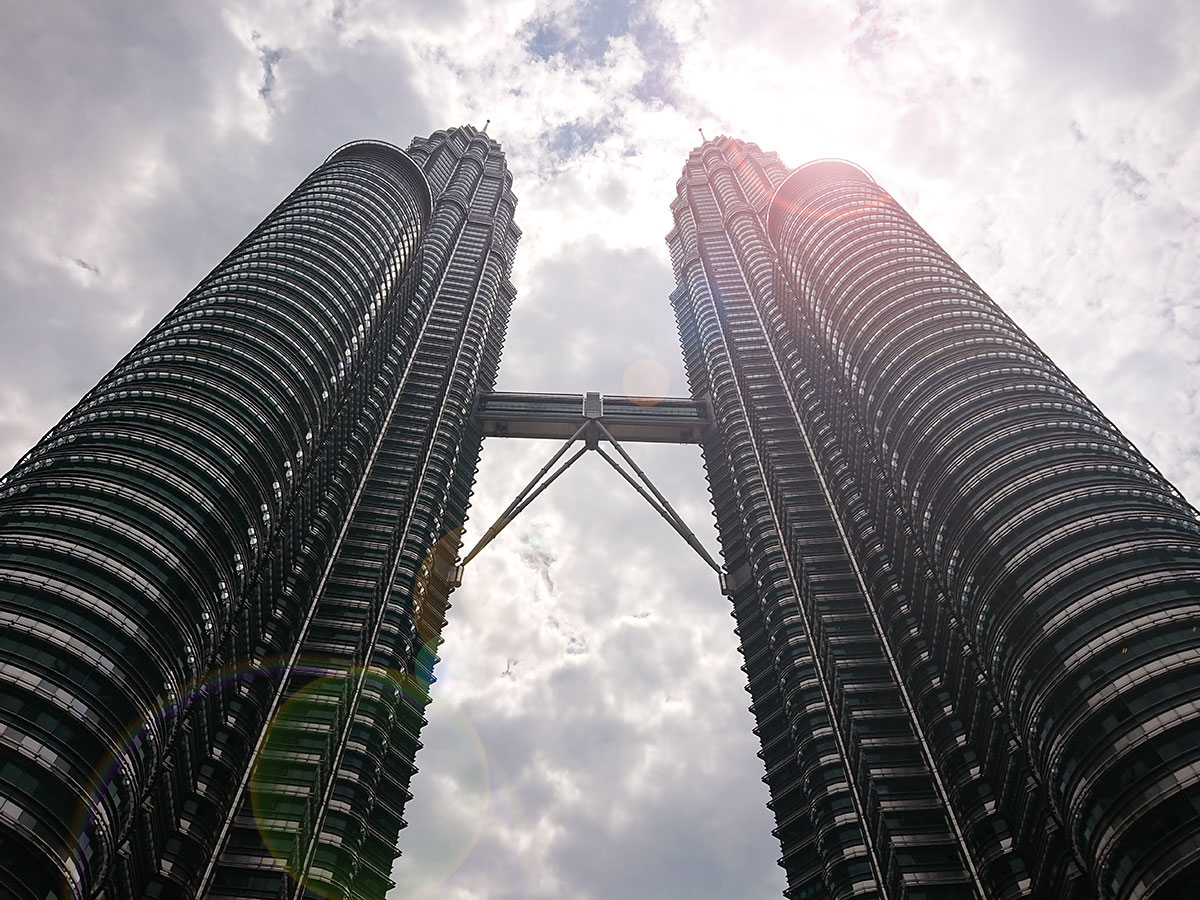
Malaysia is often imagined through the gleaming towers of Kuala Lumpur, especially the iconic Petronas Twin Towers. Yet one of the country’s sharpest contrasts appears in Kelantan, in the northeast of the peninsula.
Here, skyscrapers and luxury malls give way to a more traditional Malay world. Kelantan is a conservative state where agriculture, fishing, and silver craftsmanship remain important to everyday life. Its atmosphere can feel closer to the traditional villages of southern Thailand than to the polished image of a modern global destination.
And perhaps that is part of Malaysia’s charm: the country is not a single picture, but a collection of very different worlds—some reaching for the sky, others rooted firmly in the soil.
Here, skyscrapers and luxury malls give way to a more traditional Malay world. Kelantan is a conservative state where agriculture, fishing, and silver craftsmanship remain important to everyday life. Its atmosphere can feel closer to the traditional villages of southern Thailand than to the polished image of a modern global destination.
And perhaps that is part of Malaysia’s charm: the country is not a single picture, but a collection of very different worlds—some reaching for the sky, others rooted firmly in the soil.
The Bornean Divide
What makes East Malaysia feel like a nation apart?
What makes East Malaysia feel like a nation apart?
Cross the South China Sea, and you step into another world. East Malaysia—comprising the Bornean states of Sabah and Sarawak—doesn't just feel like a different region; to walk its soil is to enter an entirely different country. Here, beneath the emerald canopy of the planet’s oldest rainforests, the air hums with a distinct rhythm. It is a land of pristine wilderness and ancient indigenous heritage, where the languages and customs of the Dayak, Iban, and Kadazan-Dusun peoples hold as much sway as the national tongue.
This separation is not merely geographical; it is etched into the region's political soul. When Sabah and Sarawak joined the federation in 1963, they did so as equal partners, a pact enshrined in the Malaysia Agreement that still fuels a fierce, independent identity today. Peninsular Malaysia, by contrast, pulses with a more centralized, homogenized heartbeat. The cultural and physical distance is vast, a reality underscored by lingering geopolitical frictions—such as the Philippines' historical territorial claims over Sabah—which only deepen the local sentiment of being a world apart.
Walking through the bustling waterfronts of Kuching or the quiet highlands of the interior, I am struck by how a single nation can harbor such profound duality. To be from East Malaysia is to belong to Borneo first, a truth that transforms the concept of a border from a mere line on a map into a deep, living cultural fault line.
This separation is not merely geographical; it is etched into the region's political soul. When Sabah and Sarawak joined the federation in 1963, they did so as equal partners, a pact enshrined in the Malaysia Agreement that still fuels a fierce, independent identity today. Peninsular Malaysia, by contrast, pulses with a more centralized, homogenized heartbeat. The cultural and physical distance is vast, a reality underscored by lingering geopolitical frictions—such as the Philippines' historical territorial claims over Sabah—which only deepen the local sentiment of being a world apart.
Walking through the bustling waterfronts of Kuching or the quiet highlands of the interior, I am struck by how a single nation can harbor such profound duality. To be from East Malaysia is to belong to Borneo first, a truth that transforms the concept of a border from a mere line on a map into a deep, living cultural fault line.
What We Talk About
What do people talk about over a table or while waiting in line for bread?
What do people talk about over a table or while waiting in line for bread?
In Malaysia, food is a national obsession. People talk about the newest places to eat, local recipes, and the subtle differences between one flavour and another. A good meal can be reason enough to drive for hours.
Holidays and cultural events are another natural subject. With Malays, Chinese, Indians, and other communities sharing the same calendar, conversations often turn to religious and cultural celebrations—the date of Eid al-Fitr, Chinese New Year, or Deepavali. Malaysia’s crowded calendar of overlapping holidays is almost a conversation topic in itself.
Then there is “Malaysian time,” or Jam Karet—the familiar joke about arriving late, sometimes by as much as half an hour. It is one of those small habits that becomes part of the rhythm of everyday life.
Yet some subjects are better left untouched. Politics, religion, income, and marital status are usually avoided unless the relationship is close enough to make such questions feel natural. Perhaps, like everywhere else, what people choose not to discuss can reveal as much as what they do.
Holidays and cultural events are another natural subject. With Malays, Chinese, Indians, and other communities sharing the same calendar, conversations often turn to religious and cultural celebrations—the date of Eid al-Fitr, Chinese New Year, or Deepavali. Malaysia’s crowded calendar of overlapping holidays is almost a conversation topic in itself.
Then there is “Malaysian time,” or Jam Karet—the familiar joke about arriving late, sometimes by as much as half an hour. It is one of those small habits that becomes part of the rhythm of everyday life.
Yet some subjects are better left untouched. Politics, religion, income, and marital status are usually avoided unless the relationship is close enough to make such questions feel natural. Perhaps, like everywhere else, what people choose not to discuss can reveal as much as what they do.
Destination Digest
The Map's Forgotten Fold
What does a country erase when it draws its own portrait?
What does a country erase when it draws its own portrait?
The official map of Malaysia is a tidy, bureaucratic affair: thirteen states, a scattering of federal territories, all neatly stitched together. But any map, as any traveler knows, is a lie the moment it is printed—and the deepest truths of a place are always found in its margins, in the territories that cartography forgets.
Fall off the edge of that glossy national portrait, and you land among the Orang Asli of the peninsula and the indigenous tribes of Borneo. They have lived in the rainforest's green cathedral for millennia, their pulse beating in time with the dripping leaves and the afternoon downpours. Yet in the relentless forward march of "modern Malaysia"—the skyscrapers, the highways, the digital economy—they are rarely more than a footnote, a quiet reminder that development often writes its story over the bones of an older one. Their silence is not absence; it is the hum of a country's conscience, deliberately turned down.
Then there is Labuan. A federal territory in name, but a financial ghost in practice—a tax haven floating off the coast of Borneo, its purpose purely transactional. It lingers in the shadow of Kuala Lumpur's glitter and Langkawi's tourist tides, an administrative afterthought rather than a living, breathing part of the national psyche.
But what the roll-call of states and territories truly leaves out is not just these places or these peoples. It leaves out the tension itself—the uncomfortable fact that a nation's soul is not found in its celebrated centers, but in the stubborn, overlooked peripheries where identity refuses to be neatly filed. The official narrative wants harmony; the hidden map whispers that harmony is only meaningful when it acknowledges what—and who—it has chosen to exclude.
Fall off the edge of that glossy national portrait, and you land among the Orang Asli of the peninsula and the indigenous tribes of Borneo. They have lived in the rainforest's green cathedral for millennia, their pulse beating in time with the dripping leaves and the afternoon downpours. Yet in the relentless forward march of "modern Malaysia"—the skyscrapers, the highways, the digital economy—they are rarely more than a footnote, a quiet reminder that development often writes its story over the bones of an older one. Their silence is not absence; it is the hum of a country's conscience, deliberately turned down.
Then there is Labuan. A federal territory in name, but a financial ghost in practice—a tax haven floating off the coast of Borneo, its purpose purely transactional. It lingers in the shadow of Kuala Lumpur's glitter and Langkawi's tourist tides, an administrative afterthought rather than a living, breathing part of the national psyche.
But what the roll-call of states and territories truly leaves out is not just these places or these peoples. It leaves out the tension itself—the uncomfortable fact that a nation's soul is not found in its celebrated centers, but in the stubborn, overlooked peripheries where identity refuses to be neatly filed. The official narrative wants harmony; the hidden map whispers that harmony is only meaningful when it acknowledges what—and who—it has chosen to exclude.
Keys on the Tongue
What three words turn a stranger into a neighbor?
What three words turn a stranger into a neighbor?
If you want to step past the tourist board's glossy collages and into the breathing heart of Malaysia, leave your camera behind. The real keys to this country are not landmarks you can frame, but syllables you can carry on your lips.
Take Terima Kasih. A Chinese-Malaysian acquaintance once told me how locals toss it into nearly every exchange, like a shuttlecock kept perpetually in the air. But what the guidebooks omit is the literal poetry beneath it—terima means "receive," and kasih means "love." To say thank you is to receive love. And here is the astonishing kicker: the one being thanked almost always murmurs it right back, as if gratitude were a boomerang that cannot bear to land alone. It is less a courtesy than a quiet ritual of mutual replenishment.
Then there is Boleh. Not the brash, unyielding "yes" of a Western can-do, but a softly inquiring "is it possible?"—a word that carries within it a national shrug of accommodation. In a country of so many faiths and faces, boleh is the verbal lubricant that prevents friction. It bends, it yields, it finds a crack where a door might open, and it whispers that rules, like borders, are never quite as fixed as they appear.
And finally, Makan. To eat. But in the steamy, sizzling theatre of Malaysian streets, it is not mere fuel for the stomach; it is the sacrament that binds the fractured mosaic together. When a Malay hawker, a Chinese regular, and an Indian office worker gather over a single table strewn with curry and noodles, they are not just dining—they are performing a daily, unspoken ceasefire. To say makan is to issue a passport to belonging, no visa required.
What the textbooks fail to add is that these three words form a hidden syllogism for survival itself: receive love, make space, break bread together. Learn them, and the doors of Malaysia do not simply open—they dissolve entirely, leaving you standing not as a visitor, but as a temporary local, welcomed into the quiet rhythm of a nation that has learned, against all odds, to hold its multiplicity in a single, grateful breath.
Take Terima Kasih. A Chinese-Malaysian acquaintance once told me how locals toss it into nearly every exchange, like a shuttlecock kept perpetually in the air. But what the guidebooks omit is the literal poetry beneath it—terima means "receive," and kasih means "love." To say thank you is to receive love. And here is the astonishing kicker: the one being thanked almost always murmurs it right back, as if gratitude were a boomerang that cannot bear to land alone. It is less a courtesy than a quiet ritual of mutual replenishment.
Then there is Boleh. Not the brash, unyielding "yes" of a Western can-do, but a softly inquiring "is it possible?"—a word that carries within it a national shrug of accommodation. In a country of so many faiths and faces, boleh is the verbal lubricant that prevents friction. It bends, it yields, it finds a crack where a door might open, and it whispers that rules, like borders, are never quite as fixed as they appear.
And finally, Makan. To eat. But in the steamy, sizzling theatre of Malaysian streets, it is not mere fuel for the stomach; it is the sacrament that binds the fractured mosaic together. When a Malay hawker, a Chinese regular, and an Indian office worker gather over a single table strewn with curry and noodles, they are not just dining—they are performing a daily, unspoken ceasefire. To say makan is to issue a passport to belonging, no visa required.
What the textbooks fail to add is that these three words form a hidden syllogism for survival itself: receive love, make space, break bread together. Learn them, and the doors of Malaysia do not simply open—they dissolve entirely, leaving you standing not as a visitor, but as a temporary local, welcomed into the quiet rhythm of a nation that has learned, against all odds, to hold its multiplicity in a single, grateful breath.
The Open Threshold
How does Malaysian hospitality balance warmth and boundaries?
How does Malaysian hospitality balance warmth and boundaries?
In Malaysia, hospitality is not merely a courtesy; it is a sacred geometry of welcome. Nowhere is this more vivid than in the "Open House" tradition. During festivals like Hari Raya, doors are thrown wide open to neighbors, friends, and even wandering strangers. I have sat at tables groaning under the weight of festive feasts, realizing that to refuse a taste of the food or a sip of tea is to gently reject the host’s grace. It is a beautiful, unspoken contract: to partake is to belong, if only for an afternoon.
Yet, this boundless warmth operates within a delicate choreography of respect. Crossing the threshold, one must immediately shed their shoes, leaving the outside world behind. Inside, the body learns a quiet, physical language. The left hand is kept modestly at one's side when giving or receiving; the head, considered the seat of the soul, is never casually touched. In a Muslim home, the soles of the feet are never pointed at a host, and a prayer mat is treated with the reverence of a sanctuary.
Naturally, one never offers pork or alcohol to a Muslim friend. I’ve come to see these not as rigid restrictions, but as the expression of muhibbah—the deep Malaysian ethos of communal harmony. It is precisely by honoring these quiet boundaries that the open door remains a place of true grace.
Yet, this boundless warmth operates within a delicate choreography of respect. Crossing the threshold, one must immediately shed their shoes, leaving the outside world behind. Inside, the body learns a quiet, physical language. The left hand is kept modestly at one's side when giving or receiving; the head, considered the seat of the soul, is never casually touched. In a Muslim home, the soles of the feet are never pointed at a host, and a prayer mat is treated with the reverence of a sanctuary.
Naturally, one never offers pork or alcohol to a Muslim friend. I’ve come to see these not as rigid restrictions, but as the expression of muhibbah—the deep Malaysian ethos of communal harmony. It is precisely by honoring these quiet boundaries that the open door remains a place of true grace.
The Small Rules of Malaysia
What everyday habits might surprise a traveller in Malaysia?
What everyday habits might surprise a traveller in Malaysia?
Sometimes it is not the monuments but the small rituals that make a country feel foreign. In Malaysia, time is one of them. “Malaysian time”—arriving up to half an hour late for a meeting or a gathering—is often treated with a certain tolerance.
Even greetings can change with culture and background. Muslims may greet one another with “Assalamu alaikum,” while people often speak softly and with a calm, measured manner. Bargaining is common in traditional markets, but in modern shops and shopping malls, prices are generally fixed.
Then there are the little linguistic and practical surprises. Air simply means “water,” but if you want plain drinking water, it is safer to ask for air kosong. And in many Malaysian toilets, toilet paper is placed in a bin rather than flushed. None of these things is remarkable on its own. Yet together, they are the small rules through which a traveller begins to understand the rhythm of a place.
Even greetings can change with culture and background. Muslims may greet one another with “Assalamu alaikum,” while people often speak softly and with a calm, measured manner. Bargaining is common in traditional markets, but in modern shops and shopping malls, prices are generally fixed.
Then there are the little linguistic and practical surprises. Air simply means “water,” but if you want plain drinking water, it is safer to ask for air kosong. And in many Malaysian toilets, toilet paper is placed in a bin rather than flushed. None of these things is remarkable on its own. Yet together, they are the small rules through which a traveller begins to understand the rhythm of a place.
The Plastic Chair Democracy
Where does the true soul of Malaysia reveal itself?
Where does the true soul of Malaysia reveal itself?
If you want to understand the soul of a nation, do not look in the hushed, climate-controlled aisles of a museum. In Malaysia, I’ve found that the truest mirror of the country is the mamak stall. Run by Indian Muslims, these humble, open-air eateries are the undisputed heartbeat of the night. Under the hum of fluorescent lights and the familiar clatter of plastic chairs, the country’s grand, complex narrative is quietly written in the everyday.
Here, the rigid lines of race and class simply dissolve into the steam of a freshly poured teh tarik. I have watched corporate executives and taxi drivers share the same modest tables, united by plates of flaky roti canai and the sweet, frothy pull of the tea. It is a sanctuary for lepak—that beautiful, untranslatable art of lingering without purpose. In this twenty-four-hour democracy of the street, Malays, Chinese, and Indians sit shoulder to shoulder, debating everything from local gossip to global politics. It is here, over a simple cup of tea, that the pluralistic heart of Malaysia truly beats.
Here, the rigid lines of race and class simply dissolve into the steam of a freshly poured teh tarik. I have watched corporate executives and taxi drivers share the same modest tables, united by plates of flaky roti canai and the sweet, frothy pull of the tea. It is a sanctuary for lepak—that beautiful, untranslatable art of lingering without purpose. In this twenty-four-hour democracy of the street, Malays, Chinese, and Indians sit shoulder to shoulder, debating everything from local gossip to global politics. It is here, over a simple cup of tea, that the pluralistic heart of Malaysia truly beats.
Cities of Malaysia so far
The Legends That Linger
\What old legends still shape everyday life in Malaysia?
\What old legends still shape everyday life in Malaysia?
Some legends never quite disappear. In rural Malaysia, the sacred tiger (Harimau Keramat) is still sometimes regarded as a supernatural guardian—or even a harimau jadian, a human transformed into a tiger. There is also the curious belief that tigers love durian, opening the spiky fruit with their claws. Such stories run deep enough that older villagers may still warn you never to point at a durian tree or swear beneath it.
Other legends serve a more practical purpose. Stories of frightening spirits such as Hantu Kopek are still sometimes told to children to keep them from wandering outside at night. In this way, folklore becomes a quiet form of social control—a way of teaching children where the boundaries lie.
Even language preserves traces of the past. Tengku, once a title associated with princes or royal descendants, can also be used respectfully for people of high standing or older age. It is a small reminder that Malaysia’s old hierarchies have not entirely vanished; they have simply found their way into everyday speech.
Other legends serve a more practical purpose. Stories of frightening spirits such as Hantu Kopek are still sometimes told to children to keep them from wandering outside at night. In this way, folklore becomes a quiet form of social control—a way of teaching children where the boundaries lie.
Even language preserves traces of the past. Tengku, once a title associated with princes or royal descendants, can also be used respectfully for people of high standing or older age. It is a small reminder that Malaysia’s old hierarchies have not entirely vanished; they have simply found their way into everyday speech.
A Poem Before Malaysia
What should you experience before travelling to Malaysia?
What should you experience before travelling to Malaysia?
Before travelling to Malaysia, I would begin with Syair Bidasari, one of the best-known love poems of the Malay world, believed to date back to around 1750. Its story travelled beyond the page and onto the screen in 1965, when it was made into a black-and-white film of the same name.
What makes the film especially distinctive is that much of its dialogue is delivered in rhymed verse, allowing the old poem to live again through cinema. Reading or watching Bidasari before a journey offers something more than a glimpse of Malaysian culture: it lets you arrive with the echo of an older Malay world already in your mind.
What makes the film especially distinctive is that much of its dialogue is delivered in rhymed verse, allowing the old poem to live again through cinema. Reading or watching Bidasari before a journey offers something more than a glimpse of Malaysian culture: it lets you arrive with the echo of an older Malay world already in your mind.
The Generous Hour
What if the greatest waste of time was chasing it?
What if the greatest waste of time was chasing it?
In the ledger of the West, a laggard minute is a thief. But sit in a Malaysian mamak at midnight—where ceiling fans stir only the thick, humid air, and a table of strangers gradually melts into a circle of debate—and you begin to question everything. The white-knuckled rush to the office, the sterile stress of ticking boxes, the frantic race toward an ever-receding finish line: that, here, feels like the truer squandering of existence.
Living, on the other hand, unfolds in quieter rituals. It is jalan-jalan—the art of wandering aimlessly through steamy lanes, buying nothing, arriving nowhere, yet somehow finding everything. And above all, it is makan, a word that turns eating into a sacred pilgrimage; no traffic jam is too suffocating, no distance too absurd, if the destination is a shared plate of noodles consumed in the company of warm, familiar faces. Work, in this cosmology, is merely the scaffolding erected to support these communal feasts—never the building itself.
But to reduce this to a mere binary of "waste" versus "life" is to miss the quiet, defiant philosophy that underpins it. This is not tropical inertia or a lazy shrug. It is a deliberate recalibration—a post-colonial wisdom that refuses to bow to the Protestant work ethic's iron grip. In a nation stitched together from so many threads, productivity takes a backseat to presence; time is not a straight line to be conquered, but a generous circle to be shared. And in that generous turning, the frantic question of "wasting" simply dissolves—leaving only the quiet grace of a moment stretched long enough to hold a friend, a story, and a single, lingering taste of home.
Living, on the other hand, unfolds in quieter rituals. It is jalan-jalan—the art of wandering aimlessly through steamy lanes, buying nothing, arriving nowhere, yet somehow finding everything. And above all, it is makan, a word that turns eating into a sacred pilgrimage; no traffic jam is too suffocating, no distance too absurd, if the destination is a shared plate of noodles consumed in the company of warm, familiar faces. Work, in this cosmology, is merely the scaffolding erected to support these communal feasts—never the building itself.
But to reduce this to a mere binary of "waste" versus "life" is to miss the quiet, defiant philosophy that underpins it. This is not tropical inertia or a lazy shrug. It is a deliberate recalibration—a post-colonial wisdom that refuses to bow to the Protestant work ethic's iron grip. In a nation stitched together from so many threads, productivity takes a backseat to presence; time is not a straight line to be conquered, but a generous circle to be shared. And in that generous turning, the frantic question of "wasting" simply dissolves—leaving only the quiet grace of a moment stretched long enough to hold a friend, a story, and a single, lingering taste of home.
Every city wears its scars like a second skin, though few care to admit it. In Malaysia, I have learned to read the landscape not for what it proudly displays, but for what it has quietly chosen to bury.
Take Taiping, a drowsy town in Perak that wears its name—"Eternal Peace"—like a prayer whispered over an old wound. In the 1860s, this was the blood-soaked theater of the Larut Wars, where rival Chinese secret societies, the Ghee Hin and the Hai San, tore the tin-rich earth apart in a cycle of vengeance that left the rivers running the color of rust. It took the Pangkor Treaty of 1874 and the heavy hand of the British to finally silence the guns. And so, in an act of almost desperate optimism, the town was rechristened "Taiping," as if a single word could stitch a fractured land back together. Remarkably, it did. From that hard-won stillness, the town bloomed into a cradle of modern firsts: Malaysia's first railway, first hill station, first telegraph office, first fire brigade. Peace, it turns out, is the most fertile soil of all.
Then there is Kuala Lumpur, a metropolis whose very name means "muddy confluence," born where two rivers tangled in silt and ambition. Today, the glass towers of the Golden Triangle have all but erased that humble origin. Yet beneath the choked arteries of the city center, the original Sungai Lumpur still flows—culverted, buried, invisible—much like the tin miners whose sweat raised a capital from a swamp. Walking above it, I sometimes imagine I can hear the murmur of that forgotten water, a quiet reminder that even the most glittering cities are built on mud.
Take Taiping, a drowsy town in Perak that wears its name—"Eternal Peace"—like a prayer whispered over an old wound. In the 1860s, this was the blood-soaked theater of the Larut Wars, where rival Chinese secret societies, the Ghee Hin and the Hai San, tore the tin-rich earth apart in a cycle of vengeance that left the rivers running the color of rust. It took the Pangkor Treaty of 1874 and the heavy hand of the British to finally silence the guns. And so, in an act of almost desperate optimism, the town was rechristened "Taiping," as if a single word could stitch a fractured land back together. Remarkably, it did. From that hard-won stillness, the town bloomed into a cradle of modern firsts: Malaysia's first railway, first hill station, first telegraph office, first fire brigade. Peace, it turns out, is the most fertile soil of all.
Then there is Kuala Lumpur, a metropolis whose very name means "muddy confluence," born where two rivers tangled in silt and ambition. Today, the glass towers of the Golden Triangle have all but erased that humble origin. Yet beneath the choked arteries of the city center, the original Sungai Lumpur still flows—culverted, buried, invisible—much like the tin miners whose sweat raised a capital from a swamp. Walking above it, I sometimes imagine I can hear the murmur of that forgotten water, a quiet reminder that even the most glittering cities are built on mud.
The Buried River
What forgotten histories shaped Malaysia's cities?
What forgotten histories shaped Malaysia's cities?
The Unread Chapter
Whose names are too heavy to carve into a nation's official stone?
Whose names are too heavy to carve into a nation's official stone?
History books in Malaysia are remarkably tidy affairs—they prefer the broad brushstroke of national consensus over the jagged shard of individual sacrifice. But look close enough, and you will find a different pantheon gathering in the margins, a quiet assembly of the uninscribed, whose stories refuse to stay buried.
There is Sybil Kathigasu, the so-called "Florence Nightingale of Malaya," who ran a small clinic in the hills of Perak during the Japanese Occupation. Under the noses of the occupying forces, she tended to the wounded of the resistance—and paid dearly for it with torture and imprisonment. Her resilience was whispered across the kampongs like a prayer, yet you will struggle to find her name in the grand narratives taught in classrooms. Perhaps because she was a woman; perhaps because she was Eurasian, her loyalties inconveniently tangled between coloniser and colonised.
Then consider Datuk Siti Rahmah Kasim. In 1957, as the nation's independence teetered on the edge of a diplomatic abyss, she calmly stripped the gold bracelet from her own wrist and sold it to fund Tunku Abdul Rahman's crucial voyage to London. Her gesture was not grand, not political—it was the quiet, unglamorous sacrifice of a woman who understood that some nations are built with small objects given away, not with grand speeches proclaimed. She faded back into obscurity as soon as the flag was raised.
And what of the Talalla brothers, Cyril and Henry—Eurasian boys from Seremban who soared above the fields of Europe as RAF pilots in World War II? Cyril became the first Asian, and the only non-European, to pass the RAF's elite entrance examination; Henry flew the fearsome Typhoon fighter, his hands gripping controls that carried the weight of an empire's survival. Yet their heroism belonged to Britain's war, not Malaya's—and in the shifting tides of post-colonial memory, their airborne courage was quietly grounded, too uncomfortably imperial to be celebrated in a sovereign land.
What the official histories leave out is not merely these names, but the awkward truth they embody: that bravery in Malaysia has never worn a single skin, or spoken with a single accent. Sybil's nursing, Siti's gold, the Talallas' engines—they are threads of a complex, multi-ethnic fabric that the official needle deliberately sidesteps. The nation prefers its heroes safely Malay, safely male, safely aligned with the political trajectory of independence. But the real history of the country is a palimpsest—and these four names are the scratched-out lines beneath the polished text, waiting quietly for a reader willing to trace them back into the light.
There is Sybil Kathigasu, the so-called "Florence Nightingale of Malaya," who ran a small clinic in the hills of Perak during the Japanese Occupation. Under the noses of the occupying forces, she tended to the wounded of the resistance—and paid dearly for it with torture and imprisonment. Her resilience was whispered across the kampongs like a prayer, yet you will struggle to find her name in the grand narratives taught in classrooms. Perhaps because she was a woman; perhaps because she was Eurasian, her loyalties inconveniently tangled between coloniser and colonised.
Then consider Datuk Siti Rahmah Kasim. In 1957, as the nation's independence teetered on the edge of a diplomatic abyss, she calmly stripped the gold bracelet from her own wrist and sold it to fund Tunku Abdul Rahman's crucial voyage to London. Her gesture was not grand, not political—it was the quiet, unglamorous sacrifice of a woman who understood that some nations are built with small objects given away, not with grand speeches proclaimed. She faded back into obscurity as soon as the flag was raised.
And what of the Talalla brothers, Cyril and Henry—Eurasian boys from Seremban who soared above the fields of Europe as RAF pilots in World War II? Cyril became the first Asian, and the only non-European, to pass the RAF's elite entrance examination; Henry flew the fearsome Typhoon fighter, his hands gripping controls that carried the weight of an empire's survival. Yet their heroism belonged to Britain's war, not Malaya's—and in the shifting tides of post-colonial memory, their airborne courage was quietly grounded, too uncomfortably imperial to be celebrated in a sovereign land.
What the official histories leave out is not merely these names, but the awkward truth they embody: that bravery in Malaysia has never worn a single skin, or spoken with a single accent. Sybil's nursing, Siti's gold, the Talallas' engines—they are threads of a complex, multi-ethnic fabric that the official needle deliberately sidesteps. The nation prefers its heroes safely Malay, safely male, safely aligned with the political trajectory of independence. But the real history of the country is a palimpsest—and these four names are the scratched-out lines beneath the polished text, waiting quietly for a reader willing to trace them back into the light.
The Places Worth Missing
Which places in Malaysia are worth skipping—and which are worth finding?
Which places in Malaysia are worth skipping—and which are worth finding?
It is difficult to call any attraction truly “not worth it,” but Batu Caves can become overwhelmingly crowded on weekends and public holidays, sometimes drowning out the spiritual atmosphere that makes the place special. The Petronas Twin Towers, too, may offer little beyond the familiar photograph if you only stop to admire them from the outside.
For something quieter, I would go instead to Aman Island, off Penang. Just a five-minute boat ride from the mainland, this small, peaceful island was once said to be a hideout for pirates. Today, there are no cars and hardly any crowds—no roads, only forest paths and simple fishing huts.
Local legend tells of an ancient well whose water could turn things into gold. But the real treasure, for me, is found on the plate: mantis prawns, served in simple wooden restaurants on stilts, either with fiery sambal or butter. Sometimes the places worth discovering are the ones that never made it onto the postcard.
For something quieter, I would go instead to Aman Island, off Penang. Just a five-minute boat ride from the mainland, this small, peaceful island was once said to be a hideout for pirates. Today, there are no cars and hardly any crowds—no roads, only forest paths and simple fishing huts.
Local legend tells of an ancient well whose water could turn things into gold. But the real treasure, for me, is found on the plate: mantis prawns, served in simple wooden restaurants on stilts, either with fiery sambal or butter. Sometimes the places worth discovering are the ones that never made it onto the postcard.
Our Stories from Malaysia
-
What Does a Carbon Footprint Mean? (A Morning Coffee Story)
-
An Introduction to Sustainable Travel
-
The Instagram picture and the fragile truth behind it
-
24 Easy and Quick Tips for Stunning Travel Portraits
-

The Art of Enough: Finding Joy in Simple Photography
-

Explore Magnificent Photographs: 20 Handpicked Online Galleries
-

Beyond Stereotypes: Unveiling the Enchantment of Iran
-
Sunken courtyards of Kashan
-
The Old Weaver's Hidden Smile
The Story We Choose to Keep
When a nation's origin is a fiction, who does the fiction serve?
When a nation's origin is a fiction, who does the fiction serve?
Every nation is a story it tells itself until the fiction hardens into unshakeable fact. Malaysia's foundational myths, however, are particularly audacious—almost as if the country, aware of its own breathtaking hybridity, felt it necessary to construct an origin tale too grand to be questioned by outsiders.
Consider Hang Tuah, the legendary warrior of the Malacca Sultanate, the very paragon of Malay masculinity and feudal loyalty. Yet a persistent, shadowy whisper in the digital back-alleys claims he was actually a Chinese Muslim, dispatched by the Ming Emperor as a diplomatic gift. And the old Sultans, with spectacular chutzpah, traced their lineage to Alexander the Great—Zulkarnain himself—a staggering genealogical leap enshrined in the holy text of their history, the Sejarah Melayu. Greece and China, improbably woven into the royal chromosomal thread, as if the archipelago needed the validation of distant empires to legitimize its own throne.
Then there is Ketuanan Melayu—the doctrine of Malay supremacy, the ideological spine of the nation. It posits the Malays as the bumiputera, the "sons of the soil," relegating Chinese and Indian Malaysians to the status of pendatang, perpetual latecomers forever indebted to native generosity. But the soil remembers differently. Historical and archaeological dust suggests that Indian traders were settling, worshiping, and dying on these shores long before the Malay sultanates had even consolidated their Islamic identity. The pendatang narrative is less a historical record than a political comfort blanket, woven to soothe a demographic anxiety.
What is missing from this collection of fables is the anxious, beating question that lies just beneath the surface. Why such a desperate grasping for singular origins—a Chinese hero, a Greek king, pure indigenous blood—in a land that is, and has always been, the original crossroads of Asia? These myths are not history; they are therapy. They attempt to soothe the vertigo of a nation that knows, deep down, that it is a glorious mosaic desperately pretending to be a monolithic block. The real legend isn't who Hang Tuah was, or where the Sultans came from, but why the present needs them to be so exclusively defined. In the end, a country that believes its own myths too rigidly is not a nation—it is a dreamer, and dreams, as we know, are notoriously fragile when touched by the cold, indifferent hand of fact.
Consider Hang Tuah, the legendary warrior of the Malacca Sultanate, the very paragon of Malay masculinity and feudal loyalty. Yet a persistent, shadowy whisper in the digital back-alleys claims he was actually a Chinese Muslim, dispatched by the Ming Emperor as a diplomatic gift. And the old Sultans, with spectacular chutzpah, traced their lineage to Alexander the Great—Zulkarnain himself—a staggering genealogical leap enshrined in the holy text of their history, the Sejarah Melayu. Greece and China, improbably woven into the royal chromosomal thread, as if the archipelago needed the validation of distant empires to legitimize its own throne.
Then there is Ketuanan Melayu—the doctrine of Malay supremacy, the ideological spine of the nation. It posits the Malays as the bumiputera, the "sons of the soil," relegating Chinese and Indian Malaysians to the status of pendatang, perpetual latecomers forever indebted to native generosity. But the soil remembers differently. Historical and archaeological dust suggests that Indian traders were settling, worshiping, and dying on these shores long before the Malay sultanates had even consolidated their Islamic identity. The pendatang narrative is less a historical record than a political comfort blanket, woven to soothe a demographic anxiety.
What is missing from this collection of fables is the anxious, beating question that lies just beneath the surface. Why such a desperate grasping for singular origins—a Chinese hero, a Greek king, pure indigenous blood—in a land that is, and has always been, the original crossroads of Asia? These myths are not history; they are therapy. They attempt to soothe the vertigo of a nation that knows, deep down, that it is a glorious mosaic desperately pretending to be a monolithic block. The real legend isn't who Hang Tuah was, or where the Sultans came from, but why the present needs them to be so exclusively defined. In the end, a country that believes its own myths too rigidly is not a nation—it is a dreamer, and dreams, as we know, are notoriously fragile when touched by the cold, indifferent hand of fact.
The Punchline and the Phantom
What do a nation's jokes reveal about its fears?
What do a nation's jokes reveal about its fears?
Humor is the secret geography of a culture; it reveals not only what a people find amusing, but what keeps them awake at night. In Malaysia, I’ve found that laughter is often a subtle shield, a way of negotiating with both the wider world and their own inherited ghosts.
I have often heard locals, with perfectly straight faces, assure bewildered visitors that they live in the rainforest canopy and bathe beneath waterfalls. It began as a satirical retort to a particularly tone-deaf remark by an American television host about Southeast Asian poverty, but it has evolved into a cherished defense mechanism. It is a gentle, self-deprecating way to ward off the homogenizing gaze of mass tourism, preserving a pocket of mystique in an age of overexposure.
Then there is their geopolitical wit. When the U.S. Embassy once shared a satellite image of the country, the local internet erupted in a chorus of mock panic. "Watch out," they joked, "they’re eyeing our oil!"—only to quickly add, with a wink, that Malaysia has no oil to speak of, "just tigers and crocodiles." It is a brilliant, breezy deflection of imperial anxiety, turning the very real fear of foreign intervention into a punchline about jungle wildlife.
Even their deepest anxieties have a linguistic rhythm. Among the Chinese-Malaysian community, the number four is strictly shunned; in the tonal cadences of their dialects, it sounds uncomfortably close to the word for "death." I’ve smiled watching modern elevators skip from the third floor directly to "3A." It is a charming collision of ancient superstition and high-rise convenience, a quiet reminder that even in our most rational skyscrapers, the phantoms of old language still dictate the buttons we press.
I have often heard locals, with perfectly straight faces, assure bewildered visitors that they live in the rainforest canopy and bathe beneath waterfalls. It began as a satirical retort to a particularly tone-deaf remark by an American television host about Southeast Asian poverty, but it has evolved into a cherished defense mechanism. It is a gentle, self-deprecating way to ward off the homogenizing gaze of mass tourism, preserving a pocket of mystique in an age of overexposure.
Then there is their geopolitical wit. When the U.S. Embassy once shared a satellite image of the country, the local internet erupted in a chorus of mock panic. "Watch out," they joked, "they’re eyeing our oil!"—only to quickly add, with a wink, that Malaysia has no oil to speak of, "just tigers and crocodiles." It is a brilliant, breezy deflection of imperial anxiety, turning the very real fear of foreign intervention into a punchline about jungle wildlife.
Even their deepest anxieties have a linguistic rhythm. Among the Chinese-Malaysian community, the number four is strictly shunned; in the tonal cadences of their dialects, it sounds uncomfortably close to the word for "death." I’ve smiled watching modern elevators skip from the third floor directly to "3A." It is a charming collision of ancient superstition and high-rise convenience, a quiet reminder that even in our most rational skyscrapers, the phantoms of old language still dictate the buttons we press.
The Limestone Capital
Where does Malaysia's true culinary soul reside?
Where does Malaysia's true culinary soul reside?
We are tempted to equate the loudest city with the true capital, but in matters of the palate, sovereignty belongs to the quiet. While Penang may wear the official crown of Malaysia’s food capital, I have long suspected that the true, unspoken sovereign of flavor resides in the languid, limestone-shadowed streets of Ipoh. It is a city that doesn't need to shout about its heritage; it simply simmers it into every bowl.
Here, the culinary lineage is deeply rooted in the Cantonese and Hakka miners who once sifted these hills for tin, leaving behind a legacy of profound, unpretentious simplicity. I have sat on low plastic stools at dawn, watching the steam rise from a bowl of hor fun—noodles so impossibly silky they seem to dissolve on the tongue—or savoring the crisp, clean snap of bean sprout chicken. And then there is the legendary Ipoh white coffee, roasted with palm oil margarine and brewed to a fragrant, amber perfection. But the locals will tell you a secret that no recipe book captures: it is the water. Filtered naturally through the ancient karst mountains, the water here is so pure it elevates a simple bowl of toufu fa (silken tofu pudding) into something approaching the divine.
To eat in Ipoh is to partake in a slower, more deliberate rhythm of life. It is a gentle reminder that the richest capitals are not built on monuments of stone, but on the quiet, daily devotion to a perfect bowl of noodles.
Here, the culinary lineage is deeply rooted in the Cantonese and Hakka miners who once sifted these hills for tin, leaving behind a legacy of profound, unpretentious simplicity. I have sat on low plastic stools at dawn, watching the steam rise from a bowl of hor fun—noodles so impossibly silky they seem to dissolve on the tongue—or savoring the crisp, clean snap of bean sprout chicken. And then there is the legendary Ipoh white coffee, roasted with palm oil margarine and brewed to a fragrant, amber perfection. But the locals will tell you a secret that no recipe book captures: it is the water. Filtered naturally through the ancient karst mountains, the water here is so pure it elevates a simple bowl of toufu fa (silken tofu pudding) into something approaching the divine.
To eat in Ipoh is to partake in a slower, more deliberate rhythm of life. It is a gentle reminder that the richest capitals are not built on monuments of stone, but on the quiet, daily devotion to a perfect bowl of noodles.
The Unlisted Address
Where does a country keep its true, unpolished soul?
Where does a country keep its true, unpolished soul?
The guidebooks, bless them, always point you toward the monuments—the Petronas Towers, the colonial arcades, the sprawling malls that gleam like fever dreams of prosperity. But any traveler who has learned to read a place by its pulse rather than its postcards knows that the real nation is never found in its showpieces. It hides in the corners the tourism board forgets to polish.
Take Jementah, in Johor—a pinprick on the map, a ghost of a town that feels like a Chinese settlement preserved in amber. Its narrow lanes are lined with old shophouses whose paint has long surrendered to the tropical humidity, their interiors humming with the quiet industry of noodle-makers and herbalists. The heart of the place is the Yun Feng Gong temple, incense-laden and unassuming, where elderly women whisper prayers to deities whose names have faded from official memory. To wander here is to slip through a crack in time, into a Malaysia that existed before highways and high-rises, when communities were small and secrets were kept in the family.
Then there is the so-called Seven Streets Market in Penang—an evening bazaar that masquerades as a vegetable market, but is, in truth, a clandestine headquarters of local food wisdom. Here, the hawkers are not performers for tourist cameras; they are guardians of recipes passed down through generations, their stalls lit by fluorescent tubes that cast a harsh, unpretentious glow over the city's best-kept culinary secrets. The char kway teow here does not pose for Instagram; it simply is—a perfect, greasy truth.
And in the heart of Kuala Lumpur, squeezed between the glass towers of the new economy, stands the Zhongshan Building—a former school transformed into a sanctuary for the city's artistic underbelly. Independent bookshops, vinyl records, small galleries, and quiet cafes occupy its rooms, humming with the low, earnest murmur of a creative class that operates far from the official cultural radar. It is a place where Malaysia's future is being sketched in pencil, not carved in stone.
What these spots collectively reveal is that the soul of Malaysia is not a single, centralised archive—it is a scattered, provisional collection of back-alley sanctuaries. The official narrative wants you to believe the country is defined by its sultans, its skyscrapers, its triumphant national story. But Jementah whispers of a Chinese heritage that predates the national myth; the Seven Streets hums with a culinary democracy that ignores racial boundaries; the Zhongshan Building nurtures a contemporary art that refuses to sing the government's tune. These are not tourist sites—they are the nation's private diary, kept under the mattress. And the locals, wisely, do not hand over the key to just anyone. You have to earn it—by walking slowly, by eating without asking for a fork, and by understanding that the most important places are rarely the ones that appear on any map.
Take Jementah, in Johor—a pinprick on the map, a ghost of a town that feels like a Chinese settlement preserved in amber. Its narrow lanes are lined with old shophouses whose paint has long surrendered to the tropical humidity, their interiors humming with the quiet industry of noodle-makers and herbalists. The heart of the place is the Yun Feng Gong temple, incense-laden and unassuming, where elderly women whisper prayers to deities whose names have faded from official memory. To wander here is to slip through a crack in time, into a Malaysia that existed before highways and high-rises, when communities were small and secrets were kept in the family.
Then there is the so-called Seven Streets Market in Penang—an evening bazaar that masquerades as a vegetable market, but is, in truth, a clandestine headquarters of local food wisdom. Here, the hawkers are not performers for tourist cameras; they are guardians of recipes passed down through generations, their stalls lit by fluorescent tubes that cast a harsh, unpretentious glow over the city's best-kept culinary secrets. The char kway teow here does not pose for Instagram; it simply is—a perfect, greasy truth.
And in the heart of Kuala Lumpur, squeezed between the glass towers of the new economy, stands the Zhongshan Building—a former school transformed into a sanctuary for the city's artistic underbelly. Independent bookshops, vinyl records, small galleries, and quiet cafes occupy its rooms, humming with the low, earnest murmur of a creative class that operates far from the official cultural radar. It is a place where Malaysia's future is being sketched in pencil, not carved in stone.
What these spots collectively reveal is that the soul of Malaysia is not a single, centralised archive—it is a scattered, provisional collection of back-alley sanctuaries. The official narrative wants you to believe the country is defined by its sultans, its skyscrapers, its triumphant national story. But Jementah whispers of a Chinese heritage that predates the national myth; the Seven Streets hums with a culinary democracy that ignores racial boundaries; the Zhongshan Building nurtures a contemporary art that refuses to sing the government's tune. These are not tourist sites—they are the nation's private diary, kept under the mattress. And the locals, wisely, do not hand over the key to just anyone. You have to earn it—by walking slowly, by eating without asking for a fork, and by understanding that the most important places are rarely the ones that appear on any map.
The Journey Is the Destination
Which journey in Malaysia is worth taking for the journey itself?
Which journey in Malaysia is worth taking for the journey itself?
The flight to Bario, in Sarawak, is one of those rare journeys that becomes a destination in its own right. From Miri, the small Twin Otter takes you low and loud over the vast forests of Borneo. Below, the jungle unfolds almost endlessly—a reminder that sometimes the most memorable part of arriving somewhere is simply the way there.
The Appointment
What is the price of catching a place at its most honest hour?
What is the price of catching a place at its most honest hour?
You cannot simply arrive in Malaysia and demand its beauty. The country yields only on its own terms—at a specific hour, in a specific season, when the elements decide to align with human patience. The best views are not attractions; they are appointments, and missing them is not a failure of planning, but a failure of surrender.
The Mossy Forest, perched at 2032 metres above the Cameron Highlands, is less a destination than a negotiation. To see it in its full, haunting glory, you must rise before the roosters, while the morning is still a half-light and the mist clings to the trees like a memory refusing to let go. Arrive by afternoon, and that same mist thickens into a wet, white blindness—the landscape simply vanishes into itself. The drier months, February to April or June to August, offer the best odds, but even then, nature makes no promises. It is a reminder that some places are not meant to be conquered; they are meant to be waited upon.
Bukit Chabang Mari, in the northernmost state of Perlis, asks for the opposite schedule. Its landscape is starkly simple—twin limestone hills rising abruptly from the flat, green farmland. But at sunset, something alchemical occurs. The sun, in a slow, deliberate arc, drops precisely between the two peaks, as if slipping into a preordained cradle. The light transforms from harsh gold to molten amber, casting impossibly long, lean shadows across the rice paddies and into the wide, empty sky. You stand there, watching, and realize that this geometry is not a coincidence—it is a daily ritual, performed for an audience that rarely shows up.
What the bare facts of altitude and season omit is the quiet, demanding virtue that connects both places: the willingness to be still. To catch the Mossy Forest at its most mystical, you must brave the pre-dawn chill and accept that the mist may still win. To witness the twin hills ignite, you must wait through the heat of the late afternoon, trusting that the sun will keep its ancient appointment. Neither experience can be hurried, purchased, or captured cleanly with a lens. They exist only for the traveler who understands that beauty in the tropics is not a permanent fixture—it is a fleeting, conditional gift. And the truest reward is not the photograph you take home, but the silent, humid patience you leave behind in the grass, or in the moss, as the moment quietly folds itself back into time.
The Mossy Forest, perched at 2032 metres above the Cameron Highlands, is less a destination than a negotiation. To see it in its full, haunting glory, you must rise before the roosters, while the morning is still a half-light and the mist clings to the trees like a memory refusing to let go. Arrive by afternoon, and that same mist thickens into a wet, white blindness—the landscape simply vanishes into itself. The drier months, February to April or June to August, offer the best odds, but even then, nature makes no promises. It is a reminder that some places are not meant to be conquered; they are meant to be waited upon.
Bukit Chabang Mari, in the northernmost state of Perlis, asks for the opposite schedule. Its landscape is starkly simple—twin limestone hills rising abruptly from the flat, green farmland. But at sunset, something alchemical occurs. The sun, in a slow, deliberate arc, drops precisely between the two peaks, as if slipping into a preordained cradle. The light transforms from harsh gold to molten amber, casting impossibly long, lean shadows across the rice paddies and into the wide, empty sky. You stand there, watching, and realize that this geometry is not a coincidence—it is a daily ritual, performed for an audience that rarely shows up.
What the bare facts of altitude and season omit is the quiet, demanding virtue that connects both places: the willingness to be still. To catch the Mossy Forest at its most mystical, you must brave the pre-dawn chill and accept that the mist may still win. To witness the twin hills ignite, you must wait through the heat of the late afternoon, trusting that the sun will keep its ancient appointment. Neither experience can be hurried, purchased, or captured cleanly with a lens. They exist only for the traveler who understands that beauty in the tropics is not a permanent fixture—it is a fleeting, conditional gift. And the truest reward is not the photograph you take home, but the silent, humid patience you leave behind in the grass, or in the moss, as the moment quietly folds itself back into time.
The Invisible Portal
How do internal borders reshape a nation's soul?
In Malaysia, a state line is rarely just an administrative fiction; it is a portal. Cross from the sleek, cosmopolitan sprawl of Selangor or Penang into the northeastern state of Kelantan, and you do not merely change your coordinates—you shift epochs. The modern hum of the city dissolves into the rhythmic, vowel-heavy cadence of the local dialect and the haunting, melodic echo of the call to prayer. Here, the architecture trades glass and steel for intricate wood and gold leaf, and the air grows thick with the conservative, deeply rooted soul of traditional Malay culture. It is a profound reminder that within a single nation, the spirit can wear many different faces.
Yet, the most seismic crossing requires leaving the peninsula entirely. To fly across the South China Sea to Sabah and Sarawak is to step off the map of modern Malaysia and into the ancient, breathing heart of Borneo. The shift is visceral. The air feels older, heavy with the scent of primeval rainforest and the distinct, untamed rhythm of indigenous heritage. High in the Kelabit highlands, in the remote, mist-shrouded enclave of Bario, I found a world entirely its own. Here, the descendants of former headhunters now quietly tend to the sweet, high-altitude Bario rice. To cross these invisible lines is to realize that Malaysia is not a single story, but a vast, archipelagic novel, where every new chapter demands a completely new way of reading.
Yet, the most seismic crossing requires leaving the peninsula entirely. To fly across the South China Sea to Sabah and Sarawak is to step off the map of modern Malaysia and into the ancient, breathing heart of Borneo. The shift is visceral. The air feels older, heavy with the scent of primeval rainforest and the distinct, untamed rhythm of indigenous heritage. High in the Kelabit highlands, in the remote, mist-shrouded enclave of Bario, I found a world entirely its own. Here, the descendants of former headhunters now quietly tend to the sweet, high-altitude Bario rice. To cross these invisible lines is to realize that Malaysia is not a single story, but a vast, archipelagic novel, where every new chapter demands a completely new way of reading.
The Reserved Table
What do we eat when we eat for our ancestors, not our appetites?
What do we eat when we eat for our ancestors, not our appetites?
The chaos of hawker centres is democracy on a plate—anyone can sit, anyone can slurp. But scratch the surface of this cacophonous culinary paradise, and you find a tiered system of taste, strictly reserved for specific bloodlines, sacred calendars, and celestial transactions. These are not dishes you stumble upon; they are dishes that summon you, if you are worthy of the invitation.
Take rendang. On the tourist menu, it is merely a dry curry. But in the humid kitchens of a Malay wedding or the quiet dawn of Hari Raya, it is a ceremony in itself. The beef is simmered for hours, sometimes an entire day, until it collapses into a dark, caramelised matrix of coconut milk and spices—a meditative act of patience that mirrors the gravity of the occasion it graces. This is not fast food; it is edible devotion, cooked in batches large enough to feed the entire village, binding the community in a single, savory embrace.
Then there is Jala Mas—"golden net"—a Kelantanese dessert spun from nothing but egg yolks and sugar, boiled into delicate, thread-like strands. In the past, it was the exclusive preserve of Sultans and nobles, and even today, its taste carries the faint, lingering echo of royal chambers. To eat it is to momentarily step into a world where lineage matters more than merit. Similarly, Kelamai—a sticky, glutinous treat from the Rao community—appears only during Eid, its presence historically signaling the household's grandeur and standing. It is a dessert that carries a family's reputation on its sweet, dense shoulders.
And on the eastern edge of Borneo, in Sabah, the harvest festival of Kaamatan is unthinkable without Lihing. This rice wine is not a casual drink; it is a spiritual covenant, poured out in May to honour the spirits of the paddy fields. The Kadazandusun people raise their glasses not to each other, but to the unseen forces that have sustained them through the seasons. To drink Lihing is to participate in a conversation with the land itself.
What the simple description of these foods misses is the quiet, almost architectural hierarchy they uphold. In a nation obsessed with the rhetoric of unity, these dishes are gentle reminders of difference—of class, of ethnicity, of ceremonial time. They are the opposite of the everyday makan; they enforce a vertical axis of prestige and memory, connecting the modern citizen to the ancient Sultan, the village ancestors, and the capricious spirits of the harvest. They remind us that in Malaysia, not all tables are created equal. Some are reserved for the soul, and you cannot book a seat—you must be born into it, or at least be lucky enough to be invited by a grandmother who still remembers why we cook these things at all.
Take rendang. On the tourist menu, it is merely a dry curry. But in the humid kitchens of a Malay wedding or the quiet dawn of Hari Raya, it is a ceremony in itself. The beef is simmered for hours, sometimes an entire day, until it collapses into a dark, caramelised matrix of coconut milk and spices—a meditative act of patience that mirrors the gravity of the occasion it graces. This is not fast food; it is edible devotion, cooked in batches large enough to feed the entire village, binding the community in a single, savory embrace.
Then there is Jala Mas—"golden net"—a Kelantanese dessert spun from nothing but egg yolks and sugar, boiled into delicate, thread-like strands. In the past, it was the exclusive preserve of Sultans and nobles, and even today, its taste carries the faint, lingering echo of royal chambers. To eat it is to momentarily step into a world where lineage matters more than merit. Similarly, Kelamai—a sticky, glutinous treat from the Rao community—appears only during Eid, its presence historically signaling the household's grandeur and standing. It is a dessert that carries a family's reputation on its sweet, dense shoulders.
And on the eastern edge of Borneo, in Sabah, the harvest festival of Kaamatan is unthinkable without Lihing. This rice wine is not a casual drink; it is a spiritual covenant, poured out in May to honour the spirits of the paddy fields. The Kadazandusun people raise their glasses not to each other, but to the unseen forces that have sustained them through the seasons. To drink Lihing is to participate in a conversation with the land itself.
What the simple description of these foods misses is the quiet, almost architectural hierarchy they uphold. In a nation obsessed with the rhetoric of unity, these dishes are gentle reminders of difference—of class, of ethnicity, of ceremonial time. They are the opposite of the everyday makan; they enforce a vertical axis of prestige and memory, connecting the modern citizen to the ancient Sultan, the village ancestors, and the capricious spirits of the harvest. They remind us that in Malaysia, not all tables are created equal. Some are reserved for the soul, and you cannot book a seat—you must be born into it, or at least be lucky enough to be invited by a grandmother who still remembers why we cook these things at all.
A Taste of Place
Which foods and drinks belong to a particular place?
Which foods and drinks belong to a particular place?
Some dishes make sense only when you know the landscape that produced them. In Kelantan, in northeastern Peninsular Malaysia, Nasi Kerabu is one of them. Its vivid blue rice is traditionally coloured with butterfly pea flowers and served with fresh local herbs, vegetables, and accompaniments. It is more than a colourful dish: it carries the flavours of Kelantan’s rural landscape and Malay culinary traditions, and can be harder to encounter in Malaysia’s more developed cities.
Then there is Janda Pulang, a traditional drink associated with Kuala Pilah in Negeri Sembilan. Made with coconut water and palm sugar, it belongs naturally to a hot afternoon and a leisurely lunch. These are not simply things to eat and drink. They are small expressions of climate, landscape, and local life—tastes that become difficult to separate from the places that gave them meaning.
Then there is Janda Pulang, a traditional drink associated with Kuala Pilah in Negeri Sembilan. Made with coconut water and palm sugar, it belongs naturally to a hot afternoon and a leisurely lunch. These are not simply things to eat and drink. They are small expressions of climate, landscape, and local life—tastes that become difficult to separate from the places that gave them meaning.
The Fading Hand
What is lost when a culture's tactile memory fades?
What is lost when a culture's tactile memory fades?
In Malaysia, some traditions refuse to be relegated to the quiet dignity of museum glass; they insist on breathing. The vibrant wax-resist patterns of batik and the shimmering, gold-and-silver threaded songket remain vital, living languages. I have often watched the intricate weave of a songket catch the light at a modern wedding, serving as a brilliant, tactile bridge between a royal past and a contemporary present. These are the crafts that have successfully negotiated with time, adapting their ancient rhythms to the modern heartbeat.
Yet, just beyond this illuminated circle, other arts are quietly slipping into the shadows. There is a poignant paradox in the revival of telepuk, the delicate art of adorning fabric with gold leaf: as the textile itself experiences a renaissance, the master woodcarvers who once etched its intricate stamps have vanished, taking their muscle memory to the grave. Similarly, the complex, resist-dyed weaves of kain limar are fraying as the last generation of master weavers puts down their looms. Even the centuries-old craft of bending bamboo and paper into Chinese lanterns is slowly succumbing to the glare of modern neon and a waning public interest.
Most haunting is the fate of wayang kulit, the ancient shadow puppet theater of Kelantan. Today, only nine tok dalang (master puppeteers) remain to coax mythic spirits from the leather screens. Sitting in the humid night air, watching their weathered hands manipulate the shadows, I am struck by a profound realization. When these hands finally stop, we will not just lose beautiful objects; we will lose a specific, tactile way of touching the world. We risk losing a quiet vocabulary of the soul that the frictionless, digital modern age simply cannot translate.
Yet, just beyond this illuminated circle, other arts are quietly slipping into the shadows. There is a poignant paradox in the revival of telepuk, the delicate art of adorning fabric with gold leaf: as the textile itself experiences a renaissance, the master woodcarvers who once etched its intricate stamps have vanished, taking their muscle memory to the grave. Similarly, the complex, resist-dyed weaves of kain limar are fraying as the last generation of master weavers puts down their looms. Even the centuries-old craft of bending bamboo and paper into Chinese lanterns is slowly succumbing to the glare of modern neon and a waning public interest.
Most haunting is the fate of wayang kulit, the ancient shadow puppet theater of Kelantan. Today, only nine tok dalang (master puppeteers) remain to coax mythic spirits from the leather screens. Sitting in the humid night air, watching their weathered hands manipulate the shadows, I am struck by a profound realization. When these hands finally stop, we will not just lose beautiful objects; we will lose a specific, tactile way of touching the world. We risk losing a quiet vocabulary of the soul that the frictionless, digital modern age simply cannot translate.
What Stays Behind
What can you bring home that keeps you connected to Malaysia?
What can you bring home that keeps you connected to Malaysia?
I would look for something that does more than sit on a shelf and collect dust. A batik piece made to your own design is one possibility. Instead of buying a ready-made cloth, visit a batik workshop and have a scarf, bag, or even a shirt created with a pattern you choose. It becomes something you can actually wear—and a small piece of Malaysian craft that continues to live with you.
Pewter, especially from Royal Selangor, offers another kind of connection. Pieces decorated with Malaysian symbols, from national flowers to birds, can carry something of the country’s identity long after the journey is over.
In Borneo, a hand-carved wooden object from an Indigenous community can tell a deeper story, although it is worth choosing pieces made and sold ethically, rather than buying cultural objects of uncertain origin.
And perhaps the simplest souvenir is a Malaysian cookbook. Making nasi lemak or another local dish at home means that the journey does not have to end at the airport. Sometimes the best souvenir is not something we look at, but something we continue to use, taste, and remember.
Pewter, especially from Royal Selangor, offers another kind of connection. Pieces decorated with Malaysian symbols, from national flowers to birds, can carry something of the country’s identity long after the journey is over.
In Borneo, a hand-carved wooden object from an Indigenous community can tell a deeper story, although it is worth choosing pieces made and sold ethically, rather than buying cultural objects of uncertain origin.
And perhaps the simplest souvenir is a Malaysian cookbook. Making nasi lemak or another local dish at home means that the journey does not have to end at the airport. Sometimes the best souvenir is not something we look at, but something we continue to use, taste, and remember.
The Smell of Malaysia
Which taste or scent stays with you long after Malaysia is gone?
Which taste or scent stays with you long after Malaysia is gone?
For me, Malaysia might be remembered first by the smell of nasi lemak in the morning: rice cooked in coconut milk, with sambal, fried anchovies, and egg. It is almost an unofficial Malaysian alarm clock—the scent of a country waking up.
Then there is the smoke of satay at a night market: charcoal glowing beneath skewers of meat marinated with turmeric and lemongrass. And the unmistakable aroma of sambal belacan, where the heat of chillies meets the powerful scent of fermented shrimp. For many Malaysians, that smell is not merely food; it is childhood, home, and memory.
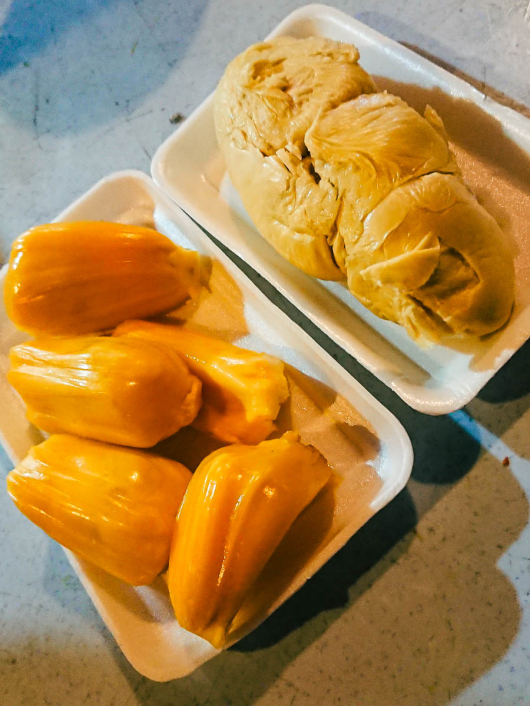
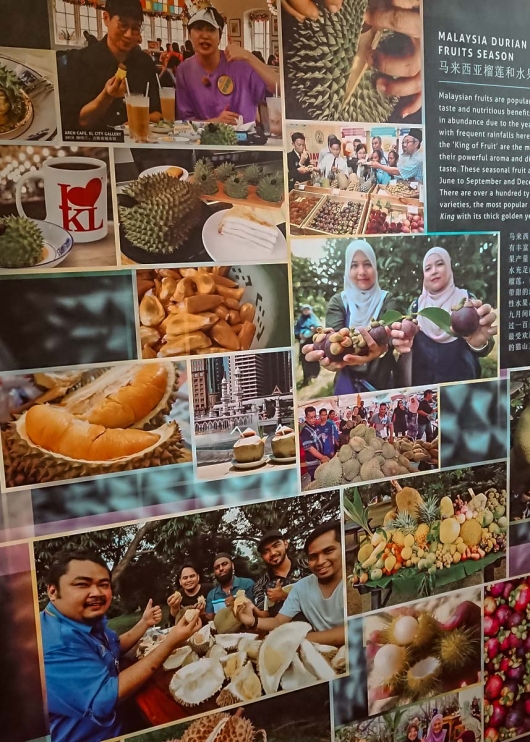
And then comes durian, the King of Fruits, with a scent so intense that you either surrender to it or run from it. Either way, you will not forget it.
Finally, there is teh tarik, thick, sweet black tea mixed with condensed milk and served in local kopitiams. Watching it being poured from one cup to another in long, theatrical streams is part of the pleasure. Perhaps this is how a country stays with us: not in monuments or photographs, but in the smells and tastes that return unexpectedly, years after we have left.
Then there is the smoke of satay at a night market: charcoal glowing beneath skewers of meat marinated with turmeric and lemongrass. And the unmistakable aroma of sambal belacan, where the heat of chillies meets the powerful scent of fermented shrimp. For many Malaysians, that smell is not merely food; it is childhood, home, and memory.
And then comes durian, the King of Fruits, with a scent so intense that you either surrender to it or run from it. Either way, you will not forget it.
Finally, there is teh tarik, thick, sweet black tea mixed with condensed milk and served in local kopitiams. Watching it being poured from one cup to another in long, theatrical streams is part of the pleasure. Perhaps this is how a country stays with us: not in monuments or photographs, but in the smells and tastes that return unexpectedly, years after we have left.
The Short Drive
How far do you have to drive from the capital to find a country's other self?
How far do you have to drive from the capital to find a country's other self?
Leave Kuala Lumpur behind, and the transformation begins not in hours, but in minutes. Forty-five minutes north, and the glass towers dissolve into the misty shoulders of the Titiwangsa range, delivering you to Kampung Janda Baik—a highland village nestled in a cool, forested valley that feels less like a suburb and more like a deliberate refusal of the capital's frantic pulse. Here, the air carries the damp, mineral scent of rainforest, the only traffic is the occasional motorcycle ferrying produce from small farms, and the soundtrack shifts from the urban din of construction to the percussive chatter of cicadas. It is not a resort; it is a retreat from the very idea of hurry.
A little further, and Kuala Kubu Bharu unfolds like a sepia photograph left out in the sun. Its colonial-era shopfronts, painted in faded pastels, lean into streets that seem to have dozed off decades ago. The architecture whispers of a time when tin miners and British administrators walked these pavements, long before the skyscrapers of KL rewrote the national silhouette. To wander here is to catch a glimpse of a Malaysia that still remembers its slow, provincial adolescence—unglamorous, unpolished, and deeply authentic.
And then there is Putrajaya—the administrative capital that the guidebooks insist is a must-see, but which the locals often treat as a glorious, air-conditioned mirage. Built from scratch in the 1990s, it is the country's showcase of bureaucratic ambition: vast, manicured boulevards, a man-made lake that mirrors the Prime Minister's office, and mosques that seem to float on water. It is a city designed to impress, not to live in—a sleek, sterilised vision of what a modern Islamic nation ought to look like, preserved in pristine concrete. Yet for all its marble and symmetry, Putrajaya feels curiously uninhabited, as if the soul of the country is still stuck in traffic on the highway back to KL.
What these three places collectively reveal—and what the tourist itineraries often miss—is that Malaysia does not possess a single centre. The "second country" is not a singular destination; it is a constellation of contrasts. Janda Baik holds the nation's ecological memory; Kuala Kubu Bharu preserves its colonial ghost; Putrajaya projects its aspirational future. Each is a different version of the same restless identity, existing in quiet tension with the capital's relentless modernity. To visit any of them is to understand that the real Malaysia is not a place you arrive at, but a negotiation you enter—a dialogue between what was, what is, and what the government insists it will become. And the shortest drive from the capital is, paradoxically, the longest journey into the country's divided, dreaming heart.
A little further, and Kuala Kubu Bharu unfolds like a sepia photograph left out in the sun. Its colonial-era shopfronts, painted in faded pastels, lean into streets that seem to have dozed off decades ago. The architecture whispers of a time when tin miners and British administrators walked these pavements, long before the skyscrapers of KL rewrote the national silhouette. To wander here is to catch a glimpse of a Malaysia that still remembers its slow, provincial adolescence—unglamorous, unpolished, and deeply authentic.
And then there is Putrajaya—the administrative capital that the guidebooks insist is a must-see, but which the locals often treat as a glorious, air-conditioned mirage. Built from scratch in the 1990s, it is the country's showcase of bureaucratic ambition: vast, manicured boulevards, a man-made lake that mirrors the Prime Minister's office, and mosques that seem to float on water. It is a city designed to impress, not to live in—a sleek, sterilised vision of what a modern Islamic nation ought to look like, preserved in pristine concrete. Yet for all its marble and symmetry, Putrajaya feels curiously uninhabited, as if the soul of the country is still stuck in traffic on the highway back to KL.
What these three places collectively reveal—and what the tourist itineraries often miss—is that Malaysia does not possess a single centre. The "second country" is not a singular destination; it is a constellation of contrasts. Janda Baik holds the nation's ecological memory; Kuala Kubu Bharu preserves its colonial ghost; Putrajaya projects its aspirational future. Each is a different version of the same restless identity, existing in quiet tension with the capital's relentless modernity. To visit any of them is to understand that the real Malaysia is not a place you arrive at, but a negotiation you enter—a dialogue between what was, what is, and what the government insists it will become. And the shortest drive from the capital is, paradoxically, the longest journey into the country's divided, dreaming heart.
The Negative Space
Where does the official narrative end?
Where does the official narrative end?
The official narrative of Malaysia is written in glass, steel, and the relentless hum of progress. Yet, to truly understand the country, one must seek out the margins—the quiet, stubborn corners that refuse the present and quietly reverse the national story.
Just a stone’s throw from the frenetic, neon-lit sprawl of Penang lies Pulau Aman, an island that feels like a slip in the fabric of time. There are no roads here, no engines, no crowds. Once a notorious haunt for pirates, it is now a sanctuary of weathered fishing huts and whispering mangroves. Walking its tide-swept beaches, I am struck by how it offers a vision of Malaysia not as it races toward tomorrow, but as it was before the modern world arrived.
Further north, tucked into the deep, traditional heart of Kelantan, lies Kampung Pulai. Until the 1980s, this village was entirely cut off from the outside world, accessible only by water. Today, it remains a beautifully forgotten pocket of the country, cradled by towering limestone karsts and the gentle murmur of a slow-moving river. Here stands the Water and Moon Temple, revered as the oldest Chinese temple on the peninsula. Sitting in its fragrant, incense-heavy courtyards, the silence feels almost sacred, offering a profound contrast to the bustling, pluralistic cities just a few hours away.
What these places share is not just their remoteness, but their quiet rebellion. They remind me that in a nation so proud of its modern miracles, the most profound luxury is simply the space to be still. They are the negative space in the national portrait, proving that sometimes, to truly find a country, you must look at what it has chosen to leave behind.
Just a stone’s throw from the frenetic, neon-lit sprawl of Penang lies Pulau Aman, an island that feels like a slip in the fabric of time. There are no roads here, no engines, no crowds. Once a notorious haunt for pirates, it is now a sanctuary of weathered fishing huts and whispering mangroves. Walking its tide-swept beaches, I am struck by how it offers a vision of Malaysia not as it races toward tomorrow, but as it was before the modern world arrived.
Further north, tucked into the deep, traditional heart of Kelantan, lies Kampung Pulai. Until the 1980s, this village was entirely cut off from the outside world, accessible only by water. Today, it remains a beautifully forgotten pocket of the country, cradled by towering limestone karsts and the gentle murmur of a slow-moving river. Here stands the Water and Moon Temple, revered as the oldest Chinese temple on the peninsula. Sitting in its fragrant, incense-heavy courtyards, the silence feels almost sacred, offering a profound contrast to the bustling, pluralistic cities just a few hours away.
What these places share is not just their remoteness, but their quiet rebellion. They remind me that in a nation so proud of its modern miracles, the most profound luxury is simply the space to be still. They are the negative space in the national portrait, proving that sometimes, to truly find a country, you must look at what it has chosen to leave behind.
The Threshold
Where do you go when you want to step into a world that time overlooked?
Where do you go when you want to step into a world that time overlooked?
In a nation so obsessed with its gleaming future, the backroads still hold the keys to its forgotten past—and sometimes, to its most vibrant subcultures. There are villages in Malaysia that are not merely destinations; they are thresholds, portals into ways of life that the official narrative has gently shelved.
Take Bario, tucked into the highlands of Sarawak, a place so remote that the only practical way to reach it is by a tiny Twin Otter aircraft from Miri, swooping low over a sea of green that seems to stretch to the edge of Borneo itself. This is the homeland of the Kelabit people—once fierce headhunters who have traded their warrior past for a quieter, agrarian present. Their longhouses still stand, their rice terraces still gleam in the high-altitude sun, and once a year, the village swells with the sounds of Pesta Nukenen, a festival celebrating their unique culinary heritage. To eat a Kelabit meal in Bario is not just to taste food; it is to participate in a lineage of highland survival, where salt from the jungle and wild ginger from the forest floor tell stories of resilience.
Then there is Tanjung Sepat, a sleepy fishing settlement on the coast of Selangor, barely an hour from the chaos of Kuala Lumpur but a universe removed in spirit. The international tourists never find it—they are too busy with the glossy beaches of Langkawi or the heritage streets of Penang. Here, the pace is dictated by the tides, not the traffic lights. Fishermen haul their catch ashore in the early mornings; grandmothers fry fish in woks that have seen decades of coastal life; and the entire town exhales a slow, unpretentious rhythm that feels almost defiant in an age of relentless speed. The seafood is not a novelty; it is a sacrament, eaten with the same steady, unshowy hunger that has sustained this community for generations.
What these two places illuminate—and what the brochures inevitably omit—is that Malaysia's subcultures are not museum exhibits to be observed from a safe distance. They are living, breathing networks of memory and practice, accessible only to those willing to endure the journey and shed the expectations of urban comfort. Bario demands you fly into the clouds and sleep in a longhouse, waking to the sound of roosters and the distant murmur of a language barely spoken anywhere else. Tanjung Sepat asks you to sit quietly at a plastic table by the harbour, eat fried fish with your fingers, and watch the sun dissolve into the Strait of Malacca without taking a single photograph. These are not gateways to a "second country"—they are gateways to a different country, one that exists in parallel to the Malaysia of shopping malls and expressways. And once you step through, you may find that the door does not open both ways; you carry its salt and its highland air with you long after you have returned to the fluorescent glow of the city.
Take Bario, tucked into the highlands of Sarawak, a place so remote that the only practical way to reach it is by a tiny Twin Otter aircraft from Miri, swooping low over a sea of green that seems to stretch to the edge of Borneo itself. This is the homeland of the Kelabit people—once fierce headhunters who have traded their warrior past for a quieter, agrarian present. Their longhouses still stand, their rice terraces still gleam in the high-altitude sun, and once a year, the village swells with the sounds of Pesta Nukenen, a festival celebrating their unique culinary heritage. To eat a Kelabit meal in Bario is not just to taste food; it is to participate in a lineage of highland survival, where salt from the jungle and wild ginger from the forest floor tell stories of resilience.
Then there is Tanjung Sepat, a sleepy fishing settlement on the coast of Selangor, barely an hour from the chaos of Kuala Lumpur but a universe removed in spirit. The international tourists never find it—they are too busy with the glossy beaches of Langkawi or the heritage streets of Penang. Here, the pace is dictated by the tides, not the traffic lights. Fishermen haul their catch ashore in the early mornings; grandmothers fry fish in woks that have seen decades of coastal life; and the entire town exhales a slow, unpretentious rhythm that feels almost defiant in an age of relentless speed. The seafood is not a novelty; it is a sacrament, eaten with the same steady, unshowy hunger that has sustained this community for generations.
What these two places illuminate—and what the brochures inevitably omit—is that Malaysia's subcultures are not museum exhibits to be observed from a safe distance. They are living, breathing networks of memory and practice, accessible only to those willing to endure the journey and shed the expectations of urban comfort. Bario demands you fly into the clouds and sleep in a longhouse, waking to the sound of roosters and the distant murmur of a language barely spoken anywhere else. Tanjung Sepat asks you to sit quietly at a plastic table by the harbour, eat fried fish with your fingers, and watch the sun dissolve into the Strait of Malacca without taking a single photograph. These are not gateways to a "second country"—they are gateways to a different country, one that exists in parallel to the Malaysia of shopping malls and expressways. And once you step through, you may find that the door does not open both ways; you carry its salt and its highland air with you long after you have returned to the fluorescent glow of the city.
The Real Calendar
Which local celebration matters to people even if tourists barely notice it?
Which local celebration matters to people even if tourists barely notice it?
Some of the most meaningful dates in Malaysia never appear on a traveller’s calendar. Pesta Nukenen in Bario, held each year from 23 to 25 July, is one of them—a gathering centred on food, tradition, and community among the Kelabit people. Smoked venison, local handicrafts, traditional games, and the flavours of the highlands come together in a celebration that feels less like a festival for visitors and more like a community remembering itself.
Beyond Bario, Malaysia’s many Indigenous and minority communities keep their own calendars alive. Irau Aco celebrates the Lun Bawang, Kalimaran the Murut, Lepa-Lepa the Bajau, and Magahau the Rungus. Malaysian Thais also mark Songkran in their own communities.
These celebrations may be absent from the standard tourist itinerary, but they reveal something more important: the real rhythm of a country is often found not in the events advertised to visitors, but in the days its communities gather to honour who they are.
Beyond Bario, Malaysia’s many Indigenous and minority communities keep their own calendars alive. Irau Aco celebrates the Lun Bawang, Kalimaran the Murut, Lepa-Lepa the Bajau, and Magahau the Rungus. Malaysian Thais also mark Songkran in their own communities.
These celebrations may be absent from the standard tourist itinerary, but they reveal something more important: the real rhythm of a country is often found not in the events advertised to visitors, but in the days its communities gather to honour who they are.
The Living Past
What kind of traveler does Malaysia reward?
What kind of traveler does Malaysia reward?
Malaysia is a paradise for the traveler seeking the profound luxury of silence. In the quiet, forgotten lanes of Sungai Lembing, the clamor of the modern world dissolves into the emerald canopy, leaving only the rhythm of the jungle and the distant call of the hornbill. This haven of peace extends even to the seeker of refined comfort; the country’s five-star resorts offer a sanctuary where world-class luxury is seamlessly woven into the wild, breathing edge of the rainforest.
Yet, for the traveler in pursuit of deep, monumental antiquity, Malaysia can feel like a deliberate misdirection. If you come seeking the heavy, stone-carved ghosts of ancient empires, you will find yourself looking in the wrong place. Compared to the towering, moss-draped temples of neighboring Cambodia or the sweeping ruins of Thailand, Malaysia’s historical footprint can seem surprisingly light. But this is only if you are looking for the wrong kind of past. Malaysia’s history was never one of static, isolated kingdoms; it is the history of the monsoon winds, of merchants, and of the sea. Its antiquity is not locked in silent stone, but lives in the vibrant, syncretic culture of its streets.
I have come to realize that to judge Malaysia by the standards of Angkor Wat is to miss its true magic. It is a country that offers the ultimate grace of the present moment, rather than the heavy, immovable burden of a monumental past.
Yet, for the traveler in pursuit of deep, monumental antiquity, Malaysia can feel like a deliberate misdirection. If you come seeking the heavy, stone-carved ghosts of ancient empires, you will find yourself looking in the wrong place. Compared to the towering, moss-draped temples of neighboring Cambodia or the sweeping ruins of Thailand, Malaysia’s historical footprint can seem surprisingly light. But this is only if you are looking for the wrong kind of past. Malaysia’s history was never one of static, isolated kingdoms; it is the history of the monsoon winds, of merchants, and of the sea. Its antiquity is not locked in silent stone, but lives in the vibrant, syncretic culture of its streets.
I have come to realize that to judge Malaysia by the standards of Angkor Wat is to miss its true magic. It is a country that offers the ultimate grace of the present moment, rather than the heavy, immovable burden of a monumental past.
The Sound of Malaysia
Lost in the Desert Sky
Keyhan Kalhor
Flower’s Reward
Mehran Mobini
Konj-e-Kharabat
Gholam Hossein Fathi
Keep Roaming
Contact@roamandrecord.com
We are waiting for your kind messages