My Notes on
U . A . E
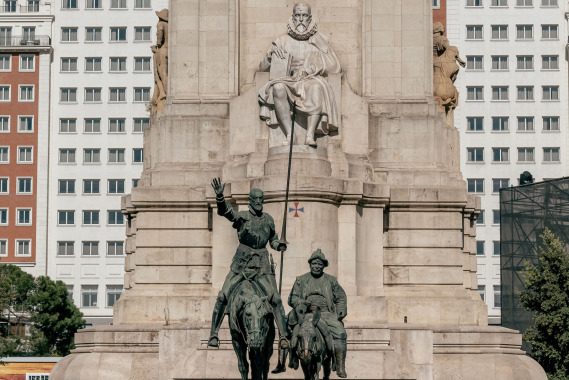
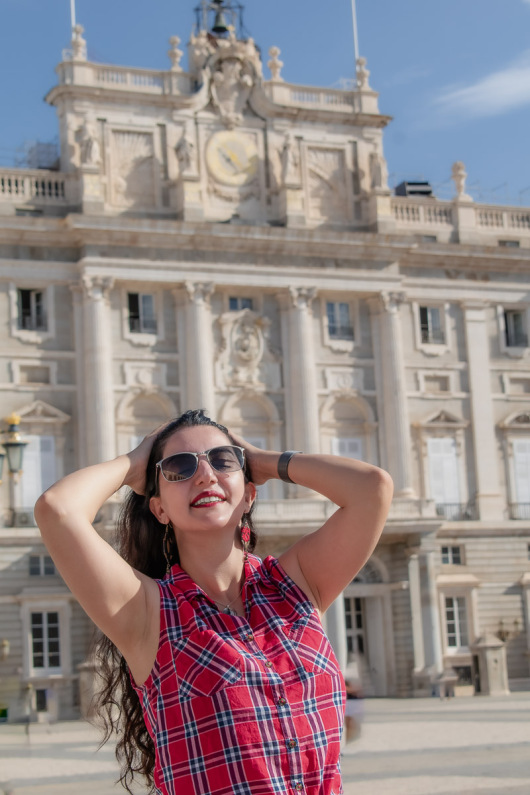
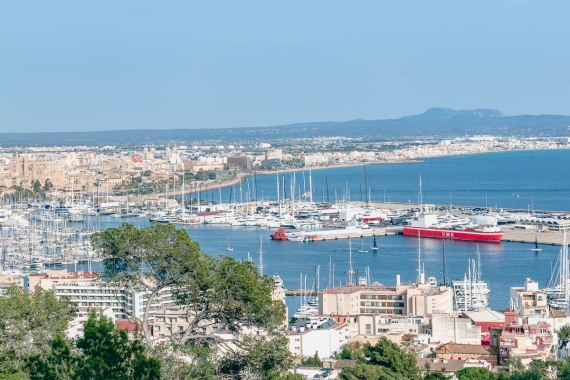
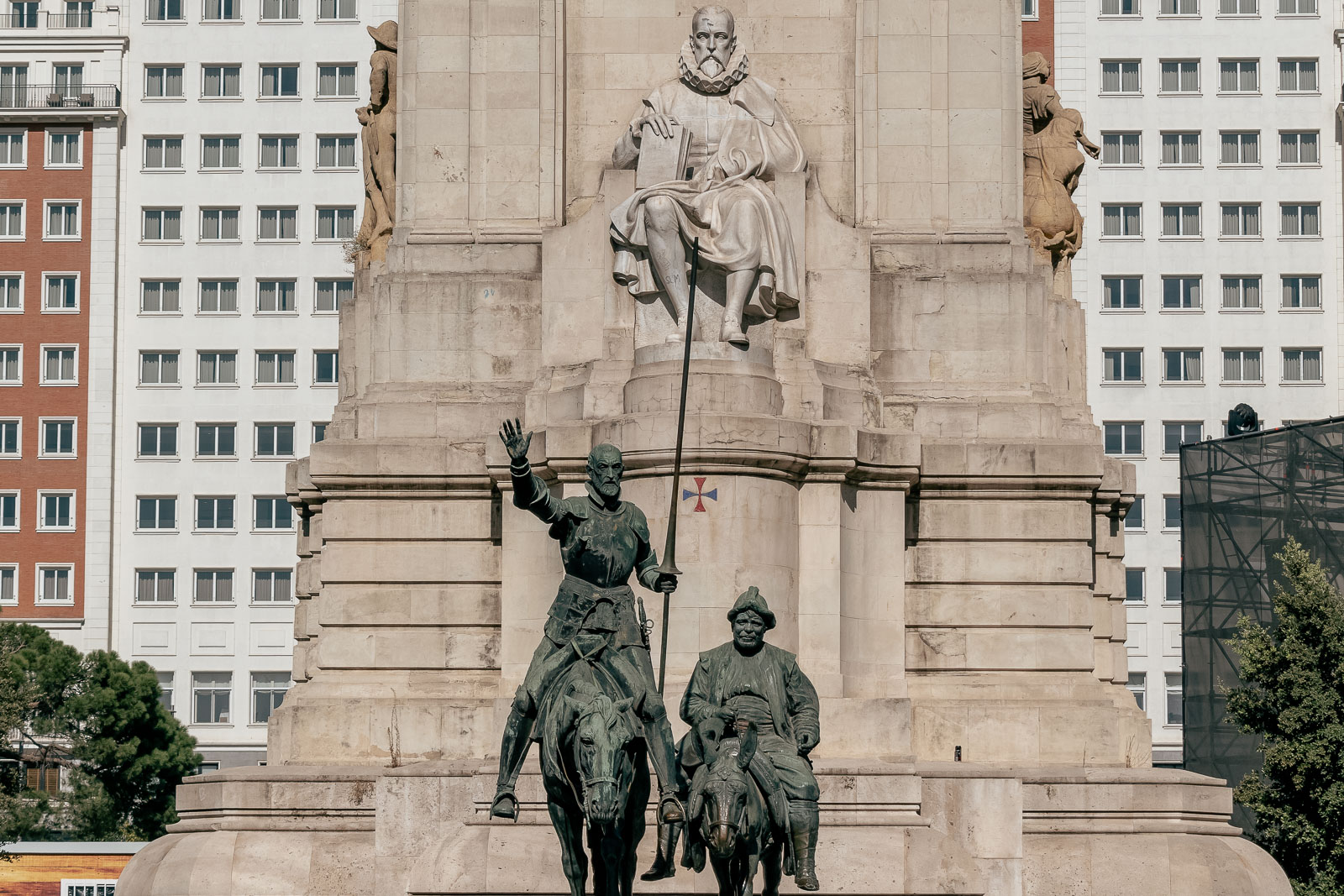
In order to attain the impossible, one must attempt the absurd.
Miguel de
Cervantes
Spain in Four Senses
If Spain were one sound, smell, colour, and taste, what would it be?
If Spain were a sound, a smell, a colour, a taste, what would it be?
I keep asking this because Spain refuses a single answer. It is less a country than a chord struck in four registers.
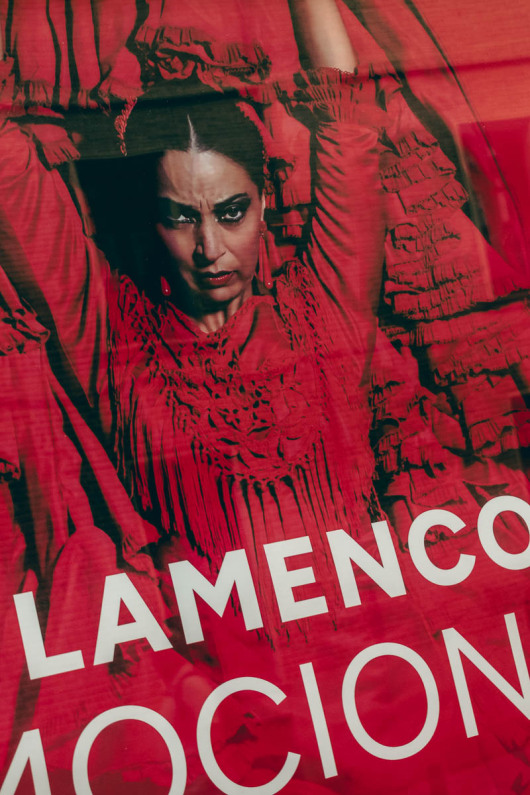
Sound: more than sound, Spain is rhythm—the sharp, percussive pulse of flamenco in the south, woven with Spanish guitar. Yet beside it lies the silence and low hum of the vast, emptied interior, la España vacía, the Empty Spain. That hush belongs to its voice too.
Smell: citrus, above all orange blossom, azahar, in spring Seville, where more than 40,000 orange trees perfume the streets, and jasmine in Granada's Albayzín. Then eucalyptus on the last stretches of the Camino de Santiago in Galicia, and olive oil everywhere—a scent that follows you like memory.
Colour: red and gold, the flag's blood and gold. Passion, energy, sunlight. But it is set against the wet, rain-washed green of Green Spain in the north, a landscape that seems to belong to another story.
Taste: no single dish can hold Spain. It lives in ingredients—saffron, paprika, garlic, extra-virgin olive oil, jamón ibérico. To eat local food is to taste the landscape; in each region, identity is distilled on the plate.
I like Pico Iyer's way of writing. So I will not try to define Spain. I will only say: it is rhythm and silence, blossom and rain, blood and gold, oil and smoke—a country you do not simply see, but sense.
The Pyrenean Ve
What forged Spain's soul?
What natural or historical boundary truly defines a nation? Is it a flowing river, a boundless sea, or a paved road? For Spain, the answer lies in the towering, ancient embrace of the Pyrenees. Stretching some 430 kilometers from the sunlit Mediterranean to the moody Bay of Biscay, this formidable spine of rock has done far more than merely divide the Iberian Peninsula from the rest of Europe; it has sculpted the very essence of the country
As a lifelong traveler, I have always felt that borders are not just arbitrary lines on a map, but profound, visceral shifts in the human spirit. The Pyrenees enforced a beautiful, stubborn isolation. They kept Spain at arm's length from the continent, giving rise to the famous, somewhat wry maxim that "Africa begins at the Pyrenees."
Yet, this geographic seclusion acted as a cultural crucible. By keeping the kingdoms on either side of the peaks apart for centuries, the mountains allowed fiercely distinct local identities to take deep root. In their enduring shadow, Spain did not just endure its isolation; it distilled it into a vibrant, singular heritage, proving that sometimes, the highest walls build the deepest roots
Beyond the Spanish Postcard
What lies beyond Spain’s postcard image?
Many travelers picture Spain through a familiar postcard: sunlit costas, late-night parties, and plates of tapas. Yet far from this Mediterranean image lies northern Spain—Cantabria, Asturias, and the Basque Country—known as Green Spain. Here, cool rain replaces relentless sunshine; green meadows, snow-capped mountains, misty valleys, and rugged Atlantic cliffs create a landscape that feels almost like another country.
Even Benidorm, the emblem of mass British tourism, carries its own contradiction. Beneath the stereotype of cheap holidays and nightlife, the city also welcomes more than a million Spanish visitors each year, many of them drawn by the simple pleasure of coastal life. Perhaps Spain is most interesting when we stop looking at the postcard and begin looking at the country itself.
The Missing Spain
Which part of Spain's map is missing from the official narrative?
Which part of the map is missing from the official story? For me, it is La España vacía—or, more honestly, La España vaciada: the Empty Spain, the Spain that has been emptied. It is the vast, thinly populated interior, the central plateau of La Meseta, some 400,000 square kilometres of dwindling villages and small towns whose people have drifted toward Madrid and the coasts. On tourist maps, Spain often becomes sun, sand, and tapas; but the interior is the country's quiet backbone. Ignore it, and urban Spain makes no sense. It is the silence beneath the flamenco, the space between the postcards.
There is another omission too: Spain's colonial past in Africa—Spanish Guinea, Western Sahara, Ifni—and the Pacific islands that once belonged to its empire. These places rarely enter the official narrative, yet they are part of the map, part of the memory, part of the shadow Spain casts. I like Pico Iyer's way of writing because he lets a place remain mysterious while still making it intimate. So I will not pretend to complete the map. I will only trace its missing edges.
What is absent is not empty. It is erased, overlooked, or simply inconvenient. The Empty Spain and the forgotten colonies ask the same question: whose Spain is being told? To read the country honestly, we must look at what the official map leaves blank.
A Continent in Disguise
Which part of Spain feels like another country?
I have long believed that the truest measure of a place is not its unity but its contradictions. Spain, more than any country I know, rewards this belief. Ask which region feels like another nation entirely, and you will receive not one answer but several—each fiercely defended.
In the Basque Country, you hear Euskara on the streets, a language older than Latin, unrelated to any tongue in Europe, as if it arrived from some forgotten epoch and simply refused to leave. Here, and in Catalonia, regional identity doesn't merely coexist with national identity—it eclipses it. A Catalan will tell you she is Catalan before she is Spanish, with the quiet certainty of someone stating the obvious.
Then there is Galicia, tucked into the rain-soaked northwest, where emerald hills and Celtic bagpipes make you wonder if you've wandered into Ireland by mistake. The people there often feel more kinship with Lisbon than with Madrid, and walking through its misty villages, you understand why.
There is a saying that captures this beautifully: Spain is not a country but a continent in disguise. Barcelona and Seville might as well exist on different planets. Yet this magnificent fragmentation is not Spain's weakness—it is its deepest truth, a mosaic that only makes sense when you stop looking for a single picture.
The Art of Lingering
What do Spaniards talk about when they have time to linger?
In Spain, a bakery queue or café table can feel like a second living room, even a small public office. Conversation flows easily, moving from politics and football to the weather, family, and the small dramas of everyday life. Someone may debate the proper recipe for cocido madrileño; another may simply pause over the freshness of the bread or the quality of the coffee: “¡Qué rico está este café!”—how good this coffee is.
What strikes me is the absence of hurry. These conversations are rarely about filling silence or getting somewhere else. A coffee can stretch into an hour, and a simple meal can become a social ritual. In Spain, the table is not merely where food is served; it is where opinions are exchanged, stories unfold, and relationships are quietly renewed. Perhaps this is one of the country’s oldest luxuries: having enough time to talk.
Destination Digest
The Password Is Hospitality
Which local word or phrase opens doors in Spain?
Some words are keys.
In Spain, the phrase that opens the most doors is not a password but an invitation: "Mi casa es su casa"—my house is your house. It is hospitality in its deepest form, a way of saying you are not a stranger. It turns a doorway into a welcome and a guest into family.
Of course, everyday doors open with smaller keys. "Buenos días," "Buenas tardes," "Buenas noches"—said with a smile—change the temperature of an encounter. "Permiso" lets you pass politely or gently ask for attention. And "¿Me puede recomendar...?"—can you recommend...?—in a café or shop signals respect and genuine curiosity.
I like Pico Iyer's way of writing because he shows that travel is less about seeing than about learning the local grammar of belonging. So I would say: learn the words, but listen for the tone. In Spain, courtesy is not decoration; it is the hinge. The phrase may be simple, but it says: I see you. Come in.
The Geometry of Warmth
Where lie the boundaries of Spanish hospitality?
To truly know Spain, one must first surrender to its hospitality—a warm, almost aggressive generosity. When invited to a local home, you will quickly encounter a delightful "loving coercion," where hosts practically urge you to eat until you burst. Yet, this is a beautifully choreographed dance. A guest never accepts an invitation outright; a polite hesitation is expected, prompting the host to insist. It is a profound ritual of mutual respect disguised as charming, endearing stubbornness.
But where does this boundless warmth end? I have found the boundary lies in the invisible geometry of public space. In the plaza, Spaniards collapse the physical distance, standing intimately close and punctuating sentences with a reassuring touch on the arm. Yet, this tactile intimacy has its quiet limits. In formal realms, it gracefully yields to the crisp boundary of a firm handshake and steady eye contact. Even the ritual of tipping reflects this unspoken grace; it is never a transactional duty, but a modest gesture of a few coins left on the table, reminding us that true connection cannot simply be bought, but must be freely given.
When the Clock Lets Go
What feels different when Spain slows down?
For a traveler, Spain can feel slightly closer, slower, and more intimate than expected. A first greeting may involve two kisses on the cheeks—usually beginning on the right—between friends or when meeting women, a gesture that can seem surprisingly familiar to newcomers from more reserved cultures.
Time, too, follows a softer rhythm. Arriving 15 or 30 minutes late to a social gathering is often tolerated without drama; punctuality matters, but the clock rarely rules the evening. Spaniards may also stand remarkably close while talking, a distance that suggests warmth and engagement rather than intrusion.
Bargaining is uncommon in ordinary shops and supermarkets, but at a mercadillo, the weekly street market, a little negotiation can become part of the pleasure. What I notice most is that none of these habits feels designed for efficiency. Spain seems to leave a little more room for people, conversation, and the unplanned.
Uncurated Spain
Which scene tells more about Spain than a museum?
I trust markets, stations, cemeteries, even gas stations. They are Spain's uncurated rooms.
Local markets—mercados de abastos—come first. Under the hum of voices, amid the scent of fresh fruit and vegetables and the gleam of meat and fish counters, Spain does more than buy and sell. It talks, jokes, argues, belongs. Locals arrive with their shopping trolleys, tease the vendors, then drift into nearby bars for a tapa. The market is not a monument; it is a conversation with a roof.
In La España vacía, the Empty Spain, the gas station becomes something else: the only social centre, sometimes the only bar for miles. Drivers, families, and travelers gather there, not because it is beautiful, but because it is shared. The cemetery, too, is not only for grief. On Día de los Muertos, it becomes a place of community and remembrance, at times almost lively—a gathering of the living beside the dead.
And the train station? Atocha in Madrid, with its bustle and singular architecture, is urban Spain in motion: arrivals, departures, hope, hurry, anonymity. I like Pico Iyer's way of writing because he shows that a country reveals itself less in official exhibits than in passing gestures. So I do not look for Spain only in museums. I look for it where life is still warm: a market stall, a station platform, a roadside bar, a grave with flowers.
When the Past Walks On
Which old stories still shape Spain today?
Spain still carries its past in ways that are easy to miss. The memory of the Reconquista—centuries of Christian kingdoms fighting to reclaim territory from Muslim rule—survives not simply in monuments, but in the country’s strong regional identities and its complicated relationship with central power. In local festivals, medieval history is often retold not as distant history, but as something almost lived.
I find this clearest in legends such as the Maidens of Simancas, the story of seven young women sacrificed to resist a cruel tribute. Recreated in festivals and local culture, the tale has become a symbol of resistance and dignity. Elsewhere, figures such as the Boatman of Cantillana, transformed by Romantic literature from ferryman into outlaw, show how oral tradition keeps reshaping memory. In Spain, the past does not always remain behind us; sometimes it simply changes costume and walks into the present.
The Wealth of Stillnes
What is the true meaning of time in Spain?
I have often noticed how the hurried traveler mistakes stillness for stagnation. In Spain, the delicate boundary between wasting time and truly living is beautifully, deliberately blurred. What a restless visitor might dismiss as idle lingering over a morning coffee, the midday shuttering of shops, or a dinner beginning only when the clock strikes ten, is in fact the very essence of life itself.
To the Spanish mind, living means investing deeply in human connection. Tapas are never merely about physical sustenance; they are the joyful pretext for hours of unhurried conversation. It means surrendering gracefully to the natural rhythm of the sun. The afternoon pause is not an excuse for laziness, but a profound adaptation to the heat, a sacred interlude for family. It means yielding Sundays entirely to rest, letting the cities fall quiet so the soul might finally catch its breath.
Ultimately, I have come to realize that the true waste of time is rushing through moments meant to be savored. The most vital things—deep bonds, quiet peace, the warmth of kinship—simply cannot be hurried. They bloom precisely in the quiet hours we are foolish enough to call wasted.
Cities of Spain so far
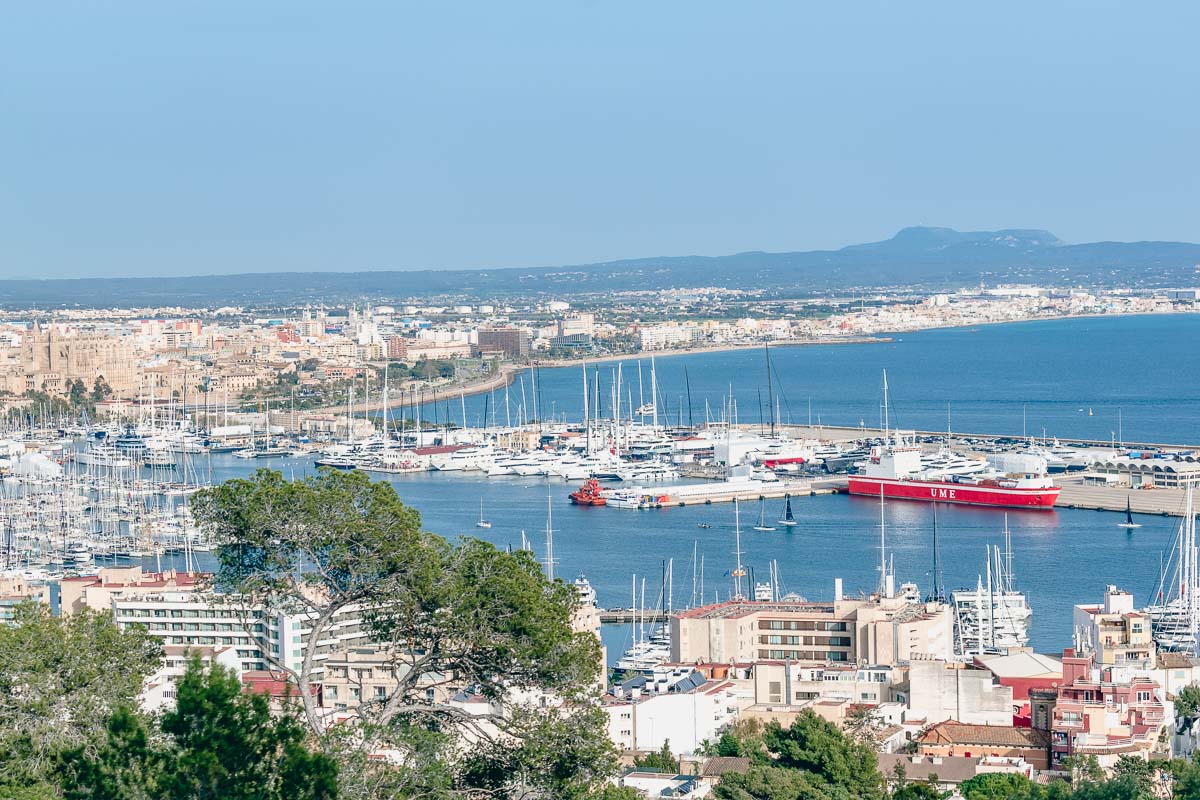
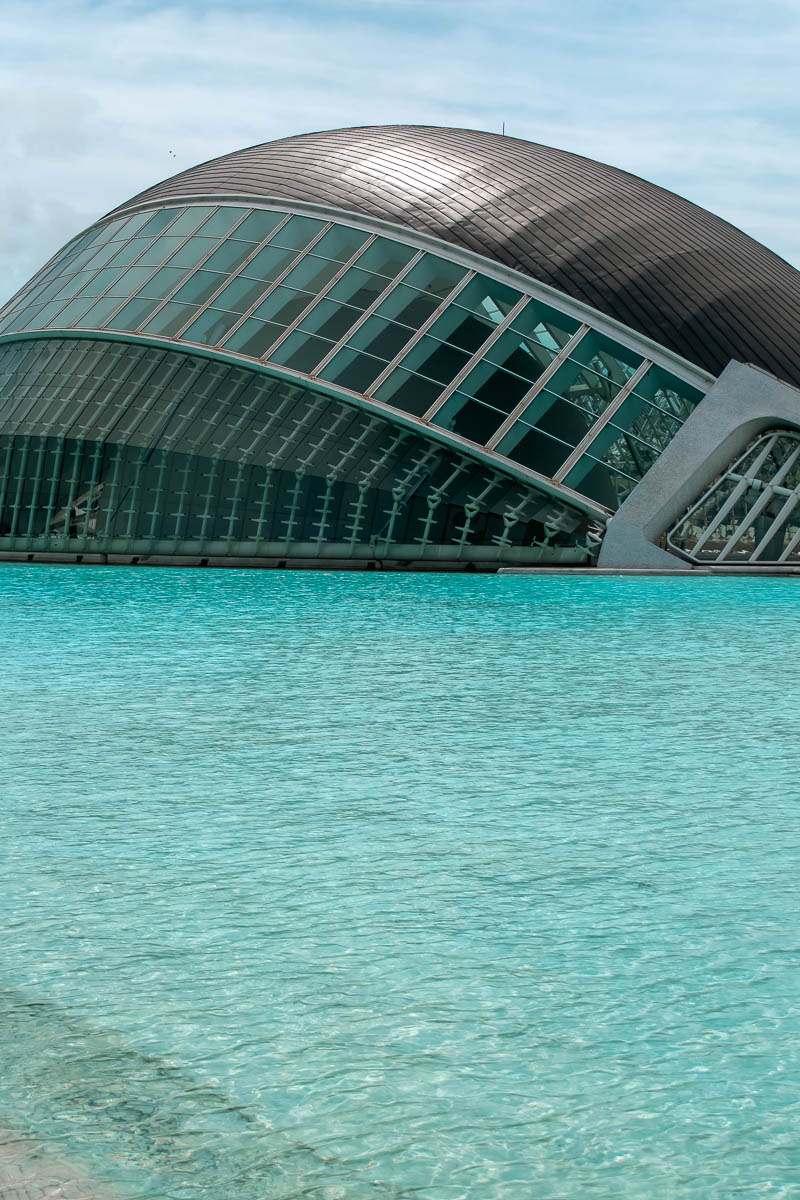
The Heroes Off the Page
Which local hero never made it into the books?
Which local hero never made it into the books? I keep thinking about the ones history edits out.
Eloy Gonzalo, the Hero of Cascorro, is the clearest ghost. In Cuba's war of independence, 1895–1898, he broke a siege by setting fire to a house where the enemy was entrenched. A Spanish magazine wrote in 1897 that he was, without doubt, the most popular soldier of the war. Yet the press left out the cruel beginning: born in Madrid on 1 December 1868, abandoned hours later in the cold dark at the door of an orphanage run by the Sisters of Charity. Pinned to his clothes was a note, now kept in the Madrid archive: 'This child was born at six in the morning. He has not been baptized, and we ask you to name him Eloy Gonzalo García.' His statue still stands in Plaza de Cascorro, at the edge of Madrid's Rastro, but few know the true story behind it.
Then there is Francisquete—'Uncle Camuñas'—one of the toughest guerrillas in Spain's war of independence against the French in La Mancha. And Manuel Hernández, a Civil Guard who saved the people of Albendín from certain death. Today, as the saying goes, no street, no plaque remembers the hero of Albendín. I like Pico Iyer's way of writing because he lets places keep their silences. So I listen for these missing names. They are not footnotes. They are the country's heartbeat, beating outside the official story.
The Architecture of Silence
What historical silence shapes Spain's landscape?
I have always believed that a country’s truest history is written not in its grand monuments, but in its profound silences. In Spain, the heaviest of these is the post-Civil War "Pact of Forgetting." To nurture a fragile democracy, Spaniards implicitly agreed to bury their collective trauma. Consequently, thousands of unmarked graves still lie beneath the sun-baked earth, and the 2007 Historical Memory Law remains a fiercely contested political wound.
This collective amnesia shapes the very soil. I often think of El Alamin, a utopian village near Madrid abandoned to the dust, now a haunting stop for dark tourism. Or Trasmoz, excommunicated in 1255 over a trivial dispute of firewood; its centuries-old curse is now cherished as a quirky shield preserving its unique heritage.
Yet, silence can also be an act of quiet defiance. In the Andalusian village of Cútar, an 800-year-old Quran was discovered hidden within a wall. During the Reconquista, its Muslim inhabitants concealed it, passing down the secret through generations. As a fellow traveler once noted, Andalusia did not vanish in 1492; it simply learned to hide. Here, the past is never truly gone; it merely waits in the shadows.
A Spain Before Spain
What should I experience before traveling to Spain?
Before Spain, I would watch, read, and listen my way into it. I like Pico Iyer's way of writing: travel begins as inner weather.
For film, Almodóvar's All About My Mother and Volver show urban Spain, strong women, and Spanish black humor. Guillermo del Toro's Pan's Labyrinth turns civil-war scars into dark fantasy. Mondays in the Sun captures working-class Spain and post-crisis unemployment. Ocho apellidos vascos teases identity between Spain and the Basque Country. Woody Allen's Vicky Cristina Barcelona is an outsider's affectionate Barcelona.
For fiction: Carlos Ruiz Zafón's The Shadow of the Wind is postwar Barcelona, mysterious and book-haunted. Don Quixote is Spain's founding myth. María Dueñas's The Time in Between moves from Tangier to Madrid on the eve of World War II. Hemingway's The Sun Also Rises gives the 1920s outsider's Spain—Pamplona, bullfighting, the Lost Generation.
For poetry, Antonio Machado, especially "Castilla," searches for Spain's identity in the dry, empty plains of the meseta: "Spain, I live in the most criminal city on earth, but you, Spain, are not that city, because you are generous and good." Miguel de Unamuno personifies Castile and ties national identity to language and political discourse.
For song, Joan Manuel Serrat—above all "Tu nombre me sabe a hierba," where love, identity, and memory knot together.
In my wanderings, I have found that every nation weaves a mythology to explain itself to the world, yet Spain’s most profound myth is one it keeps largely for itself: the quiet conviction that "Spain is different." Foreigners often mistake this for the sun-drenched clichés of flamenco, or worse, the sixteenth-century "Black Legend" painted by Protestant rivals that branded the empire as savage. Franco later hollowed this into a mere tourist slogan, but the truth beneath it is far more labyrinthine.
What the outsider rarely grasps, and what I find most fascinating, is that Spaniards are their own most unsparing critics. Unlike most nations that gaze upon themselves with rosy affection, Spaniards possess a beautifully complex, almost self-deprecating skepticism. They view their own reflection with a piercing clarity no foreigner could ever muster. Furthermore, they cling to the myth of their "infinite diversity"—a sprawling mosaic of identities that sometimes borders on denying a shared national soul. Yet, this fierce internal plurality stands in stark contrast to the outsider’s reductive gaze, which still sees only the dust of Andalusia and the shadow of the bullring.
The Unseen Mirror
What hidden myth defines the Spanish self?
Laughing at Ourselves
What does Spain laugh at—and what does that laughter reveal?
In Spain, humor is more than entertainment; it is a way of living with difficulty. Even under Franco’s dictatorship, Spaniards did not lose their particular sense of humor. If anything, they learned to laugh more sharply, often turning discomfort into something they could carry.
Perhaps the most Spanish joke is the joke about Spain itself—especially the old stereotype of *la pereza española*, the “Spanish laziness,” and the *siesta*. Foreigners may imagine Spaniards as lazy, while Spaniards themselves happily play along: “We are not lazy; we simply cannot work in the midday heat. We stay up late instead.” Beneath the joke lies a gentle criticism of social habits and the country’s complicated relationship with time.
Then come the regional jokes. Andalusians are portrayed as easygoing and lazy, Catalans as thrifty and hardworking, Basques as serious and tough. These stereotypes are exaggerated, of course, but the laughter sometimes carries the memory of deeper regional tensions and identities.
There is also the old joke about Madrid and the central government—the distant center that, depending on where you stand, seems to interfere too much or understand too little. Yet perhaps the darkest humor concerns Spain’s past: the Civil War, Franco, and the memories that never completely disappeared. Jokes about them can break the silence around painful history. In Spain, laughter is sometimes not an escape from fear, but a way of looking it in the eye.
The Overrated and the Overlooked
Which famous sight isn't worth it—and which unknown place is?
Which famous sight isn't worth it—and which unknown place is? I ask this in the spirit of Pico Iyer: not to dismiss a place, but to find its quieter truth.
La Rambla in Barcelona, I'd say, has become a victim of its own fame. It now stands for mass tourism and the loss of local identity: pricey terraces, souvenir-only shops, pickpockets. Many travelers leave disappointed.
Instead, wander El Born and Gràcia, where independent cafés, craft shops, and local restaurants keep the city's everyday pulse alive. In Madrid, trade Puerta del Sol for Plaza Mayor in the early morning, or lose yourself in La Latina—narrow lanes, traditional markets, tapas bars.
Then go where the crowds don't. Jaén, in Andalusia, is the overlooked antidote. As The Times put it, nothing rivals Seville's dreamlike beauty, but Jaén has its own charms and so few tourists that stressed Sevillians can only dream of such peace. Its Renaissance cathedral, medieval Arab baths, whitewashed winding alleys, churches, monasteries, and old taverns make it "Seville without the souvenir shops."
For me, the best places are not the loudest. They are the ones that still belong to themselves. So skip the postcard when it has become a queue, and follow the hum of ordinary life.
The Keeper's Map
Where do locals hide?
In my years of wandering, I have learned that the most profound secrets of a country are never found in its glossy guidebooks, but in the quiet, unassuming corners its people fiercely protect. On the sun-drenched eastern coast, locals guard Xabia like a well-kept secret, reserving its hidden coves and exquisite, unpretentious restaurants for those who truly understand the Mediterranean rhythm.
Yet, to find the soul of the interior, one must journey to Extremadura, that vast, landlocked expanse wedged between Madrid and Portugal. Here, the crowded tourist trails simply dissolve into the earth. In the golden afternoon light, the magnificent, silent plazas of Trujillo and Cáceres reveal a Spain entirely untouched and happily off the radar. It is a landscape of rolling hills and ancient stone villages that speaks in whispers rather than shouts.
For an even deeper retreat, I often seek the Valle del Silencio in León. Nestled within it is Peñalba de Santiago, a medieval hamlet of barely fifteen souls. With its dark stone houses, wooden balconies, and slate roofs huddled around a tenth-century Mozarabic church, it offers a profound, almost sacred stillness. These are the places where Spain keeps its truest self, far from the clamor of the world.
Our Stories from Spain
-
24 Easy and Quick Tips for Stunning Travel Portraits
-
The Art of Enough: Finding Joy in Simple Photography
-
Explore Magnificent Photographs: 20 Handpicked Online Galleries
-
Beyond Stereotypes: Unveiling the Enchantment of Iran
-
Sunken courtyards of Kashan
-
The Old Weaver's Hidden Smile
-
One Lens, One Pen: The Hatching of "Roam & Record"
When the Road Becomes the Destination
Which Spanish road becomes the destination itself?
Some roads are meant to take you somewhere. Others make you forget where you were going. In Spain, I find the second kind more tempting—the routes where the landscape slowly becomes the reason for travelling.
In Andalusia, the Pueblos Blancos route winds for roughly 100 kilometres through hills scattered with whitewashed villages and traces of Moorish Spain. Beginning in Ronda and heading towards Setenil de las Bodegas, the road moves between cliffs, olive groves and quiet villages. At Setenil, houses seem to disappear into the rock itself, as if the landscape had decided to become architecture.
Farther north, the Green Coast follows the Atlantic edge from San Sebastián in the Basque Country towards Santiago de Compostela in Galicia. Passing through Bilbao, Santander and Santillana del Mar, it reveals a Spain of green mountains, mist, ocean cliffs and small coastal towns—a cooler, quieter country than the Spain of the postcards.
Then there is the roughly 450-kilometre inland route from Almería to Cádiz, crossing Granada and Málaga. Here, the pleasure lies less in arriving than in stopping: at forgotten viewpoints, mountain villages, roadside cafés and unexpected corners of Andalusia. Perhaps this is what I like most about Spanish roads: sometimes the map is only an excuse. The real destination is everything that happens between two names.
The Wrong Hour, the Right Place
Where should you go at an unexpected hour, season, or weather?
Where should you go at an unexpected hour, season, or weather? I like Pico Iyer's way of writing, so I look for the moment when a place forgets its audience.
In autumn and winter, Spain grows quieter, cheaper, more itself. Visit the white villages of Andalusia in spring or autumn, when you can enjoy their lanes without the punishing heat. In Segovia, Maderuelo—a walled village beside a reservoir—offers winter silence, wide views, and unhurried walks. In Cádiz, Setenil de las Bodegas in February, with the fewest tourists, lets you savor its rock-roofed houses. In the Basque Country, Laguardia in winter reveals an underground labyrinth: more than two hundred wineries linked by tunnels.
At sunset, see Albarracín from its outer walls just before the sun goes down; the golden hour works magic on photographs. Watch Ronda from Puente Nuevo at dusk, when the cliffs turn gold and the crowds vanish.
Then there is Playa de Gulpiyuri in Asturias: a hidden inland beach joined to the sea by an underground tunnel. At full tide, it shows its full enchantment.
For me, timing is not logistics; it is intimacy. The right hour does not just improve a view. It returns a place to itself.
The Quiet Capitals
Where are Spain's true capitals?
In my travels across the globe, I have learned that a nation’s true capitals are rarely found in its grand political centers, but rather in the quiet, fiercely proud hamlets that hold its enduring soul. Madrid may govern, but the heart of Spain beats in its villages. Consider Sigüenza, where a medieval castle, now a grand parador, crowns a town of barely 5,000, earning it the well-deserved mantle of rural tourism’s true capital. Or wander the rose-hued, cobblestone labyrinth of Albarracín. Perched on a cliff, this overlooked medieval jewel feels like a secret kept from the hurried world.
Yet, true capitalcy is not just about beauty; it is about singular devotion. In the quiet valleys of La Rioja, the tiny village of Ezcaray reigns as the unlikely global capital of cinema seats, crafting the very thrones where the world watches its dreams unfold. Meanwhile, Pedraza, with its mere 300 souls, stands as a perfectly preserved time capsule, its single stone gate guarding centuries of silence. These places remind me that the most profound centers of power are often the smallest, proving that greatness is measured not by size, but by the depth of its character.
Where Spain Changes
Where does Spain quietly become another country?
Spain has borders that never appear on a map. Cross one, and the language, food, architecture, even the mood can change within a few kilometres. For me, these invisible borders are among the most revealing ways to travel through the country.
Enter the Basque Country (País Vasco) and Spain suddenly feels less Spanish, more like a culture suspended between Spain and France. You hear Euskara, a language with no known relationship to any other living European language. Tapas become pintxos, food becomes a serious art, and Bilbao’s Guggenheim introduces an unmistakably avant-garde architecture. The atmosphere feels northern, self-contained and quietly confident.
In Galicia, the landscape softens into rain and green. Galician replaces Castilian in everyday life, sounding closer to Portuguese than to the Spanish heard farther south. The table fills with Atlantic seafood, pulpo a la gallega and Albariño wine, while stone hórreos stand beside old villages. This is a wetter, more mysterious Spain—the country of mist and ocean rather than endless sunshine.
Then comes La España vacía, the “Empty Spain,” across the central plateau. Around Soria and Guadalajara, the roads grow quiet, villages become medieval and stone-built, and meals turn towards roast lamb and rustic stews. Some settlements have only a handful of inhabitants. Here, Spain seems to breathe more slowly. Perhaps that is the real lesson of its internal borders: you do not always need to cross a country to enter another world.
Weather on a Plate
Which dish only makes sense in one climate or class?
Some dishes are not recipes so much as weather and history on a plate. I like Pico Iyer's way of writing: a place is never just scenery; it is also what people cook when the sky turns.
In Almería, migas belong to rain. This arid province treats water as treasure, so on wet days locals make migas of stale bread, garlic, chorizo, and olive oil—a shepherd's meal turned into gratitude. To honor the rain is to say, in effect, every cloud has its silver lining, though here the lining is crisp bread and smoke.
In cold Castilla y León, roast lamb and suckling pig, cooked over wood in clay ovens, rule the table. This is España del Asado, the Spain of roasts: not a luxury but an answer to harsh winters and a long pastoral tradition. In Extremadura, caldereta—a rugged meat stew rooted in shepherd and village life, with echoes of Arab "sinab"—rises from dry plains and grazing land. And in La Rioja, patatas a la Riojana, with chorizo and sometimes pork ribs, has traveled far beyond its small region. Sitting on the Camino de Santiago, Rioja is a land of exchange, and this dish is its edible signature.
For me, these foods are less about class than about belonging. They taste of a specific wind, a specific winter, a specific road. You do not simply eat them; you understand where you are.
The Calendar of Taste
The Calendar of Taste
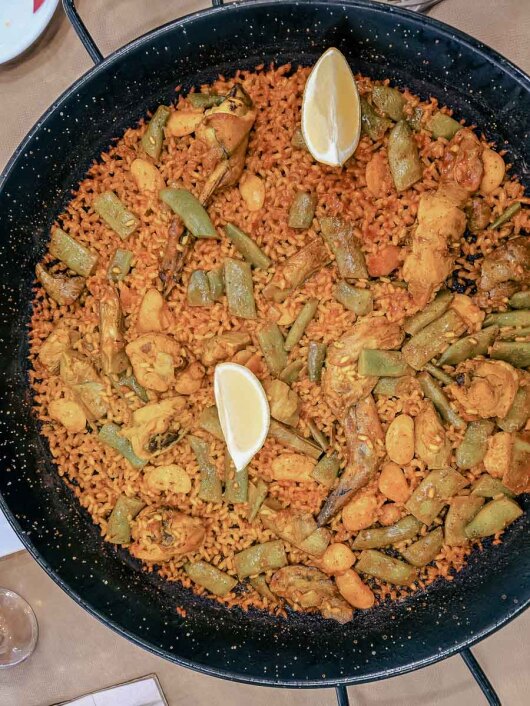
In my wanderings, I have learned that a country’s truest flavors are rarely found on a hurried tourist’s plate, but in the quiet, deliberate rituals of its calendar. Take paella. To the casual visitor, it is the ubiquitous, sun-drenched symbol of Spain. Yet to the local, it is a sacred, communal rite. Spaniards rarely order it in a bustling tavern; instead, it is conjured in vast, blackened pans over open fires for saints’ days, birthdays, or the autumn harvest, feeding a sprawling, joyous family. It is food as a gathering of the tribe.
Beyond this, the authentic palate is deeply tethered to the turning of the year. On Christmas Eve, the dining table becomes a vivid map of regional devotion: the ruby-red bream of La Rioja, the tender suckling lamb of Aragon, or the lavish, briny seafood feasts of Catalonia. The winter air grows sweet with turrón and polvorones, the indispensable, crumbling confections of the season. And when the grand feast finally concludes in the misty north, the ritual gracefully shifts to orujo. This fiery grape pomace brandy is poured not merely to aid digestion, but to warm the spirit and prolong the conversation into the deep, quiet night. Here, food is never just sustenance; it is the very rhythm of time.
Crafts That Refuse to Disappear
Which Spanish crafts are still alive—and which are disappearing?
Spain’s traditional crafts tell a quieter story than its cathedrals and museums. Some still live in small workshops, carried from one generation to the next; others survive in the hands of only a few ageing masters, their future uncertain.
In Toledo, Damascene work (Damascene)—the delicate inlay of gold and silver into metal—is one of the most fragile survivors. Only a small number of recognised craftsmen remain, and masters such as Mariano San Félix, who began learning the art at thirteen, represent a tradition that may soon become more museum piece than living practice.
In Málaga, esparto weaving, once made from a tough grass known almost as Spain’s national fibre, has also dwindled to a handful of practitioners. Baskets, ropes and shoes that once belonged to everyday life are now increasingly made for memory. In Lanjarón, Granada, wicker weaving has suffered an even quieter decline; where hundreds once worked, only a few craftsmen remain.
Yet not every craft is fading. Ceramics and pottery still breathe in Valencia, Granada and elsewhere, with the distinctive Fajalauza tradition keeping old forms alive. In Córdoba, leather workshops continue to produce finely made goods, while silver filigree survives in the narrow streets of the Judería.
What I find moving is that these crafts are not simply objects. They are accumulated time—the patience of hands, the rhythm of repetition, and knowledge that cannot be downloaded. To buy one is easy; keeping the hands that made it alive is the harder part.
Souvenirs That Stay
What should I buy to stay connected to Spain after the trip?
The best souvenir is not on a tourist shelf. I look for the Artesanía de España mark—an interlocking A—a quiet promise of authenticity and quality. I want something that keeps working on me after I return: a taste, a texture, a daily object that carries a place.
For taste, olive oil first. Spain is the world's largest producer; choose extra-virgin AOVE from Jaén or Baena. Saffron from Castilla-La Mancha is among the finest, celebrated each October in Consuegra. Pimentón de La Vera, from Extremadura, smokes its way into everything. Seafood preserves—ventresca, bonito in olive oil, Cantabrian anchovies—bring the coast home. And sweets: Toledo marzipan, Valencia turrón, Mallorca's ensaimada.
For craft, buy what hands made. A clay bowl or plate from Valencia or Granada. Traditional espardeñas from Ibiza, still made the old way. A hand-embroidered mantón with traditional motifs. Or leather from Córdoba—a notebook or small bag, embossed and lasting.
I like Pico Iyer's way of writing because he reminds us that travel is not possession but relationship. So I choose things that age with me: oil that flavors a winter kitchen, a bowl that holds morning coffee, leather that softens. A souvenir says, "I was there." These say, "I am still there."
The Spain Beyond the Postcard
Which Spanish landscapes overturn the country’s official image?
Spain is often imagined through a familiar palette: dry plains, bright beaches, white villages and endless Mediterranean light. Yet some of its most revealing landscapes seem to belong to another country altogether. For me, they are reminders that a nation is rarely as simple as its postcard.
In **Bardenas Reales**, in Navarra, the land turns almost desert-like. Eroded cliffs and strange, sculpted formations create a landscape that feels dry, mysterious and faintly extraterrestrial—a striking counterpoint to the idea of a green Spain.
And green Spain is very real. Spain is among Europe’s most heavily forested countries, with vast woodland landscapes in the north. The rainy forests of **Asturias**, protected by a cool Atlantic climate, challenge the familiar image of a country defined by heat, drought and sun.
Then there is **El Hierro**, the quietest and most remote of the Canary Islands. Volcanic landscapes, rugged coastlines and its long commitment to renewable energy give it a very different character from the crowded resort image associated with Tenerife or Ibiza. It feels less like a holiday island and more like a place that has managed to remain itself.
And in the north, the **Picos de Europa** rise with alpine meadows, deep valleys, lakes and snow-capped peaks. Spain’s first national park, established in 1918, looks less like the Mediterranean postcard and more like a fragment of the Pacific Northwest. Perhaps that is what I love about Spain: just when you think you know its landscape, the country quietly changes the picture.
The Threshold of Time
Where lies Madrid's second country?
I have always believed that to truly understand a capital, one must occasionally flee its relentless pulse. Just a two-hour drive from the frantic energy of Madrid lies Alarcón, a medieval jewel in Cuenca that National Geographic rightly crowns among Spain’s hundred most beautiful villages. Perched defiantly on a sheer cliff above the winding Júcar River, it offers a profound escape into a "second country" that feels centuries removed from the modern metropolis, preserving an older, much quieter rhythm of life.
Passing through its ancient stone gates—Campo, Calabozo, and Budigo—I find myself stepping entirely out of time. The narrow cobblestone alleys, the thirteenth-century solemnity of the Santa Trinidad church, and the hushed Plaza de Don Juan Manuel stand in stark, beautiful defiance of the capital's endless rush. At its heart stands the great fortress, now a historic Parador, where I can sleep within the very walls of history. Here, at the very threshold of the capital, Spain’s enduring, stone-carved soul waits in perfect silence.
The Rhythm of the Road
Who truly belongs in Spain?
I have long believed that Spain is not merely a destination to be consumed, but a profound rhythm to be inhabited. For the traveler seeking slowness and deep authenticity, it is an absolute paradise. Step off the beaten path, and the country reveals its deeper, quieter soul. Hikers and cyclists wandering the emerald folds of Asturias or the sun-baked, forgotten plains of Extremadura will find a richness that defies any hurried tourist checklist. It is a true haven for those who wish to linger, allowing the sun and the sea to slowly dissolve the edges of the self.
Yet, for those chasing the polished veneer of classic European luxury, Spain can be a profound disappointment. To the uninitiated, the Spanish spirit can feel unyielding, almost arid, resisting the easy, predictable comforts of the north. Worse still is the inescapable trap of the manufactured coast. The glittering high-rises of Benidorm or the overpriced, crowded shores of the Costa del Sol have, in many ways, paved over their own authenticity. For the seeker of quiet solitude, these overrated, bustling resorts are not a paradise, but a beautiful, exhausting mistake.
Village as Portal
Which village opens a subculture?
Which village or small town is a gateway to a subculture? I like Pico Iyer's way of writing: the smallest place can open the widest interior.
Matavenero in El Bierzo, León, opens onto hippie eco-village culture. Emptied in the 1960s, it was revived in 1989 by the international Rainbow Family. Over seventy residents from seven nationalities live there: no television, no cars, solar power, no two houses alike. It inspired Extremoduro's Agila and became an emblem of marching to a different drummer.
Trevijano in La Rioja opens onto neorruralismo, the back-to-the-land movement. On the brink of abandonment, it was revived in 1971 by anthropologist Luis Vicente Elías, shaped by Paris May 1968. Participatory methods turned the tide. In summer it holds 150 people—a working example of neo-rural revival.
El Burgo in Málaga opens onto orgullo rural, rural pride. Fewer than 1,800 people live there; in 2024 it hosted the first Rural Pride, challenging the conservative-countryside stereotype and making room for LGBTQ+ diversity—turning over a new leaf.
The Ponent villages of Lleida open onto rural punk counterculture. Rooted thirty years ago in the Balaguer-Tàrrega-Ponts triangle, the movement is reviving through self-management, against the grain.
For me, these are not escapes but experiments in belonging. They ask what community can be when the crowd goes elsewhere. The road less traveled often leads deeper into Spain, not away from it.
The Calendar Beyond Tourism
Which traditions keep the real calendar of Spain alive?
Spain has two calendars: the one tourists see, filled with famous festivals and crowded squares, and another that belongs to villages, families and memory. The second is often harder to find, but it may say more about Spain than any major celebration.
In Cantabria, La Vijanera turns the first Sunday of January into a ritual of masks, noise and renewal, driving away evil spirits and saying farewell to the old year. In Galicia, Santa Marta de Ribarteme is stranger still: on July 29, survivors of serious illness or accidents are carried through the village in coffins, giving thanks to Santa Marta for a second chance at life.
In Granada, El Cascamorras transforms an old dispute over a religious image into a colourful battle, as the character attempts to reach the statue while residents of the rival town cover him in paint. In Málaga, Los Rondeles fills a December night with flaming torches, turning a small village into something almost dreamlike.
Elsewhere, Ochagavía in Navarra briefly turns back the clock, reviving forgotten occupations and customs from the early twentieth century. And in Tarragona, the Concurs de Castells brings competing teams together to build human towers that can rise ten storeys high—a remarkable display of trust, balance and collective strength.
What I like about these traditions is that they are not performances created for visitors. They are ways of remembering who a place is. Tourism may have its calendar, but the deeper Spain keeps time differently.
The Sound of Spain
Lost in the Desert Sky
Keyhan Kalhor
Flower’s Reward
Mehran Mobini
Konj-e-Kharabat
Gholam Hossein Fathi
Keep Roaming
Contact@roamandrecord.com
We are waiting for your kind messages