My Notes on
S P A I N
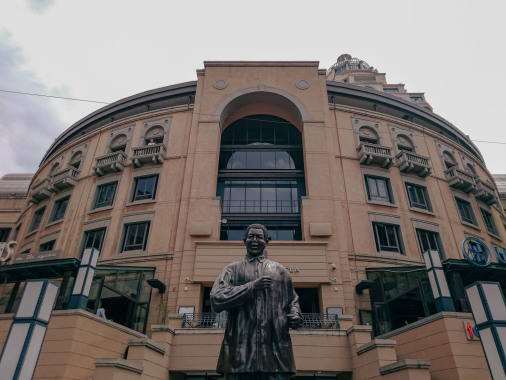
I have fought against white domination, and I have fought against black domination. I have cherished the ideal of a democratic and free society in which all persons live together in harmony and with equal opportunities. It is an ideal which I hope to live for and to achieve. But if needs be, it is an ideal for which I am prepared to die.
Nelson Mandela
Which part of South Africa contradicts the image we carry in our minds?
What truly maps a nation's soul?
Which part of South Africa contradicts the image we carry in our minds?
Which part of South Africa contradicts the image we carry in our minds?
The Ochre Chorus
What is South Africa in sound, smell, colour, and taste?
If South Africa were a sound, a smell, a colour, and a taste, I would not reach for a single note. I would choose the mingled voice of city and wild: Johannesburg’s hooters and street music, then wind through fynbos, then the Indian Ocean’s roar. If it must be human, give me a choir, not a lone instrument.
Its smell is warm earth after rain, dry grass, wood smoke, salt at the coast. In the Western Cape, fynbos perfumes the air; in the east, humidity and subtropical green press close.
Its colour is ochre—soil, rock, dry grass, rural walls. But to show the country’s contradiction, place ochre beside deep fynbos green and ocean blue.
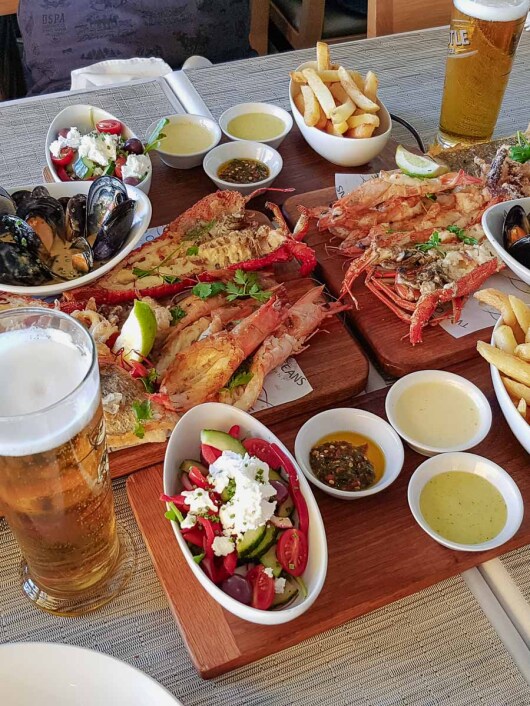
Its taste lies between grilled meat, maize, spice, and sharp relish: braai, pap, Cape Malay chutneys, Durban Indian food. Here food is as layered as the land.
This fits a country of eight biomes and more than 3,000 kilometres of coast, from Atlantic to Indian Ocean. For me, South Africa is not one thing. It is a chorus—contradictory, generous, impossible to reduce. I keep thinking that to know it, you must let all four senses speak at once.
Beyond the Postcard
Which part of South Africa contradicts the image we carry in our minds?
Johannesburg.
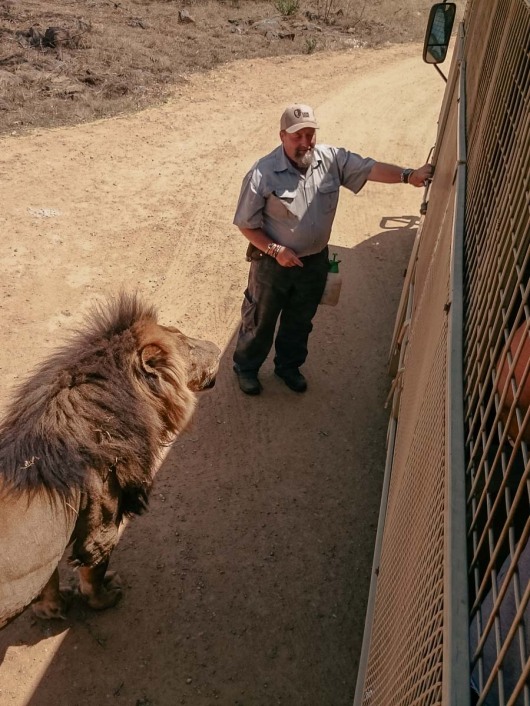
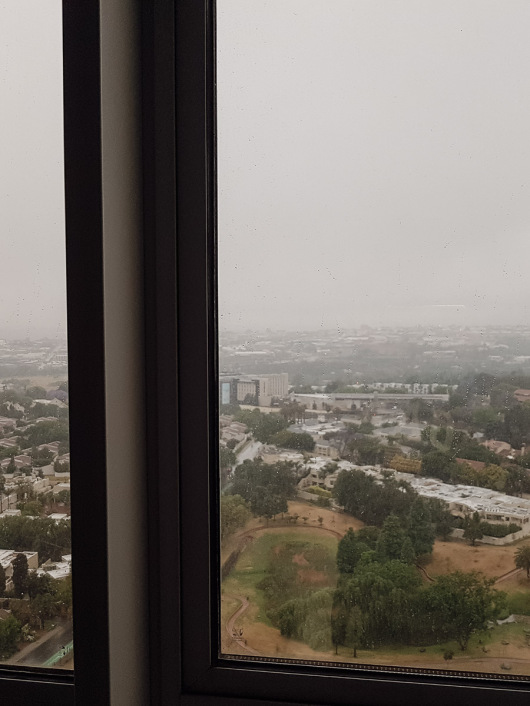
The South Africa most travelers imagine is almost a postcard: lions, elephants, endless savanna, Cape Town, and vineyards. Johannesburg belongs to another story. It is neither a coastal city nor a safari destination, but a high-altitude, densely populated metropolis whose history has been shaped by gold, migration, industry, capital, and apartheid.
This is one of the first contradictions I notice when thinking about the country. Gauteng, the smallest of South Africa’s nine provinces by area, is also its most populous. Here, one of the country’s deepest realities is not wild but urban and human. South Africa is not only about landscapes and wildlife; it is also about crowded cities, movement, inequality, ambition, and the complicated lives built around them.
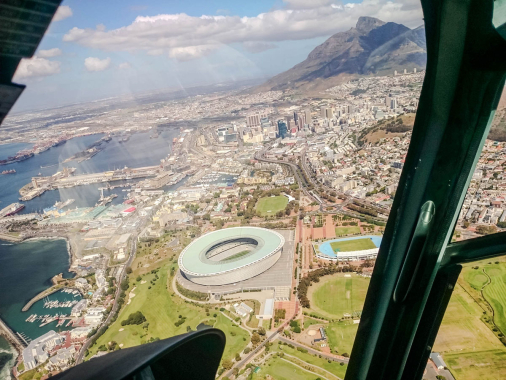
Cape Town carries another contradiction. From the outside, it can feel almost perfectly composed—beautiful beaches, restaurants, design, architecture, vineyards, and Table Mountain. Yet only a few kilometres away, the geography of the Cape Flats reveals a very different history. District Six, and the forced removals that reshaped it, reminds us that beauty can exist beside wounds that tourism does not always show.
Shadows on the Escarpment
What truly maps a nation's soul?
I have always believed that to understand a nation, you must first read its earth. In South Africa, the Great Escarpment—crowned by the jagged, dragon-like spine of the Drakensberg—is the land's most formidable natural frontier. I see it as a great geographic divisor, severing the arid, sun-baked highveld plateau from the humid, subtropical embrace of the KwaZulu-Natal coast. The landscape speaks in stark dichotomies of altitude, carving a physical divide that even the state recognizes as the defining marrow of the country's physical body.
Yet, the borders that truly haunt my imagination were not carved by tectonic shifts, but by the cruel, bureaucratic ink of a fractured apartheid. The Group Areas Act and the Bantustan system violently redrafted the human topography. Neighbors became strangers; the walk to the city center was measured in racial hierarchy. Nowhere is this phantom geography more visceral than in Cape Town’s District Six. Once a vibrant, polyphonic tapestry, it was erased in 1966, its sixty thousand souls cast out to the barren, unforgiving winds of the Cape Flats. The mountains endure, but it is these invisible scars drawn on the human heart that form the country's truest borders.
The Map of the Erased
Which part of the map is missing from the official narrative?
Which part of the map is missing from the official story? The historical margins apartheid made.
On the tourist map, Cape Town, Kruger, the Garden Route, Stellenbosch, Durban loom large. They are the postcards. But to understand South Africa, I need another map: the Cape Flats, the former homelands, the townships, the peripheral zones. These are not margins in any simple geographic sense. They are the country’s central narrative, pushed to the edge of the frame.
District Six is the emblem. Today, parts of its old land lie almost empty. That emptiness is not absence; it is evidence. More than 60,000 people were driven out of its community. The silence on the ground speaks louder than any monument. The Two Rivers project in Cape Town tells a similar story: rivers and natural spaces were cut off from social memory when people were forcibly removed from riverside neighborhoods. A landscape can be made to forget.
So the “absent map” of South Africa is not blank. It is a map of people erased from the city’s map. To see the country honestly, I must keep both maps open at once: the one that sells the view, and the one that remembers who was moved to make it possible.
Echoes of Another Earth
Where does one nation end and another begin?
To travel through South Africa is to realize it is not one nation, but a mosaic of hidden worlds. In KwaZulu-Natal, the warm breath of the Indian Ocean meets the jagged spine of the Drakensberg. Here, Zulu heritage and historic Indian influences weave a subtropical tapestry, so distinct that the constitution grants its traditional monarchy unique sovereignty. It feels less like a province than a separate kingdom.
Journey northwest to the Richtersveld, and the postcard image of savannas dissolves into ancient, sun-baked stillness. This is a landscape of stark rock and resilient succulents, recognized by UNESCO as a living cultural canvas. For two millennia, the Nama people have traced seasonal paths across this desert, proving that here, earth and ancestry are inextricably bound.
Further north, Limpopo whispers of a deeper African interior. Beneath the silent watch of baobabs, Venda and Tsonga cultures thrive. At Mapungubwe, where the Limpopo and Shashe rivers converge, the ghosts of a tenth-century kingdom still trade echoes with ancient India and China.
Finally, there is the Karoo. If Cape Town is the country’s glamorous facade, the Karoo is its quiet, beating heart. Vast skies, endless roads, and profound silence strip away the tourist veneer. As a wanderer and photographer, I find this empty expanse to be the truest mirror of the land’s soul.
Destination Digest
Where Conversation Begins
What do people talk about around a table?
Three subjects almost always open the door: sport, food, and politics.
Football and rugby, especially in everyday gatherings, can become a powerful common language. Then there is braai—far more than a way of cooking meat, it is a social occasion, a reason to gather, talk, linger, and share. And politics? In South Africa, it remains part of everyday conversation because the legacy of apartheid, inequality, housing, public services, and employment can still be felt in ordinary life.
But for a traveler, there is something more subtle to understand: do not rush straight to the point.
In many social situations, asking about someone’s well-being, family, and life is more than polite small talk. It reflects a deeper idea associated with Ubuntu: that a person finds meaning through their relationships with others. South African scholarship often connects Ubuntu with empathy, solidarity, respect, dignity, and caring for another person.
I find this particularly useful when traveling. We often think a good conversation begins with an interesting question, but sometimes it begins with something much simpler: showing that you are interested in the person before the place.
So a conversation may begin with:
“How are you?”
But the real question is not always about how you are. It may simply be an invitation to sit a little longer, listen, and let the conversation find its own way.
The Word That Sees You
Which single word opens doors?
If I could carry only one word into South Africa, I would choose Sawubona. In isiZulu it means something close to “I see you.” That is more than a greeting. It is a way of acknowledging another person, of entering a human relationship—the spirit of Ubuntu. It opens doors not because it is magic, but because it asks nothing less than recognition.
In everyday city life, though, the word I would actually use is Howzit? It sits somewhere between “hello,” “what’s up?” and “how are you?” The usual reply is Sharp, or Sharp sharp. Easy, warm, unpretentious.
But I must be careful. South Africa is not one culture, and Sawubona is not a national hello. isiZulu, isiXhosa, Sesotho, Setswana, Afrikaans, and many other languages belong to different cultural worlds. Stats SA shows how sharply languages shift from province to province.
So here is the better trick: do not collect greetings like souvenirs. Listen first. Copy the hello people are actually using in that place. Language, after all, is not a key you own; it is a door you approach with respect. That is how a word becomes a welcome.
The Boundaries of Warmth
What is the true nature of hospitality?
To travel through South Africa is to learn that true hospitality is rarely a transaction; it is a quiet covenant of connection, deeply rooted in the ancient philosophy of Ubuntu. It is the unscheduled cup of tea, the gentle insistence that we converse as humans before we negotiate as strangers, and the spontaneous sharing of a meal. Scholars often distill this ethos into four pillars: empathy, solidarity, mutual survival, and an unwavering respect for human dignity.
Yet, as a wanderer who has learned to read the subtle contours of a culture, I know we must guard against the traveler’s temptation to over-romanticize. Ubuntu is not a blanket guarantee that every soul you meet will open their doors with boundless grace. Beneath the surface of this celebrated warmth, the pragmatic realities of privacy and personal security remain firmly intact. Whether in a bustling restaurant or a quiet guesthouse, boundaries still exist. Genuine hospitality is an offering, not an obligation.
The wisest approach, I have found, is a delicate balance: embrace the genuine warmth extended to you, but never mistake it for an invitation to force an unearned intimacy.
The Art of Small Encounters
Which everyday habits might surprise a traveler?
One is the length of a greeting. In many European cultures, a greeting can be almost weightless—a quick “Hi” before moving on. In South Africa, however, a greeting can itself be a small social moment. Especially when speaking to an older person or in a more formal setting, rushing through it may feel less like efficiency and more like distance. I have learned that sometimes the first few seconds of an encounter matter more than the words that follow.
Personal space is another quiet lesson. South Africa is deeply multicultural, so there is no single rule for how close people should stand or how warmly they should interact. The safest approach for a traveler is simple: start with a little distance, then follow the other person’s lead. Travel often means learning to read these invisible boundaries rather than imposing our own.
And what about bargaining? South Africa is not a place where haggling belongs everywhere. You may negotiate in some tourist markets or informal local transactions, but in ordinary shops, supermarkets, restaurants, and many formal businesses, the displayed price is generally the price.
So I would keep one rule in mind: ask first, observe second, negotiate only when the situation invites it. The most respectful traveler is rarely the one who knows every rule; it is the one who notices when the rules change.
The Clock and the Gathering
Is “African time” reality or stereotype?
Is “African time” reality or stereotype? This may be one of the most dangerous clichés about Africa.
Yes, in some social settings in South Africa, the start of a party or gathering may drift from the official hour. Recent research even speaks of a kind of polychronic time—multiple clocks running at once. But that should never be translated as “Africans arrive late.” Contemporary scholars push back hard against that lazy reading. What they show is subtler: in South Africa, official time and social time can coexist. In the formal economy, the clock and the deadline rule. In social life, the event and the people can override the hour.
So the lesson is not that time is loose here. The lesson is that time is contextual. A business meeting is not a family braai. For a flight, a train, a tour, a meeting, or a restaurant reservation, trust the clock. For a family braai, leave a little room for the human rhythm. That is not indulgence; it is literacy in a different grammar of time.
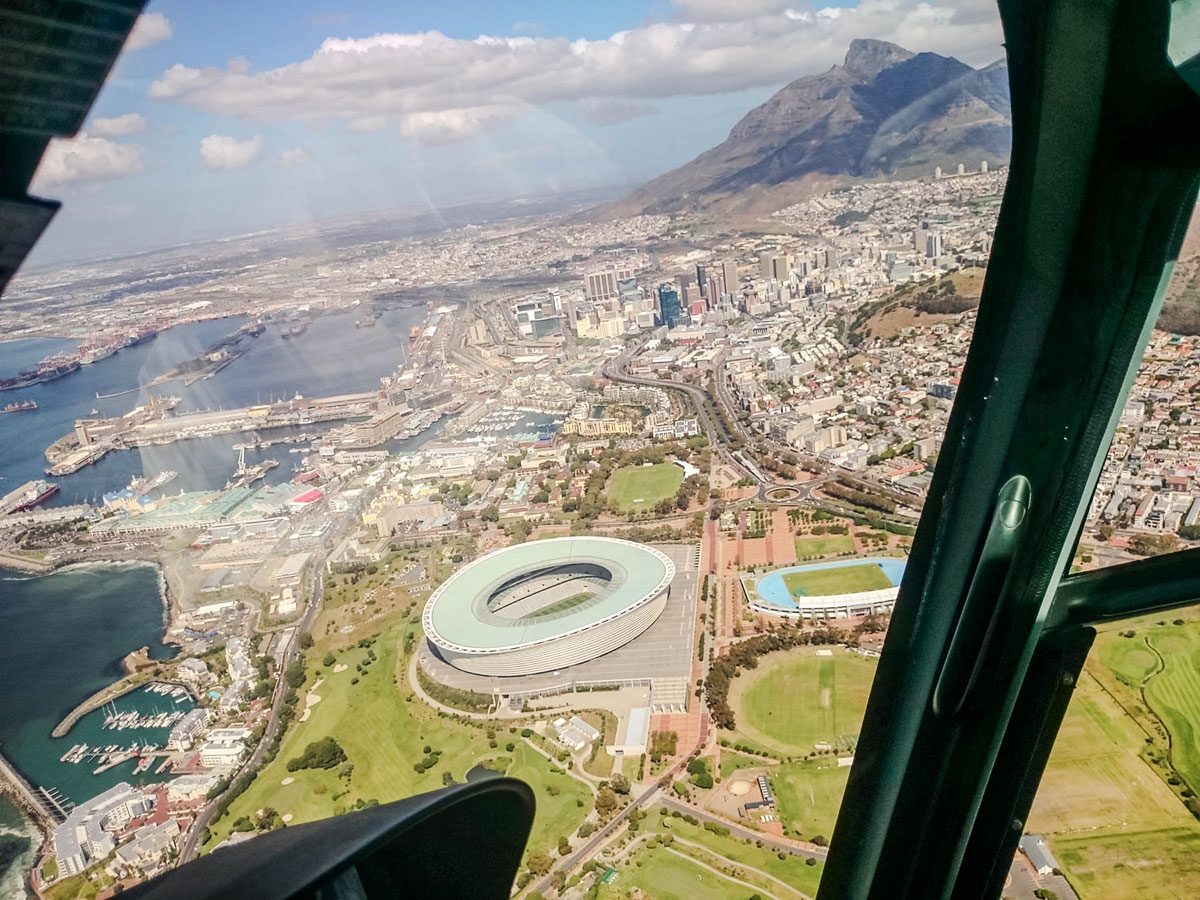
Cities of South Africa so far



Embers and Echoes
Where does a nation’s true character reside?
To truly read the soul of South Africa, one must look past the curated exhibits of museums and the grand, predictable postcards of Table Mountain or Robben Island. The most profound revelation lies in something far simpler: a neighborhood braai. It is not merely a barbecue; it is a quiet ritual of communion. Around the glowing embers, with meat sizzling on the grill and music drifting through the evening air, people gather not just to eat, but to exist together. In this single, smoky tableau, the essence of the nation unfolds: food, kinship, identity, and the unhurried art of conversation.
Yet, if the braai reveals the heart, the minibus taxi rank reveals the pulse. Here, far from the polished veneer of tourist lodges, the raw, rhythmic reality of daily life plays out. It is a vibrant theater of informal economies, a chorus of diverse languages, and the quiet dignity of workers navigating the sprawling landscape.
As a wanderer with a camera, I have learned that a bustling taxi rank speaks volumes more than any sterile museum. However, this intimacy must be approached with profound reverence. We are observers, not consumers of another’s daily survival. True travel demands that we witness these spaces with deep respect and an acute awareness of boundaries, ensuring our curiosity never infringes upon their lived reality.
The Time We Choose
What do people consider a waste of time?
The answer, here, is strangely double-edged.
Waiting for no reason, bureaucracy, traffic, a queue that refuses to move, or a task that could have been finished with one phone call—these are easy to call wasted time. But then there is another kind of time: eating with others, gathering around a braai, talking, being with family, listening to music, watching sport, or spending a quiet afternoon simply sitting and talking without needing to produce anything.
I would be careful not to translate this difference as laziness. The idea of African Time is more complicated than the familiar stereotype of Africans simply being “late.” Recent research in South Africa describes it as a more relational, event-oriented way of experiencing time, in which the quality of an encounter can sometimes matter more than the speed of completing a task.
Perhaps this is one of the small lessons travel offers us. We arrive carrying our own clocks, calendars, deadlines, and ideas of efficiency, then discover that time can also be social—a space shared with other people rather than something to be spent as quickly as possible.
A delayed conversation may have no measurable output. Neither does an unhurried meal. Yet sometimes, when I look back at a journey, these are precisely the moments I remember. Perhaps the real waste is not slow time, but time in which we were never truly present.
The Memory Beneath the Streets
Which myth or collective memory still shapes today’s behavior?
Ubuntu is the idea I would carry into South Africa. Not as a slogan, but as a way of walking. It is often explained as “a person is a person through other people.” In daily life, it means interdependence, human dignity, solidarity, responsibility for the other. Yet I must resist the temptation to treat it as a genetic trait of South Africans. After apartheid, Ubuntu entered the public language of reconciliation and community, while real lives remained more varied, more contradictory, more unfinished.
Another memory lives in the streets: the fear of returning to the past. After 1994, South Africa chose reconciliation over revenge. The Truth and Reconciliation Commission became a symbol of that path. But the result was not forgetting. The country learned to live with its past without necessarily resolving it. That is why a name, a neighborhood, a demolished house, an empty patch of land can still carry political weight. The past is not behind; it is beneath. I feel it in the careful way people speak, in the silences between words, in the hope that is also a warning.
To truly read the soul of a nation, one must look beyond the marble statues of its most famous sons. If I were to choose a single, unsung architect of South Africa’s conscience, it would be Charlotte Maxeke. Long before the world knew the names of its later presidents, she crossed oceans to study at Wilberforce University, returning to forge the Bantu Women’s League in 1918. She stood as a quiet, unyielding force against the draconian pass laws that sought to chain Black women’s movement. History rightly calls her the "Mother of Black Freedom in South Africa," yet to the passing tourist, her name remains a whisper compared to the roar of Mandela.
Then there is Solomon Kalushi Mahlangu. Born in the dusty sprawl of Mamelodi, he was swept into the anti-apartheid struggle after the 1976 student uprisings. Trained in the ANC’s military wing, he faced the gallows in 1979, later receiving the Order of Mendi for Bravery in Gold. Today, his name graces universities and street signs, but the profound, human texture of his sacrifice remains largely unread by the casual traveler.
As a photographer and wanderer, I have learned that a country’s true history is not merely curated in grand museums or dictated by towering leaders. It is etched into the shadows of these forgotten pioneers, waiting for those willing to look closer.
Whispers in the Marble
Who truly shapes a nation's soul?
The City’s Hidden Memory
Which silent historical event explains the face of a city?
Some of the best ways to understand a city are hidden in stories that tourists rarely hear. In Durban, one of them is Cato Manor.
In the 1940s and 1950s, Cato Manor was a vibrant, multicultural community of African and Indian residents. Its streets brought together markets, work, music, and everyday encounters, creating a culture that did not fit neatly into the racial divisions imposed by apartheid. Then came the Group Areas Act. In 1958, Cato Manor was declared a white area, and its residents were forcibly removed to places such as KwaMashu, Umlazi, and Chatsworth. By 1964, much of the old neighbourhood had been demolished.
But the story became more powerful when women resisted. In 1959, women protested against the tightly controlled sale of sorghum beer, police raids, and forced removals. What looked like a dispute over who could sell traditional beer became a struggle over race, gender, livelihood, and dignity.
A similar story unfolded in Johannesburg’s Sophiatown, another centre of urban, multicultural life. Its residents were forcibly removed to places such as Meadowlands. Yet people did not simply disappear into silence. They made music. The song “Meadowlands” carried the pain of forced removal beneath an almost cheerful rhythm, becoming an unexpected form of protest.
This is the kind of history I look for when I travel: the hidden story beneath the visible city. Sometimes resistance does not arrive as a speech. Sometimes it arrives as a song.
The Chosen Rainbow
What is the true myth of a nation?
The most enduring fable South Africa tells itself is that of the "Rainbow Nation." It is a beautiful, necessary myth born from the ashes of apartheid, a promise to weave fractured identities into a single, vibrant tapestry rather than bleaching them into uniformity.
Yet, to gaze only at the rainbow is to ignore the shadows that still linger. As a wanderer who has walked these divided streets with a camera, I see that the ghosts of the Group Areas Act still haunt the segregated sprawl of our cities. Stark poverty, deep inequality, and the heavy, unyielding legacy of forced removals remain etched into the very soil. To believe only in the fable is to miss the complex, breathing reality of the present.
The true magic of this land, I have found, lies not in a fairy tale of perfect, seamless unity. The profound truth is far more subtle and resilient. It is not that "we have all magically become one," but rather, "we have consciously chosen to remain one country, despite the deep chasms that still divide us." That delicate, daily choice is the real miracle.
Our Stories from South Africa
-
24 Easy and Quick Tips for Stunning Travel Portraits
-

The Art of Enough: Finding Joy in Simple Photography
-
Explore Magnificent Photographs: 20 Handpicked Online Galleries
-

Beyond Stereotypes: Unveiling the Enchantment of Iran
-
Sunken courtyards of Kashan
-
The Old Weaver's Hidden Smile
-
One Lens, One Pen: The Hatching of "Roam & Record"
A Small Syllabus
What should I watch, read, and hear first?
Before South Africa, I would not start with a guidebook, but with a small syllabus of film, fiction, and song—works that let the country enter through the side door.
If you watch only one film, choose Tsotsi (2005). Gavin Hood sets it in Soweto: a young gangster meets a child, and his life tilts. BFI calls it authentic, South African; it never romanticizes poverty. Its gift is simultaneity—street language, township, poverty, violence, family, hope—all in one frame.
Then District 9, for Johannesburg. It is science fiction, but its metaphors are earthbound: alien, class, segregation, how a city sorts people. Next, Sarafina! If you wonder why June 16, 1976, still lives in memory, watch it. The Soweto uprising turned Afrikaans into a symbol of resistance.
For a novel, read Disgrace by J. M. Coetzee—but not as a guide. It is a serious, uncomfortable literary image of violence, power, race, gender, and social change after apartheid. Read it not to know South Africa, but to see why the simple story of national reconciliation is not enough.
For music, start with "Soweto Blues." Hugh Masekela wrote it; Miriam Makeba sang it; it rises from the 1976 uprising. In exile, Makeba used music as witness. Then play "Meadowlands," for forced removal and Sophiatown. They are a history lesson: Soweto means protest; Meadowlands means displacement. Both entered collective memory through song. Listen before you go.
Laughing in the Dark
What do South Africans laugh about when life gets difficult?
To understand what South Africans laugh about—and what quietly exhausts them—you need to understand load-shedding. Power cuts became so deeply woven into everyday life that a serious infrastructure failure turned into a subject for jokes, memes, schedules, and ordinary conversation. “Do we have electricity today?” can sometimes sound like a more important question than “What are we doing today?” You learn to charge your phone, cook, work, and plan around the darkness. The joke does not make the problem smaller; it simply makes it easier to live with.
Then there is rugby. If someone says Springboks, do not hear only the name of a national team. Rugby carries layers of South African identity, history, and memory. The Springboks’ 1995 World Cup victory, with Nelson Mandela appearing at the final, became a powerful symbol of reconciliation and was later retold in Invictus. Yet rugby has its own everyday comedy: if you know nothing about the game, you may miss half the jokes around the table—especially in the friendly rivalry between rugby and football.
Perhaps that is the deeper South African joke: laughter and tragedy often sit side by side. Meadowlands, with its cheerful rhythm and painful history, is one example. Load-shedding is another. Here, humour is rarely just entertainment. Sometimes, laughter is a way of carrying what would otherwise feel too heavy.
The Unpolished Coast
Which famous sight isn’t worth it, and which unknown place is?
In France, a "secret spot" doesn't stay secret long once word gets out. But a few places still hold their quiet.
La Soule, in the heart of the Basque Country, is the smallest and wildest corner of the region—not the postcard Basque of Biarritz and Saint-Jean-de-Luz, but valleys, mountains, stone villages, farming, and the Basque language still alive in daily use. If you want to understand the Basques, La Soule teaches more than the famous coast.
Côte Bleue, just west of Marseille, is the Calanques without the crowds—same limestone coves and turquoise water, but quieter, slower, more local.
And then there's Auvergne, in the center. Foreign tourists rarely make it here; they're too busy with Paris, Provence, the Côte d'Azur. But Auvergne offers a different France entirely: dormant volcanoes, high plateaus, meadows, cheese, villages built of dark volcanic stone. The Chaîne des Puys—a chain of nearly eighty volcanoes—is UNESCO-listed and still mostly empty.
If you're looking for a France that doesn't look like France, Auvergne is the answer.
Beyond the Glass
Where does a place truly belong?
We must tread lightly here. The very notion of a "secret local spot" is a traveler’s paradox; to name it is to invite the very crowds that dissolve its quiet magic. Yet, if you seek the authentic pulse of a place rather than a polished tourist spectacle, you must learn to read between the lines of the guidebooks.
In Cape Town, the true soul shifts away from the mountain’s shadow. Woodstock hums with a gritty, creative renaissance of street art and culinary innovation, while the grassroots theaters of Khayelitsha offer a raw, unfiltered glimpse into the city’s resilient, everyday heartbeat.
For me, the most profound crucible lies in Durban’s Cato Manor. It is no conventional attraction, but a layered, living tapestry where Zulu, Indian, and African histories have intimately collided and fused. Through my camera lens, I capture not just a neighborhood, but the quiet archive of a complex identity.
Further along the untamed Wild Coast, enclaves like Bulungula redefine the very act of visiting. Here, community-based tourism invites you to step out from behind the sterile glass of mere observation. Alongside Coffee Bay and Mdumbi, it offers not a staged performance, but a genuine, shared rhythm of life.
The Road Is the Destination
When does the journey become the destination?
If I had to choose only one road trip in South Africa, I would take Route 62. Instead of driving directly from Cape Town toward the Garden Route, I would turn inland, into the Klein Karoo—a semi-arid landscape of mountains, vineyards, farm stalls, and small towns.
Barrydale, Ladismith, Calitzdorp, Oudtshoorn: the names themselves seem to slow the journey down. As the road unfolds, South Africa changes character. The ocean disappears behind the mountains; green gives way to dry earth; the rhythm of cities is replaced by long roads, farm gates, and silence. At roughly 850 kilometres, Route 62 deserves more than a hurried drive. Its real pleasure lies in stopping.
But there are other roads where the journey itself is the point. Along the Wild Coast, you can leave the car behind and walk from Coffee Bay toward Hole in the Wall and Mdumbi, crossing beaches, rivers, and scattered villages. Here, tides are not a detail but part of the journey—you learn to move with the landscape rather than against it.
In KwaZulu-Natal, the Midlands Meander offers another version of the same idea: country roads, artists’ studios, pottery, gardens, small farms, cheese makers, and places where the afternoon seems to have nowhere else to go.
These routes remind me that South Africa is larger than its safari postcard. Sometimes the best way to discover a country is not to ask where the destination is, but how slowly you can reach it.
Capitals of One Thing
Which small town is the true capital of something?
Some small towns are not capitals on any map. They are capitals of a single thing, known by rhythm rather than size.
Hermanus is the capital of watching whales from land. In season, it becomes one of the world’s best stages. Southern Right whales come to Walker Bay to mate and calve, usually June to November; September to November is the surest window. A Whale Crier walks with a horn made of kelp, announcing the whales’ arrival. That is what makes a town the true capital of an experience: it turns waiting into ritual.
Oudtshoorn is the ostrich capital, set in the Klein Karoo, with a history built on feathers. But for a traveler, its deeper gift is as a gateway: to the different landscape of the Karoo and to the Cango Caves, which the South African government lists among the region’s key attractions. A town can be known for one thing and still open onto another.
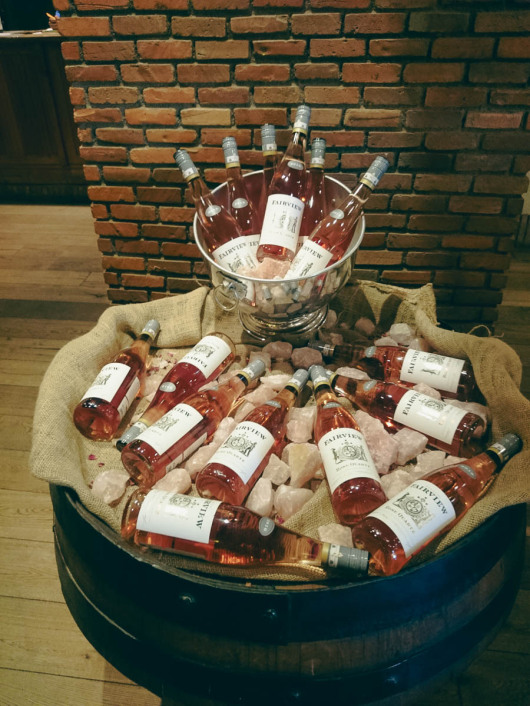
Stellenbosch is the best-known answer for wine. Yet if you want a slower, less formal taste, Robertson and Swartland may be more appealing. Think of it this way: Stellenbosch is wine country as postcard; Robertson is wine country with a local pulse.
For me, these places teach a quiet lesson. A true capital is not where power sits. It is where a place gives itself fully to one thing—and invites you to do the same.
Where One Country Becomes Another
Which internal border can change the country you experience?
If I had to choose only three internal borders in South Africa, I would choose the ones where the landscape, language, and rhythm begin to change almost imperceptibly.
Western Cape → Eastern Cape. Follow the Garden Route toward the Wild Coast, and the country gradually shifts from Afrikaans and English toward isiXhosa, from wine farms to villages, from smooth highways to rougher roads. More importantly, the polished tourist landscape gives way to a more rural Xhosa world, where the journey feels less curated and more intimate.
Western Cape → Northern Cape. Leave Cape Town behind and head toward the Karoo. The Mediterranean-like landscapes of the Cape slowly become semi-desert: fynbos gives way to succulents, the ocean disappears, and the horizon grows wider. Cafés and vineyards surrender to dry earth, wind, and silence. For me, this is perhaps the most dramatic visual transformation within the country.
Free State → KwaZulu-Natal. Moving eastward from the high interior plateau, the language, climate, vegetation, and landscape begin to change again. By the time the Drakensberg rises before you, the transition feels almost physical. The cooler, open plateau of the Free State gives way to the warmer, greener, more humid world of KwaZulu-Natal.
What I like about these borders is that no passport is required. You simply keep driving, and somewhere along the road, without noticing exactly when, South Africa becomes another country.
The Lens of Time
When is the right time to see a place?
To truly see South Africa, one must learn that time is not merely a measure, but a lens. The same place, viewed at a different hour or season, becomes an entirely different world.
In Hermanus, I avoid the glaring midday sun. Instead, I wait for the misty, early mornings of spring, when the ocean exhales and the southern right whales breach the horizon.
Further north, the Namaqualand desert teaches a profound lesson: never judge a landscape by its harshest season. After the winter rains, this seemingly unforgiving expanse erupts into a fleeting, vibrant carpet of wildflowers. Here, timing eclipses the destination itself.
At Kruger, the dry winter strips the bushveld bare, drawing wildlife to the waterholes in stark, cinematic clarity. Yet, as a photographer, I know the rainy season holds its own quiet magic—a symphony of emerald hues and migratory birds. There is no single "best" time, only the right moment for the story you wish to capture.
Then there is the wild coast of KwaZulu-Natal in winter. The Sardine Run turns the turbulent, churning sea into a theater of raw survival, drawing dolphins, sharks, and seabirds into a frenzied ballet. I have learned that rough seas are not the enemy of a journey. Sometimes, nature’s most chaotic drama is the very masterpiece we traveled to witness.
The Taste of Place
Which food or drink only makes sense in one climate or class?
Some foods are not recipes. They are maps of climate, class, and memory.
If one dish belongs to one city, it is bunny chow and Durban. Hollowed white bread filled with curry—mutton, chicken, or beans—it comes from the Indian community of KwaZulu-Natal and is tied to working-class, fast city life. It is not a tourist show. National Geographic found workers queuing at an old bunny shop. The right setting: lunch, takeaway, hands, little rush, curry soaking the bread.
Cape Malay food tells another story: slavery, exile, Islam in Cape Town. Denningvleis, bredie, bobotie, koesister, yellow rice, curries—spices from Indonesia, Malaysia, India, Africa, Holland. In Bo-Kaap, food is community memory. Here the main taste is not heat. It is memory.
Karoo lamb is taste tied to geography. The semi-arid Karoo raises sheep, and recent chefs use rooibos, buchu, fynbos to redefine its flavor. This is not just good lamb; it is lamb that has become part of a landscape's identity.
Rooibos, my chosen drink, belongs to a specific place: the Cederberg in Western Cape. It has moved from local tea to desserts, drinks, even modern cuisine. If you bring one edible home, bring rooibos.
These foods teach me that taste is not universal. It is rooted. You cannot separate bunny chow from Durban's streets, or Cape Malay food from its history of pain and survival. To eat them elsewhere is to miss the point. They are places speaking.
The Flavor of Time
Which French crafts survive, and which are fading?
France's living crafts hover, I have come to see, on a knife's edge between renaissance and quiet ruin. In towns like Thiers, where blades have been forged for centuries, or Limoges, where porcelain still gleams with an almost sacred precision, the old savoir-faire endures with a stubborn grace. Vallauris shapes its clay; Lorraine breathes fire into glass and crystal. These places still burn brightly as citadels of mastery.
Yet renown, I have learned, is no shield against oblivion. The exquisite tapestries of Aubusson and the gossamer lace of Alençon—both enshrined on UNESCO's list of intangible heritage—now teeter on the brink of vanishing, their processes too intricate, their dwindling ranks of skilled hands too few. To mend this fraying thread of history, France has turned to the oldest remedy of all: the master-apprentice bond, a fragile yet vital lifeline passing these rare and luminous arts into the waiting hands of a new generation.
The Flavor of Time
What makes a meal truly local?
To truly taste South Africa, one must understand that its most iconic dishes are not merely meals, but invitations into the rhythm of local life. Take the braai, for instance. It is not a menu item; it is a sanctuary of time. Around the glowing embers, with boerewors sizzling and music drifting through the air, strangers become confidants. If you are ever invited to one, do not treat it as a transactional restaurant experience. The true etiquette is to linger: help tend the fire, share stories, and surrender to the unhurried pace of the afternoon
Then there is potjiekos, a layered stew slow-cooked in a three-legged cast-iron pot. This is food that defies the modern urge for instant gratification. You cannot order it like fast food, because the hours spent waiting for the flavors to meld are, in fact, the very essence of the communion. The cooking process is the conversation.
For a more raw, urban pulse, I seek out shisa nyama in the vibrant townships. Here, over open coal fires, grilled meat is served alongside hearty pap and fiery chakalaka. It is a grassroots feast, unpolished and profoundly real. As a photographer, I’ve learned that the best flavors are never just on the plate; they are woven into the shared silence and laughter of the people gathered around the flame.
The Craft That Remembers.
Which traditional craft is still alive?
If I had to choose only one, I would choose beadwork—but not the generic “colorful African beads” found in souvenir shops.
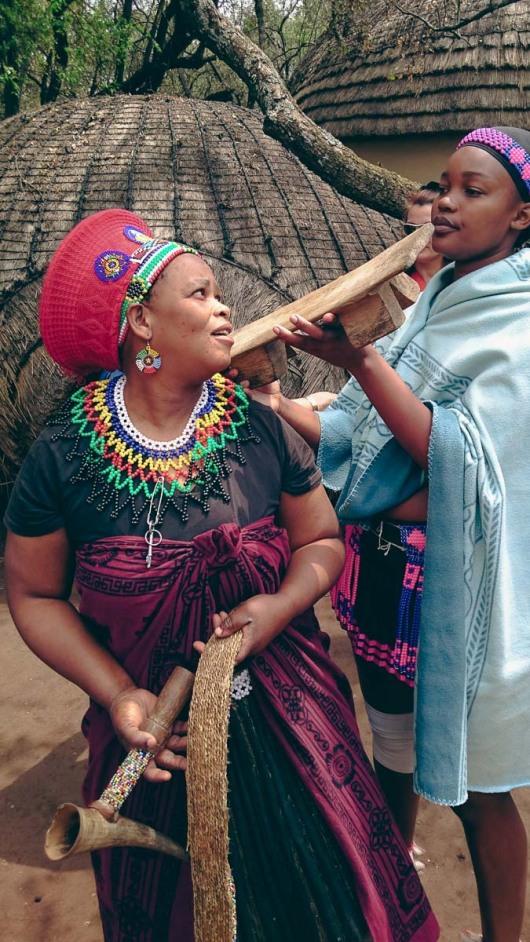
Across South Africa, beadwork has long carried meaning beyond decoration: it can express identity, status, relationships, and rites of passage. In the Ndebele tradition, it remains an important art form, and for some women it is also a source of independent income.
So if I buy a piece, I would rather ask, “What does this pattern mean?” than simply, “How colorful is it?”
If there is one craft that feels unmistakably South African to me, it is Ndebele art: geometric houses, strong colors, repeated patterns, and beadwork. Yet Ndebele design should never be reduced to a vague idea of “African design.” South Ndebele visual culture has its own distinctive architectural and decorative language, especially associated with Mpumalanga and Gauteng.
But perhaps the greater danger is not that traditional crafts disappear completely. It is that they survive only as empty tourist products. Beadwork can become a necklace, then a souvenir, then a mass-produced piece of “African decoration,” while the story that once gave it meaning disappears.
A craft is not preserved simply because it is still sold. What matters is whether its knowledge, symbolism, and skill continue to pass from one generation to the next.
For me, that leaves the real question: Will the next generation still want to make it?
The Souvenir That Stays
What should I buy to keep South Africa with me after the trip?
What should I buy to keep South Africa with me after the journey? Not a generic mask. I want something that carries a place, a hand, a story.
My first choice is rooibos. A good packet from the Cederberg ties me to one landscape more than any anonymous African carving. It is consumable, yes, but meaningful. Every cup repeats the journey.
Second, an authentic piece of beadwork—but only with three questions: Who made it? Where? What does the pattern mean? Those questions turn a souvenir into an object with a voice.
Third, a small Ndebele work. Not big, not expensive. Better a piece by a named artist. The artist’s name matters more than the phrase “Made in South Africa.”
Fourth, a Cape Malay spice blend or chutney. Use it at home, and Cape Town happens again in the kitchen.
What I would not buy: an “African” statue or mask with no maker and no place. It may belong nowhere, and may not even be made here.
Better buying means: buy less; know who made it and why. The South African government reminds us that handicrafts are income and work for local communities. So a good purchase is not just memory. It is respect. It keeps a relationship alive after the suitcase is closed.
The Other Side of the Lens
Where does the true city reside?
If I have only a few hours to step beyond the postcard perfection of Cape Town—away from the manicured Winelands and the glittering facade of the V&A Waterfront—I do not seek another scenic peak. I turn toward the Cape Flats. Geographically, it is a stone’s throw away; historically, an entirely different nation. This landscape was shaped by the cruel geometry of the Group Areas Act. District Six, Manenberg, and Khayelitsha are not mere neighborhoods, but archives of forced removals, where over sixty thousand souls were uprooted from a vibrant community. To walk here as a mere spectator is a violation. One must enter with a local guide, not to consume hardship as a spectacle, but to witness resilience. For a gentler half-day journey, Langa offers a vital key to the city’s Black residential history.
In Johannesburg, the compass points unequivocally to Soweto. It is far more than a township; it is the beating heart of South Africa’s political memory. Yes, Vilakazi Street holds the echoes of Nelson Mandela and the Hector Pieterson Museum, but to view Soweto merely as an open-air museum is to miss its vibrant present. Through my camera lens, I see a living, breathing city. Here, the solemn memory of the 1976 uprising harmonizes with the rhythmic thud of a neighborhood football match, the hum of local enterprises, and the enduring warmth of daily life.
Beyond the Safari
Which landscape tells a different South Africa?
South Africa is often introduced through the language of safari: savanna, lions, elephants, and the drama of the wild. But the Drakensberg quietly overturns that picture. Here, mountains replace open plains; deep valleys, cliffs, waterfalls, and ancient San rock art create another South Africa altogether. The uKhahlamba-Drakensberg Park is a UNESCO World Heritage Site for both its natural and cultural value, with more than 35,000 recorded examples of rock art.
Standing among these mountains, I find a different rhythm: rock, water, silence, and memory. The story is no longer about watching wildlife from a vehicle, but about walking through a landscape that has been observed and inhabited for thousands of years.
And then there is Richtersveld, in the far northwest, close to Namibia. If the usual image of South Africa is green, warm, and abundant, this place almost seems to contradict it completely: desert, stone, succulents, mountains, and an enormous silence. Yet UNESCO recognizes it not simply for its scenery, but as a cultural landscape where the semi-nomadic pastoral traditions of the Nama people remain part of the living landscape.
For me, that is the deeper lesson of these places. Culture does not always live in buildings or museums. Sometimes it lives in the way people move across the land—and in the memories a landscape refuses to forget.
Many Worlds at Once
For which traveler is this country paradise?
South Africa is a paradise for a certain kind of traveler. If you crave desert, mountain, ocean, forest, savanna in one journey, this is your place—one of the world's seventeen megadiverse countries. If you love the road, Route 62, the Garden Route, the Panorama Route, the Wild Coast, the Karoo each have their own character. Here the distance between two points is the attraction.
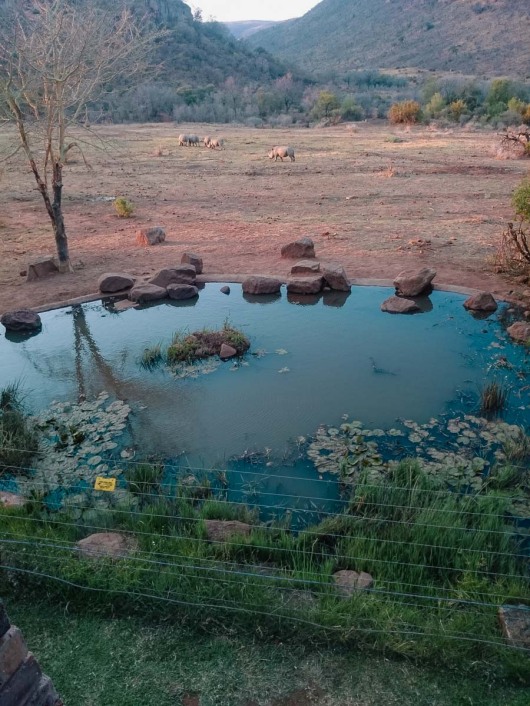
For wildlife lovers, Kruger, Addo, iSimangaliso, Kgalagadi, Madikwe offer more than lion and elephant: birds, plants, insects, ecology. For those drawn to social history, South Africa is a living laboratory—slavery, colonialism, mining, segregation, apartheid, resistance, reconciliation, present inequality—never comfortable, never romantic. And for foodies, one country holds Cape Malay, Durban Indian, Xhosa, Afrikaans, Karoo lamb, modern Cape cuisine.
Its real gift: it asks you to feel many worlds at once.
The Almanac of Embers
Where does a nation's true rhythm reside?
If I seek the true rhythm of this land, I look past the glossy brochures to the Umkhosi woMhlanga, the Zulu Reed Dance in KwaZulu-Natal. It is not a colorful spectacle staged for the wandering lens, but a profound assertion of identity, where thousands of young women gather in a living tapestry of song and tradition. To witness it requires not a camera’s click, but a bowed head of reverence. Just across the border, the Kingdom of Eswatini offers the Incwala, the First Fruits Ceremony. Though a separate nation, it shares this same ancient heartbeat, offering a far deeper truth than any commercialized festival.
Yet, the most authentic ritual requires no royal decree. On the 24th of September, Heritage Day quietly transforms into what locals affectionately call Braai Day. Here, the nation’s true calendar is revealed. Instead of flocking to sterile monuments, families gather around glowing embers. They share meat, stories, and the unhurried warmth of companionship. As a wanderer and photographer who has learned to read a culture by its fires, I see that the real almanac of South Africa is not written in the ledgers of museums, but in the ancient, enduring rhythm of fire, food, and shared silence.
Not a Carefree Escape
Who should avoid South Africa?
South Africa can be the wrong choice for someone looking for a completely effortless holiday: airport, hotel, beach, taxi, restaurant, and home again. The distances are vast, infrastructure and public transport vary, and moving between places can require more planning than expected.
It may also frustrate travelers who need every day to follow a fixed plan. Weather can change, roads may close, journeys can take longer, and safari or outdoor activities do not always obey a timetable. A little flexibility is part of the experience.
More importantly, South Africa is not a country that easily lets you escape reality. If you want only the postcard version of Africa, you may find the contrasts uncomfortable. Luxury estates and townships can exist surprisingly close to one another, and inequality is not something you can always leave outside the tourist map. It is part of the country you are visiting.
And security should never be romanticized. Some areas experience high levels of crime, so travelers need to stay aware, especially in cities and unfamiliar neighborhoods. For me, South Africa is best suited to those who are curious, adaptable, and willing to see the country as it is—not only as they imagined it.
The Sound of South Africa
Lost in the Desert Sky
Keyhan Kalhor
Flower’s Reward
Mehran Mobini
Konj-e-Kharabat
Gholam Hossein Fathi
Keep Roaming
Contact@roamandrecord.com
We are waiting for your kind messages