


I wonder whether archaeology will even exist in the future in anything like the form we know today, especially given the strange changes AI has already brought to the world, and will continue to bring. But let me imagine an archaeologist of the future, digging through the remains of our century. What will they find?
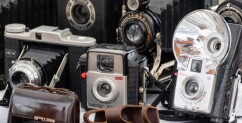
Probably millions upon millions of travel photos. In fact, there may be no other type of image left behind by modern humans in such enormous numbers. Our future archaeologist might conclude that people in our time travelled more than at any other point in human history. But that's not the whole story. The relationship between images, travel, and human beings goes much deeper than that.
Travel and images weren't two inventions that came along at the same time. We all know that early humans first stepped out of their caves in search of food. But was that really all there was to it? Our prehistoric ancestors were probably just as curious as we are. They wanted to know what lay beyond that mountain, behind that river, or deep inside that forest. What did the world on the other side look like? Perhaps even the prehistoric version of Christopher Columbus was dreaming of finding prehistoric India!
Or maybe early humans simply wanted to know who was casting those strange shadows outside their own little Platonic cave.
And whenever curiosity led to a new discovery, something else was bound to follow: the urge to tell others about the unknown world they had just encountered. Photography, in its simplest form, is simply another chapter in that very old human tradition of storytelling.
Before We Learned to Write, We Were Already on the Move
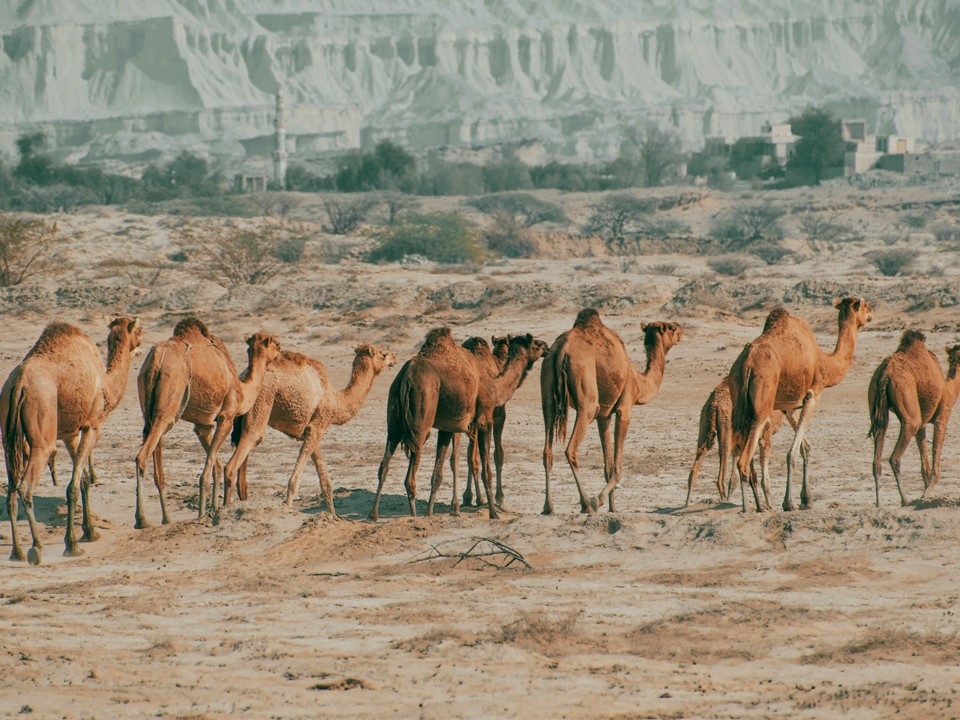
Around 60,000 to 70,000 years ago, Homo sapiens set out on what may have been the greatest journey in human history. Humans began migrating out of Africa and, over thousands of years, gradually settled almost every continent we know today. So let's call this the starting point of travel: a collective human invention, and certainly not one that anyone had planned!
But the first written accounts came much later, after the invention of writing. Writing gradually emerged around 5,000 years ago in Mesopotamia and ancient Egypt. For thousands of years, humans had passed down their experiences, knowledge, and stories from one generation to the next. Eventually, they found a way to record all of this outside their own memories. In other words, stories were finally able to break free from their storytellers.
Sumerian tablets, ancient Egyptian writings, the accounts of Herodotus, Alexander's campaigns, the travel notes of Buddhist pilgrims, Ibn Battuta's memoirs, and the travelogues of Marco Polo and Nasir Khusraw all point to one simple fact: seeing and experiencing the world wasn't enough for humans. They had another need they wanted to satisfy. They wanted to share their experiences with others.
Words are wonderful things. They still do the job remarkably well. Personally, I believe the world of tomorrow will be one in which reading matters even more than it does today. But humans weren't satisfied with simply telling stories about their travels. They wanted others to actually see what they had seen. And besides taking someone by the hand and leading them back to some faraway destination, they found another way to do it: painting.
Before the Camera, the World Was Captured on Canvas
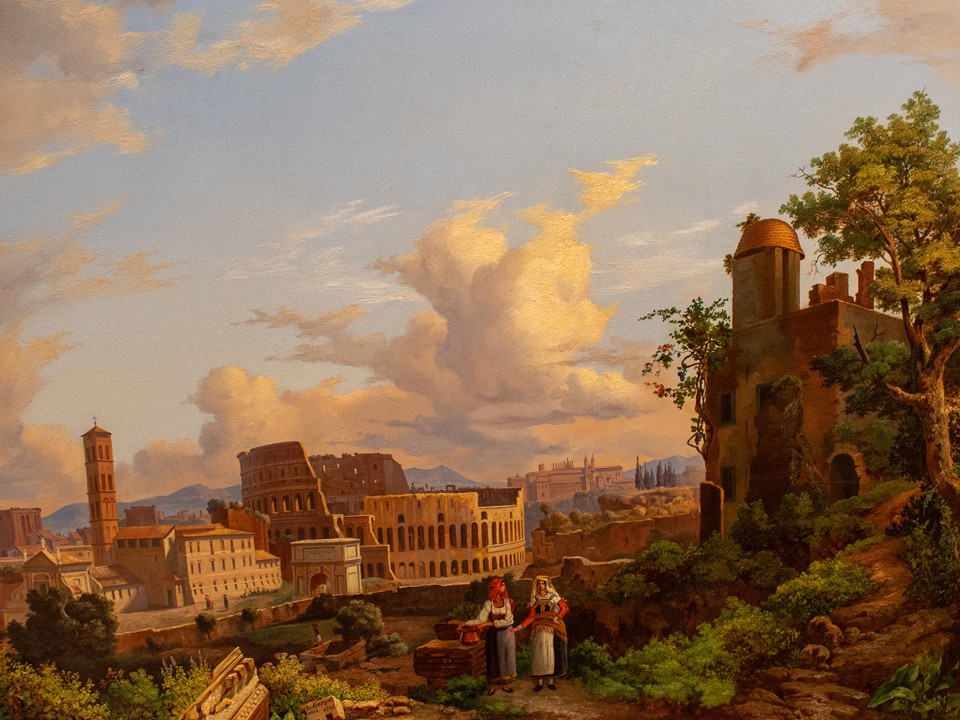
Between the 15th and 19th centuries, painters were regular companions on voyages of exploration. Without them, many of these discoveries might never have been properly documented. Governments, armies, and scientific societies often sent one or more artists along with their expeditions. Their job was simple: paint landscapes, document plants, draw unfamiliar animals, portray local people, and record architectural wonders.
One of the best-known examples of this tradition was Captain James Cook's voyages across the Pacific. Artists like Sydney Parkinson produced thousands of drawings of plants, animals, and the people of the Pacific islands.
William Hodges accompanied Captain James Cook on his second voyage of exploration to the Pacific (1772–1775). He painted the landscapes of Tahiti and New Zealand, and later went on to capture scenes from India as well.
In 1699, Maria Sibylla Merian travelled to Suriname with her daughter, carefully documenting plants, insects, and their life cycles in remarkable detail.
Thomas and William Daniell, an uncle and nephew who spent seven years travelling across India, recorded the country's landscapes, temples, cities, and architecture in an impressive collection of paintings and prints.
Johann Moritz Rugendas, a German painter, travelled to Brazil and other parts of South America during the 19th century. His work offers a glimpse into everyday life, natural landscapes, and the incredible cultural diversity of the continent.
Ferdinand Bauer, a natural history illustrator, joined Matthew Flinders on his expedition to Australia, where he produced extraordinarily detailed drawings of the continent's plants and animals.
John White, Jacques Étienne Victor Arago, Marianne North, and thousands of others followed the same path. They all devoted themselves to one simple mission: recording what they had seen so they could tell the story to people who might never get the chance to see it for themselves.
The Invention of Photography: The AI of the Painting Era
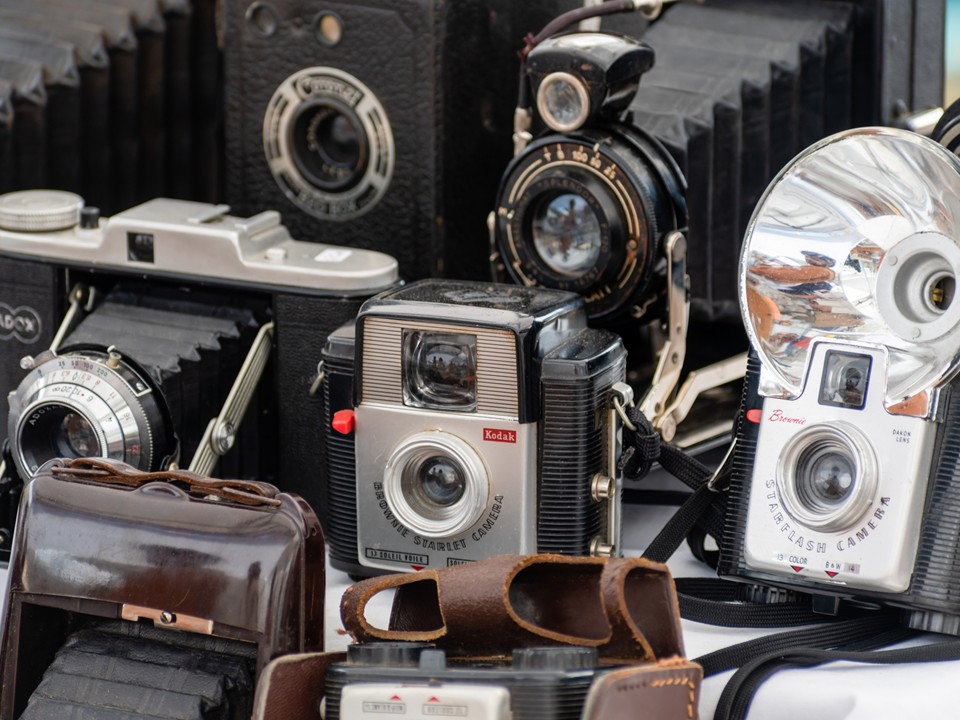
Photography was the result of decades of experiments with light, chemistry, and optics. In 1826 or 1827, French inventor Joseph Nicéphore Niépce used a camera obscura and a metal plate coated with a light-sensitive substance called bitumen of Judea to create what is now considered the world's first surviving photograph.
In 1829, Niépce entered into a partnership with Louis Daguerre. After Niépce's death in 1833, Daguerre continued their research and eventually introduced the daguerreotype process to the public in Paris on August 19, 1839. Around the same time, in England, William Henry Fox Talbot was developing a different photographic process, which he patented in 1841 under the name calotype.
And just like that, a new era began: images could now be documented without needing a painter to do the job by hand. In less than two decades, cameras were travelling around the world alongside archaeologists, geographers, and explorers.
One of the earliest major photographic documentation projects was The Photographic Views of Egypt, Nubia and Palestine, a remarkable collection by Francis Frith. Between 1856 and 1860, Frith travelled thousands of kilometres across the Middle East, taking hundreds of photographs of the pyramids, the Nile, Jerusalem, and the Sinai Desert. Today, many of the buildings and places captured in his photographs have either disappeared or changed beyond recognition.
But travelling and taking photographs were still privileges reserved for a relatively small part of society. Travel itself was expensive and logistically complicated, and owning a camera was still out of reach for most people. Technology, however, was determined to solve both problems: making travel easier and cameras more affordable.
As railway networks expanded across Europe in the second half of the 19th century, travelling gradually became more accessible to the middle classes. Around the same time, in 1888, Kodak introduced its first simple, portable camera, turning photography from a specialist activity into something ordinary people could enjoy.
Kodak's famous slogan said it all:
"You press the button, we do the rest."
From that moment on, any traveller could take their own photographs and bring home a personal record of their adventures. No painter required!
The First Travel Blogs Were Printed on Paper
During the 19th century, illustrated travel books became incredibly popular. They usually combined photographs, drawings, maps, written accounts, and personal notes. In a way, the first travel blogs appeared long before the internet, hidden between the pages of these illustrated travelogues.
I can imagine the excitement of people flipping through these books, stopping to stare at pictures of the Egyptian pyramids, Chinese palaces, or Hindu temples. These books weren't just about introducing new destinations. They also offered a glimpse into local cultures, clothing, food, architecture, and everyday life.
From the perspective of media history, they gave people a chance to see the world without actually having to travel anywhere.
After Paper Blogs Came Paper Instagram!
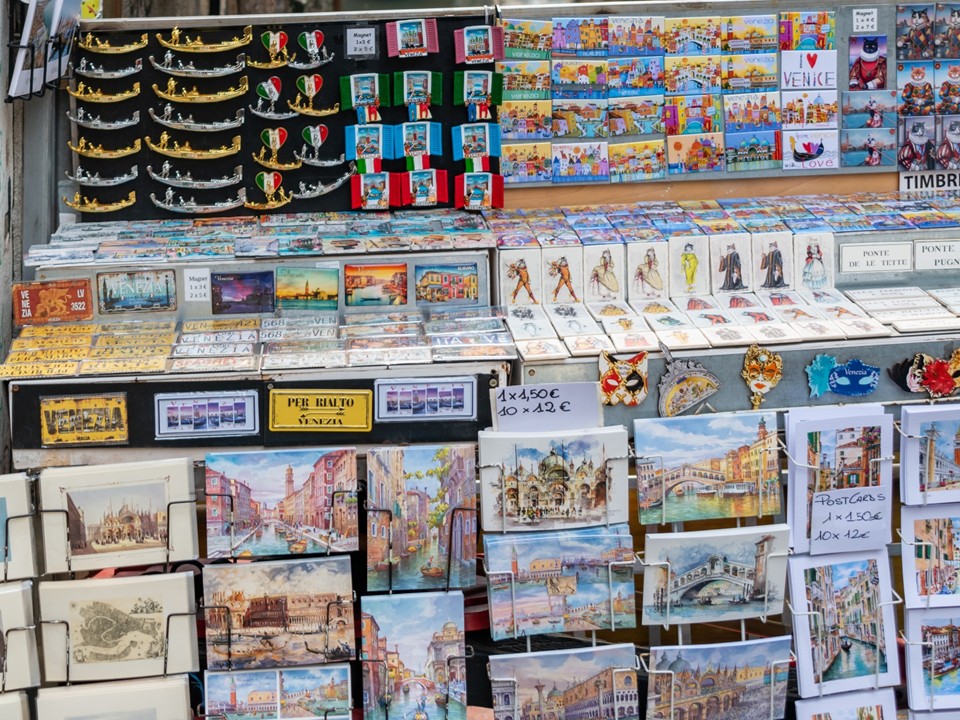
In the 1870s, postcards quickly became all the rage. By 1915, more than 900 million postcards were being sent every year in the United States alone. That's an astonishing number for those days!
Postcards had four things going for them: they showed off a beautiful view of a destination, carried a short personal message, reached their recipients relatively quickly, and allowed people to share their travel experiences with others.
Doesn't that sound remarkably similar to what social media does today?
Why Do We Feel the Need to Photograph the Places We Visit?
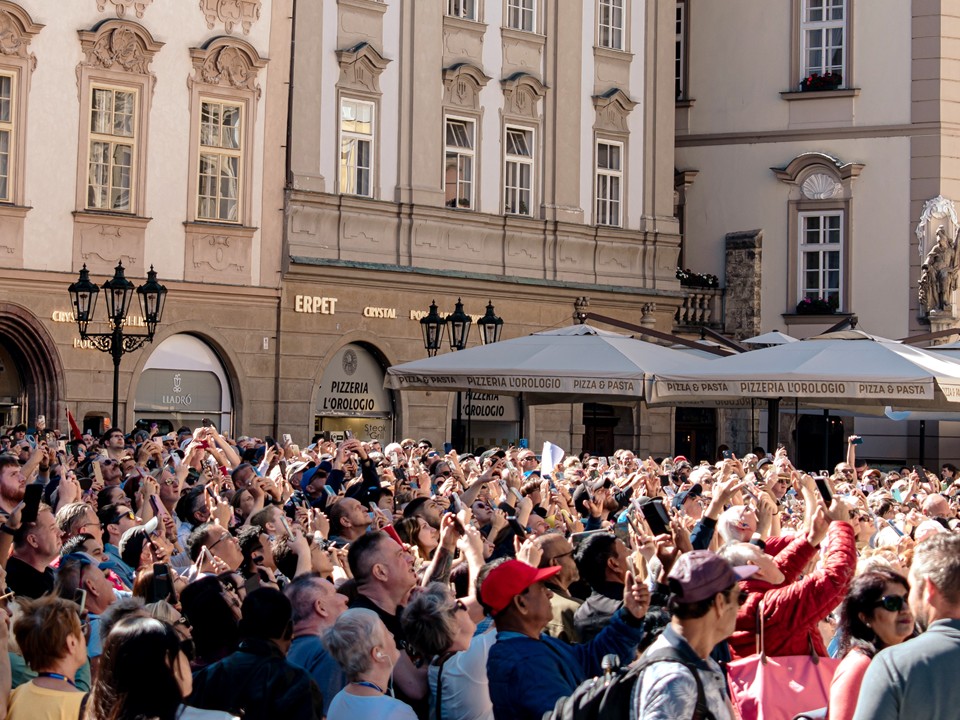
Let's start with a familiar scene. You're standing in Prague's Old Town Square, surrounded by thousands of other tourists, all waiting for the Prague Astronomical Clock to strike, its little wooden doors to open, and the figures inside to come to life. And when the big moment finally arrives, a thousand cameras held by a thousand tourists start capturing it!
Why does everyone want to photograph this particular moment? Let's leave the sociological explanations for another time. This isn't just a question of art, though. Cognitive psychologists have been studying it for years, too.
The human brain relies heavily on visual cues to build what we might call a narrative memory of our experiences. Studies in neuroscience and cognitive psychology suggest that images are more likely to stay in our long-term memory than written words. This phenomenon is known as the Picture Superiority Effect.
In many memory experiments, people have been able to recall around 60 to 70 percent of images after several days, while their ability to remember individual words has been considerably lower. From a psychological perspective, photographs serve three main purposes: preserving memories, bringing back emotions, and strengthening our sense of personal identity. That's why so many people take travel photos even when they may never look at them again!
I might be an exception to that last part. I make plenty of use of my travel photographs, and I even sell many of them. But I know exactly how satisfying it feels to capture a moment with a simple press of the shutter button.
These days, the act of taking photographs has become part of the travel experience itself. Sometimes, taking the picture is just as much a part of the journey as being there in the first place.
Seeing or Looking? That's the Real Question!
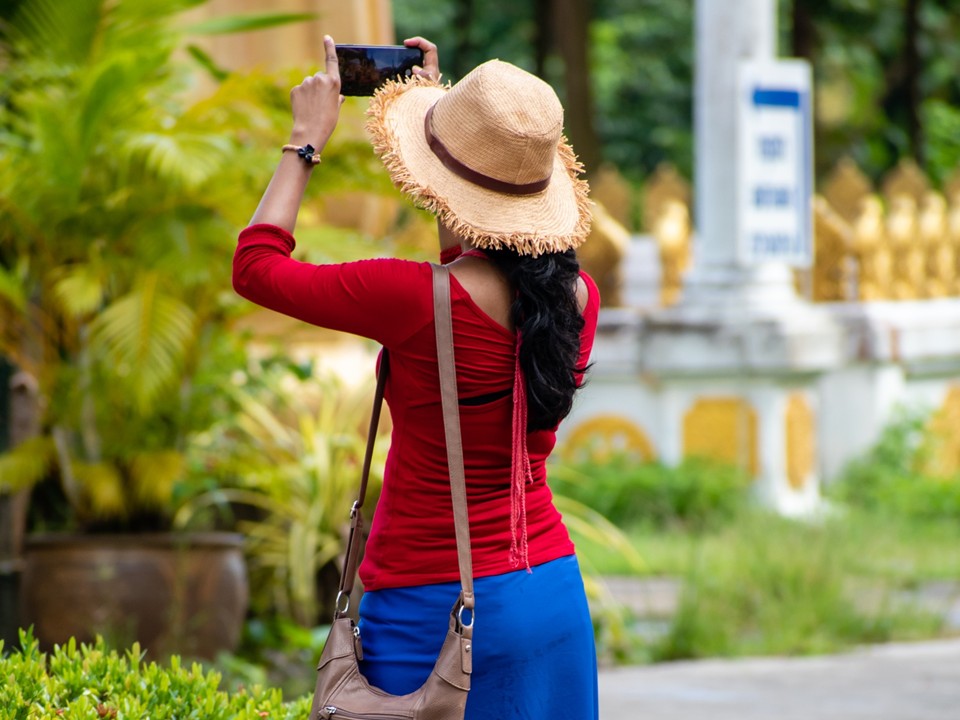
Like me, you can probably recall thousands of landscapes you've seen during your travels. But have you actually stopped to look at them? One of the biggest differences between a tourist and a photographer lies in the difference between seeing and looking. Everyone can see, but far fewer people truly look.
The French philosopher Maurice Merleau-Ponty believed that looking is more than simply receiving light through our eyes. It's an active process in which our body and mind engage with the world around us.
The British artist and writer John Berger, in his famous book Ways of Seeing, puts it this way:
"What we see is not simply determined by what is in front of us, but also by what we know and believe."
That's why two people can stand in exactly the same place and yet experience two completely different worlds. In fact, we're constantly experiencing different versions of the same world. And that's where storytelling begins: in the different ways we experience and interpret the same things. A tourist sees the landscape. A photographer, on the other hand, sees the light, the rhythm, the silence, the stories, the people, the contrasts, and the emotions. They don't just look at the subject; they explore the relationships between all the elements in the scene.
Amid the play of light, geometry, composition, contrasts, and all the techniques of photography, they're searching for a story. And perhaps that's the fundamental difference between simply observing something and truly perceiving it.
The Photographer: A Witness to the World
From the very early days of photography in the 19th century, a serious debate began among philosophers, artists, and critics: Is photography really an art, or is it simply a mechanical way of recording reality? Critics, including people like Charles Baudelaire, argued that a camera could only record whatever was placed in front of it. It could never replace the creativity, imagination, and skill of a painter.
On the other side, photographers like Alfred Stieglitz tried to prove that photography could also be an artistic process, shaped by personal choices, composition, lighting, and the photographer's own way of seeing. Gradually, the debate moved beyond the conflict between reality and art, raising a more interesting question: Does art always have to create something entirely new, or can it simply show us a different way of looking at the world?
We often imagine that a photographer's job is simply to press the shutter button. But in reality, there's something else they do before taking a single photograph, something that gives meaning to everything that follows. They decide what deserves to be seen. This is not a neutral choice. It's a way of interpreting the world. That's why many art theorists see the photographer as a witness, rather than simply someone who records what happens.
Being a witness means being there, observing, making choices, and then telling a story. Every photograph, even a purely documentary one, is the result of a series of decisions: the angle, focal length, timing, lighting, composition, the elements included or left out, and even the decision to press or not to press the shutter button.
The German philosopher Walter Benjamin, in his famous essay The Work of Art in the Age of Mechanical Reproduction, argued that although photography made it possible to reproduce images endlessly, it also changed the way people perceive reality. He introduced the concept of Aura, referring to the unique and unrepeatable quality of experiencing a particular place or work of art firsthand. In Benjamin's view, the camera can take away part of that aura. But at the same time, it allows us to see things that the human eye might miss in the moment.
Roland Barthes: Every Photograph Is Proof That "This Has Been"
One of the most influential books on the philosophy of photography is Camera Lucida, written by the French philosopher and literary theorist Roland Barthes.
Barthes believed that every photograph carries a silent message: "This has been." He called this idea That-has-been. Unlike a painting, a photograph always points to something that actually existed. Even if the scene itself is staged, the light that created the image must have come from a real subject at a particular moment in time.
Travel photography is proof that we were there. That landscape was once part of our reality. Taking a photograph is an attempt to prove that our presence, our very existence, was part of a particular place and moment in time. And this proof isn't necessarily meant for others. Perhaps we're really trying to convince ourselves.
Years from now, the street we photographed might be demolished, a forest might disappear, or a glacier might melt away. But the photograph will still testify that such a place once existed. Perhaps one day, we won't be able to visit many of the world's beautiful places anymore. But the photographs we've taken will remain as evidence of our presence during our younger and middle-aged years. They'll remind us of something simple: "I was there once."
The importance of this kind of proof is much greater than you might think. Every day, in the most ordinary moments of our lives, we're constantly trying to prove these very simple things.
Barthes also introduced two other concepts: Studium and Punctum.
Studium refers to the intellectual and cultural side of a photograph, the things most people can recognize and appreciate.
Punctum, on the other hand, is something much smaller, unexpected, and deeply personal. It's a detail that suddenly catches us off guard and, as Barthes puts it, "wounds" us. It might be a child's gaze in the background, a hand gently resting against a wall, or a ray of light that lasted only a few seconds.
Instagram is full of photographs that are visually appealing mainly because of their Studium. They catch our attention for a moment, but genuine Punctum moments are much harder to find.
In many unforgettable travel photographs, what makes the image stay with us isn't a famous landmark or a spectacular landscape. It's one of those tiny, unexpected details.
Susan Sontag: Does Photography Enrich Our Experience or Replace It?
Susan Sontag's On Photography remains one of the most important philosophical works on photography. Sontag believed that photography is a way of possessing the world. When we take a picture of something, we feel as if we've taken a little piece of it home with us. She writes:
"To photograph is to participate in another person's mortality, vulnerability, and mutability."
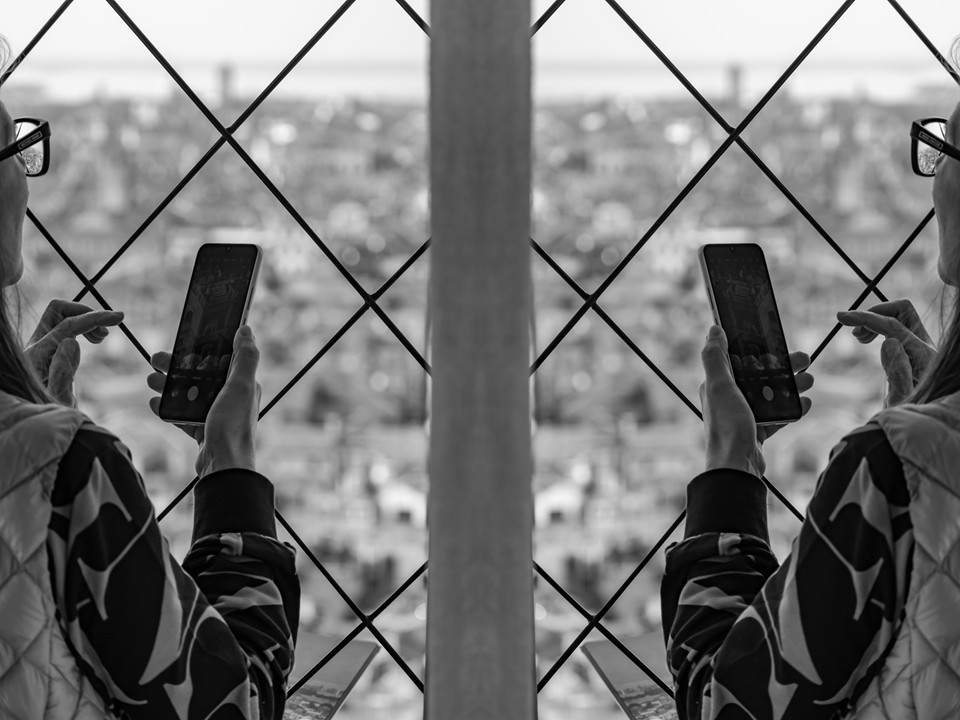
In Sontag's view, every photograph takes a moment out of the endless flow of time and turns it into something that belongs to the past. But she also offers a warning: if all our attention is focused on taking pictures, we might end up missing the experience itself. Someone who watches an entire performance, concert, or sunset through their phone screen might come away with a great photograph, but their actual experience of the moment will have been incomplete.
Today, this criticism feels more relevant than ever.
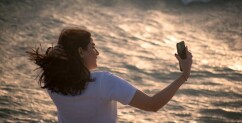
Remember my story about the Prague Astronomical Clock? There we are, thousands of us gathered in Prague's Old Town Square, waiting for something spectacular to happen. And then, just as the moment we've all been waiting for finally arrives, we manage to miss an incredible experience! All of us, armed with cameras and phones, busy capturing the moment instead of actually experiencing it. Quite an achievement, isn't it?
Henri Cartier-Bresson: The Decisive Moment
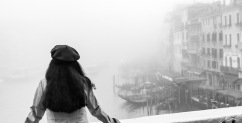
It was just after six in the morning when we reached the Rialto Bridge after a short walk from our accommodation. Apart from one or two locals going about their daily routines, there wasn't a tourist or a crowd in sight. A thick morning mist had settled over Venice's Grand Canal. It was just me, my wife, and my camera.
Only twenty minutes later, as the rising sun began to burn off the morning mist, that dreamlike scene had completely disappeared. An hour later, the bridge was so crowded that even walking from one side to the other had become a challenge!
The legendary French photographer Henri Cartier-Bresson introduced the concept of The Decisive Moment into the world of photography. In his view, the world is constantly changing, and sometimes there's only a tiny fraction of a second when form, light, movement, and meaning come together in perfect harmony.
The photographer's art lies in recognizing that very moment. As he famously put it:
"To photograph is to recognize, simultaneously and within a fraction of a second, both the fact itself and the rigorous organization of visually perceived forms that give it meaning."
Travel is full of these decisive moments. The trick is to go looking for them and learn to recognize what makes them special.
Does Photography Help Us See More or Less?
While thinking about how photography affects the way we see more or less of a place when we travel, I came across an interesting piece of research. In 2013, American psychologist Linda Henkel conducted an experiment at Fairfield University that later became known as the Photo-Taking Impairment Effect. In the study, a group of museum visitors were asked to look at some artworks without taking pictures, while photographing others. The results were interesting: those who simply took photos were less able to remember details of the artworks later. It was almost as if their brains had handed over the job of recording everything to the camera, making less effort to process and store the information in their own memory.
But the second part of the experiment revealed something important. When participants deliberately zoomed in on specific details or carefully framed their shots, their memory performance improved. This research helped answer my question, at least to some extent. When photography during travel has a clear purpose and involves some thought, it can actually help us see more. But aimlessly waving our phone cameras around, pointing them in every possible direction, might leave us with very little understanding of the place we're visiting.
Mindful photography can strengthen our memories, but mindless picture-taking can become a substitute for actually looking.
From Family Albums to Collective Memory
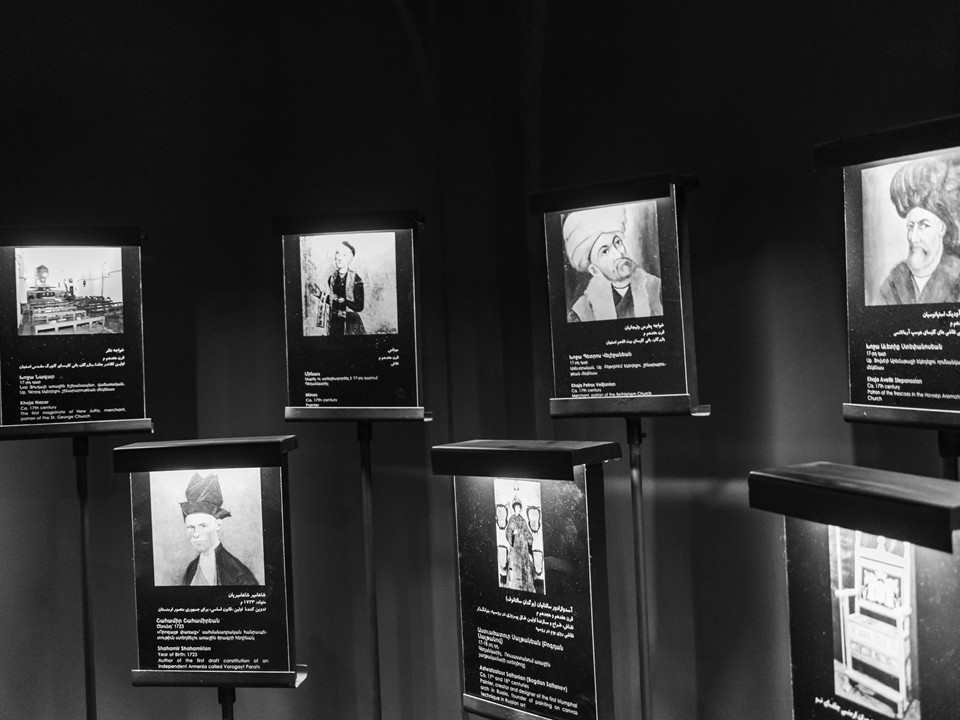
Before digital photography became so widespread, almost every home had a few photo albums filled with pictures. Many of them were travel photos, dating back to the days when images were captured on film negatives and then printed on paper. Each album held a little piece of a family's history.
But travel photographs don't just preserve personal memories. They're also part of our collective memory.
Today, much of what we know about 19th-century cities, vanished villages, glaciers, lost forests, and even extinct animal species has been reconstructed through old photographs.
There are plenty of examples of researchers comparing photographs taken 50 to 120 years apart to measure environmental changes. These include the retreat of glaciers in the Alps and the Himalayas, the loss of forest cover, and the expansion of cities. We humans also share photo albums of our own: images that help shape our collective identity. This community might start with a single family, grow into a society, and eventually expand to include the entire planet.
And who knows? Perhaps one day, it might even include extraterrestrial visitors!
When Images Create the Destination
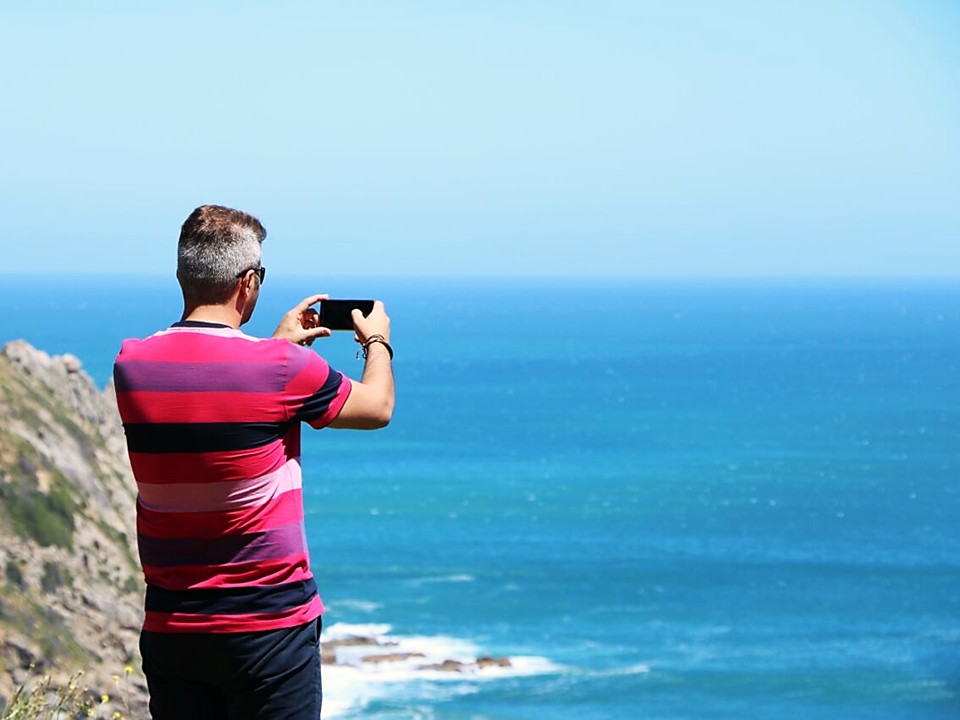
In the past, people travelled first and then showed others pictures of the places they had visited. The camera was a tool for discovering the unknown. Today, things often work the other way around: we see the pictures first and choose our destination afterwards. There's not much left to discover anymore. Everyone already knows Venice!
The role of photography has changed, and this is one of the most fundamental transformations in the travel industry in the 21st century. According to reports by UN Tourism (the World Tourism Organization), more than 70% of Millennial and Gen Z travellers use social media to find travel ideas and inspiration before choosing a destination. Some surveys have also found that more than 60% of users say images they see on Instagram or TikTok directly influence their destination choices.
I've explored this subject in more detail in my article, "The Instagram Picture and the Fragile Truth Behind It."
Meanwhile, according to data from Expedia, a large proportion of travellers say that seeing real photos shared by other users gives them more confidence than looking at official advertising.
As a result, travel photographers, even amateur ones, have become part of the global tourism marketing machine.
Everyone Sees It. Everyone Sees It the Same Way.
Instagram launched in 2010 with a simple idea: sharing photos. By 2025, it had more than 2 billion monthly active users. Every day, hundreds of millions of photos and videos are posted on the platform, and a huge number of them are about travel, nature, and tourism. This massive flood of images has had two very different effects.
On the one hand, Instagram has helped put lesser-known destinations on the map: remote villages, small national parks, and local businesses that might otherwise have gone unnoticed. In many parts of the world, a handful of striking photos have been enough to bring a place onto the international travel map.
But on the other hand, social media algorithms have created something like a standard way of seeing. Without even realizing it, users tend to choose the same angles they've already seen thousands of times. The result? Millions of photos of the same destination that look almost identical. Media philosophers call this the homogenization of visual experience. In other words, the world is wonderfully diverse, but the pictures we take of it are becoming surprisingly similar.
For travel photographers, this raises an important question: Do we really want to take the same photo that millions of people have taken before us? Or can we bring our own personal, honest, and distinctive perspective to a place we've all seen before?
The answer is what separates someone who simply takes pictures while travelling from a photographer who uses images to tell a story.
Time, Memory, and the Image
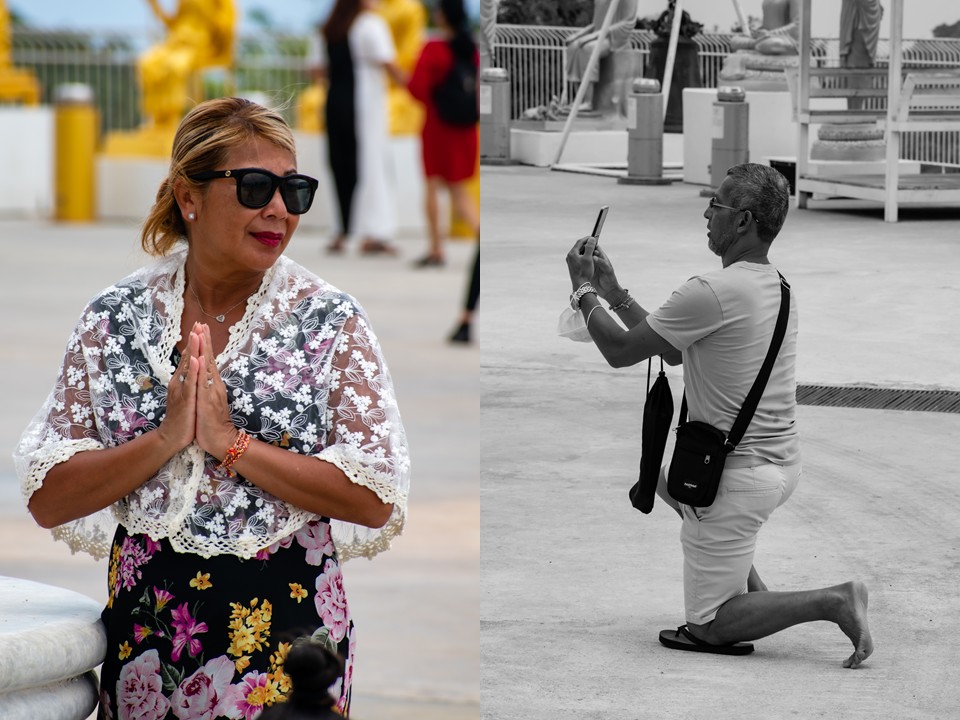
Perhaps no human activity makes us look at the world as closely as travelling. And perhaps no art turns what we see into memories quite like photography. From the earliest cave paintings to the millions of pictures we take on our phones every day, one desire has remained constant throughout human history: not to forget.
Photographing the world as we travel is a way of experiencing it all over again. But what stays with us after a trip is never just a collection of images. It's also the sounds, smells, conversations, feelings, light, tiredness, surprises, and little discoveries along the way. When a photograph captures a moment honestly, it can become a window back into all those experiences.
The French philosopher Henri Bergson didn't see memory as a warehouse where we store the past. He believed that memory brings the past back to life in the present. That's why looking at an old photograph is about much more than seeing a few pixels on a screen or tiny silver grains on a piece of paper. It's a way of bringing a part of our lives back to life.
Marcel Proust, in his great novel In Search of Lost Time, also shows how a small sensory experience — the taste of a pastry or the scent of a flower — can bring back memories from many years ago. Photographs can do the same. Sometimes all it takes is an image of a train window or a cobbled street to bring an entire trip back to life, almost as if we were there again, with every little detail intact.
That's why a travel photograph is also a record of time passing. Every image reminds us that the world keeps changing. Cities transform, trees grow or disappear, glaciers retreat, and people grow old. And through all these changes, photography becomes one of the few ways we have to keep a conversation going with the past.
Sustainable Tourism and Responsible Photography
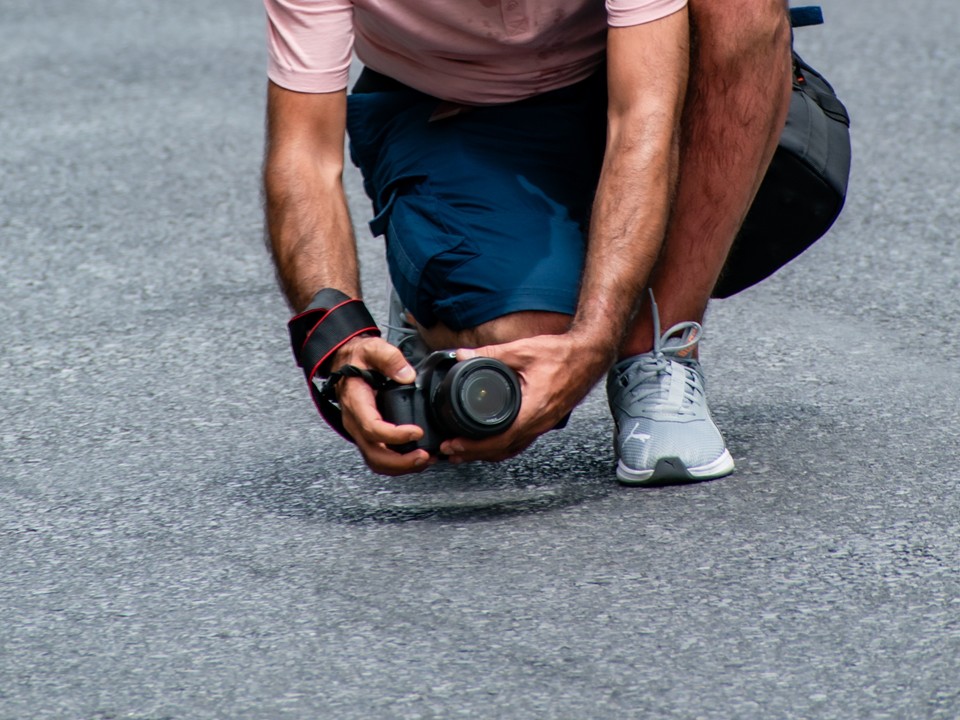
In recent years, the way we think about travel photography has changed. There was a time when the main goal was simply to capture a beautiful view. Today, photographers are also expected to think about what might happen when that image is shared with the world. After all, a single photograph can attract thousands, or even millions, of people to a destination.
The Golden Bridge at Ba Na Hills in Vietnam is an easy example to understand. The project had been on the verge of bankruptcy after the devastating impact of the COVID-19 pandemic. But then a few beautiful images of the bridge began circulating online, giving it a new lease of life and bringing visitors back.
But with that kind of influence comes responsibility. There are plenty of examples of what's now known as the Instagram Effect: when widely shared images of a place lead to a sudden surge in visitors. This can result in damage to natural landscapes, pressure on local ecosystems, overcrowding, rising housing costs, changes to local ways of life, and even the closure of certain sites.
Places such as Moraine Lake in Canada, the lavender fields of Provence in France, Fjaðrárgljúfur Canyon in Iceland, and several spots in Norway's Lofoten Islands have often been discussed in tourism research as examples of how social media can trigger sudden increases in visitor numbers. And then there are more troubling cases, such as Venice and Barcelona, where the effects have grown into much more complicated social problems.
A photographer's ethical responsibilities include respecting local cultures, protecting people's privacy, avoiding damage to nature, not encouraging dangerous behaviour just to get a good shot, and showing destinations as they really are.
Back at that very same Golden Bridge in Vietnam, a friend of mine took a photo of himself and his companions. Then, right there on the spot, he used AI to remove every other person from the picture and immediately posted the result on Instagram!
A responsible photographer shows a tourist attraction as it really is, crowds and all. Perhaps that's where the real art lies: showing people the actual experience of a place, rather than some idealized, digitally polished version of it. And in an age when AI makes it easier than ever to manipulate images, this responsibility matters more than ever.
Does the Camera Limit the Way We See?
Every new technological breakthrough raises an old question: do our tools expand human abilities, or do they weaken some of them along the way?
Today, smartphone cameras, powered by AI, offer all kinds of features: noise reduction, combining multiple exposures, scene detection, colour correction, removing unwanted objects, and even generating parts of an image that were never there in the first place.
On the one hand, these technologies have made high-quality photography accessible to millions of people. On the other, the line between capturing reality and creating reality is becoming harder to see.
Major photography competitions and news organizations are introducing stricter rules on AI-based editing. That's because documentary photography depends on one essential thing: the audience's trust.
For travel photographers, this question matters more than ever: Am I trying to show the truth about a place, or am I creating an exaggerated, unrealistic version of it? The answer isn't a technical choice. It's an ethical one.
We live in a world where difficult and complicated ethical questions keep finding their way into our lives. I hope we can all find the right answers to them.
Looking ahead, several developments are likely to bring even more ethical questions to the table. AI will play a bigger role in controlling light, composition, and editing. Drones will become more widely used, but hopefully with stricter rules to protect privacy and the environment. Wearable cameras may become more common, automatically recording our travel experiences. Computational Photography will continue to blur the line between hardware and software. Authenticity will become increasingly important as AI-generated content spreads. And Augmented Reality (AR) and Virtual Reality (VR) will open up new ways to tell travel stories through interactive experiences.
The big question is: will our collective conscience make an effort to find answers to these challenges, or will we simply look the other way?
Live the Moment Before You Press the Shutter
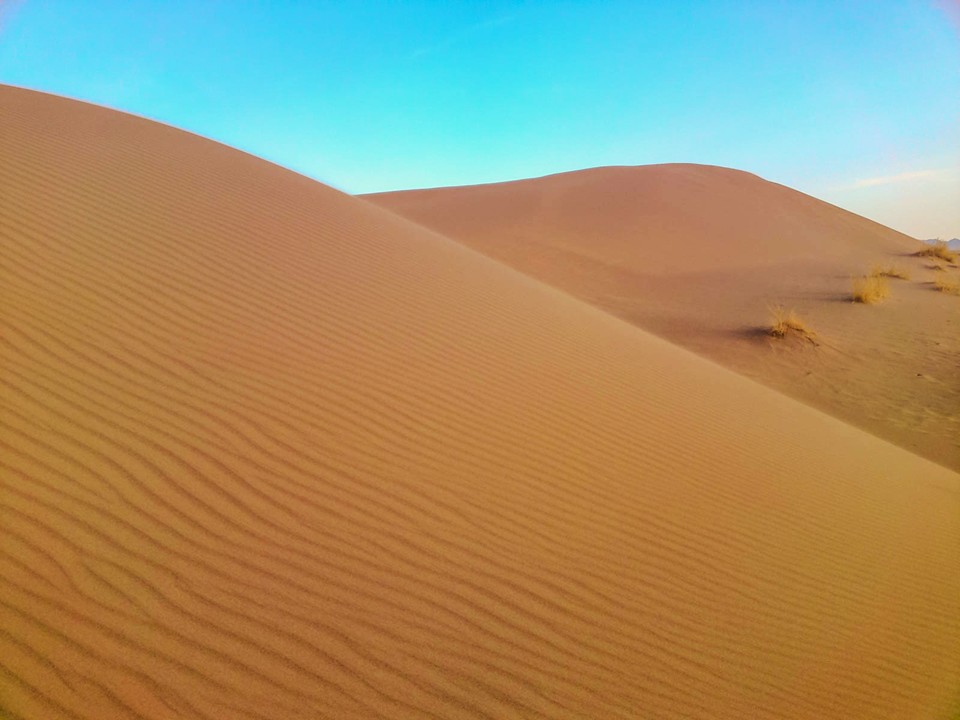
For our honeymoon, we travelled to one of Iran's desert towns. One day, we joined a guided tour to a small desert village called Garmeh. Our guide took us there to meet a man named Mazyar, who had returned from France and restored his ancestral village. The place was almost deserted, with only a handful of people still living there. We wandered through the village and walked among the palm groves. Then we sat beside a spring and spent perhaps half an hour doing absolutely nothing but listening to the sound of clear water flowing through the desert. For lunch, we were guests at Mazyar's guesthouse, where an Iranian woman had prepared khoresh-e bademjan (Persian aubergine stew). It was the best meal I've ever had! Then again, I'm a huge aubergine fan. What a delicious coincidence! After lunch, we headed out for a walk among the sand dunes. That night, right in the middle of the desert, I saw the Milky Way. For perhaps a whole hour, I couldn't take my eyes off that endless beauty. Even after all these years, the experience is still vivid in my mind. I can almost taste every moment of it.
Here's the interesting part: back then, I didn't even own a proper camera! Perhaps that was one of the reasons I enjoyed every moment so much.
Maybe one of the biggest risks of digital photography and social media is that we sometimes forget the purpose of travelling. It's not to create content. Sometimes we need to put the camera down. Listen to a river flowing gently, feel the breeze on our skin, talk to local people, smell freshly baked bread in an old street, or simply sit still for a few minutes and take it all in.
The best photographs are often taken when we've actually lived the moment before pressing the shutter.
So let's not forget: the point of travelling isn't to take pictures. Unless, of course, you're a professional travel photojournalist getting paid by an agency to do exactly that!
One Last Thought
As we've seen, the relationship between images and travel goes back as far as human history itself. It's a deep connection, woven into our cultural, historical, and social lives. Exploring this subject properly could easily fill an entire book. But here, I've done my best to touch on some of the questions that have been on my mind, even if only briefly. And who knows? Maybe one day I'll actually sit down and write that book!
Humans have always wanted to explore the world and, at the same time, share what they've seen with others. From painters travelling with exploration expeditions to documentary photographers and social media users, the tools have changed, but the basic motivation remains the same: to preserve an experience and tell its story.
But our long history of capturing and sharing moments shouldn't get in the way of actually experiencing a place. It shouldn't become a mindless daily habit, turn into yet another meaningless trend, or become a tool that helps destroy the very destinations we love to visit. It shouldn't replace real experiences or take away our chance to live those moments fully. And the list of things it shouldn't do goes on.
Ever since photography was invented, it has travelled hand in hand with us. And that partnership isn't going anywhere anytime soon. So, if this relationship is here to stay, let's give a little more thought to our ethical responsibilities: to the decisions that can make our travel experiences better, and to the choices that can help create a better world.