My Notes on
A Z E R B A I J A N
The Color of Wind
What defines the sensory essence of Azerbaijan?
What defines the sensory essence of Azerbaijan?
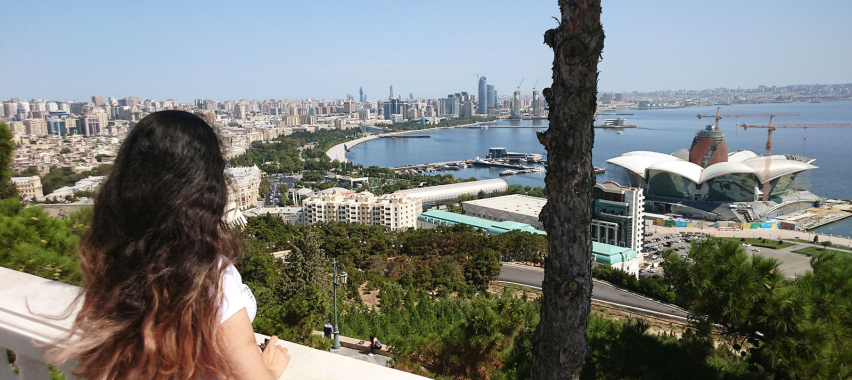
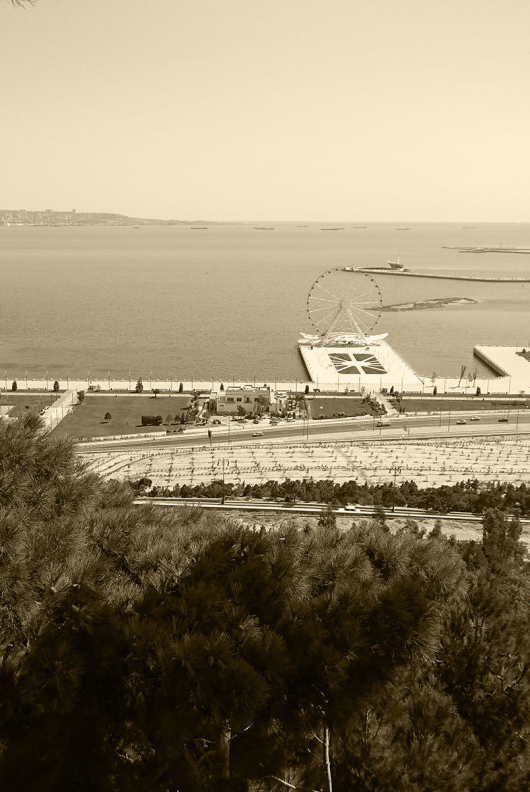
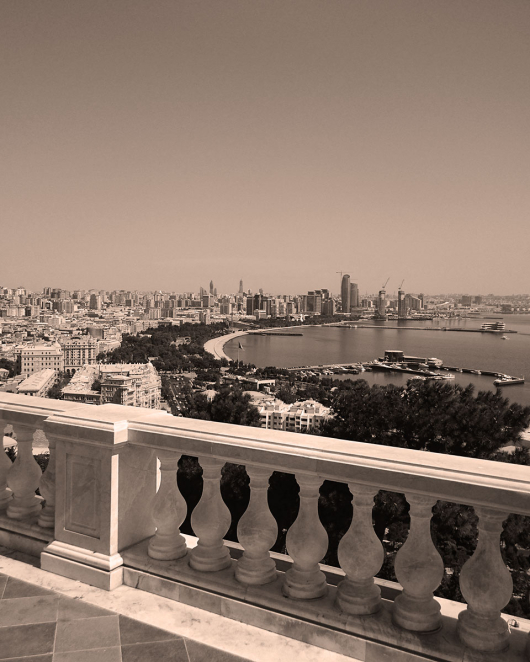
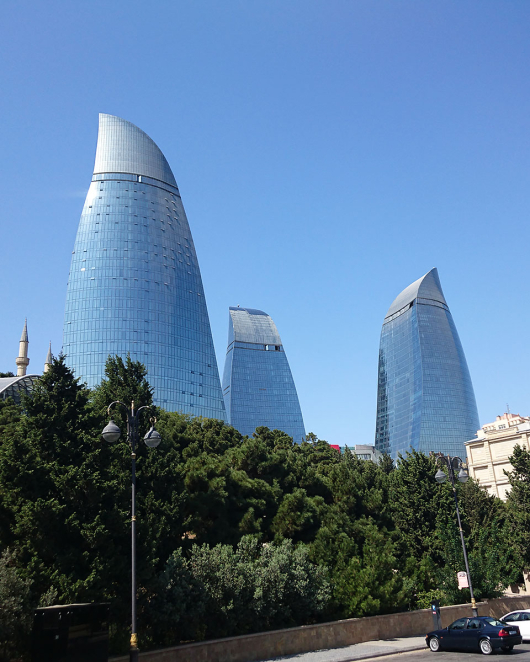
Azerbaijan is entwined with the sound of wind. Not only because of Baku's nickname, but because of the country's geography—hugging the Caspian and wedged between the ridges of the Caucasus. Baku is a city where wind is part of the texture of daily life. If I were to describe the smell of Azerbaijan: a strange blend of oil, sea salt, and damp earth. Azerbaijan is gray, but it also draws something from the Caspian's waters, and perhaps from the green of its forested mountains. The country stretches from the low Caspian shore and the semi-deserts around Baku to the 4,466-meter peaks of the Caucasus and the humid forests of the south. Nearly sixty percent of its territory is mountainous. When I think of taste, the choice becomes harder. Black tea, pomegranate, lamb with fragrant herbs. And if I had to pick a single flavor, tea might be truer than anything else.
The Faint Lines
Why do some regions remain faint in a country’s story?
Why do some regions remain faint in a country’s story?
We human beings reach for generalization when we don’t truly know a thing. On official maps, every region of a country has its place; in the tourist story, however, the lived geography of minorities and borderlands appears far more faintly than Baku and the country’s Azeri-Turkic heritage.
A clear example is the north, along the border with Russia and Dagestan. In the Qusar and Quba districts live the Lezgins—a people of the northeastern Caucasus scattered across both sides of the Russia–Azerbaijan border, especially in Dagestan and northern Azerbaijan. Their language, too, differs from Azerbaijani.
A clear example is the north, along the border with Russia and Dagestan. In the Qusar and Quba districts live the Lezgins—a people of the northeastern Caucasus scattered across both sides of the Russia–Azerbaijan border, especially in Dagestan and northern Azerbaijan. Their language, too, differs from Azerbaijani.
South of the Postcard
How does the south of Azerbaijan overturn the country’s familiar image?
How does the south of Azerbaijan overturn the country’s familiar image?
If a visitor has seen only Baku and the usual images of Azerbaijan, he or she might sum the country up as oil, fire, desert, stone, modern architecture, and Baku. But a few hours’ drive south almost turns that picture on its head. Around Lankaran, Lerik, and Astara, there are dense, rain-heavy forests, tea plantations, citrus groves, rivers, mountains—even the Hyrcanian forests. The Talysh region lies between the Caspian Sea and the Talysh Mountains, and within a fairly short distance you can move from the shore to the forest and then to the highlands. Azerbaijan’s Hyrcanian forests are part of an ancient ecosystem that stretches along the southern Caspian coast into Iran, and they are listed as a UNESCO World Heritage site.
What the Window Knows
How does a landscape carry the weight of history, and what does it mean to look down on a land whose very name stirs old grief?
How does a landscape carry the weight of history, and what does it mean to look down on a land whose very name stirs old grief?
I was gazing out the small airplane window. The pilot had just announced that we had crossed into Azerbaijani territory. One thing is immediately clear: this land stretches like a curve from the sea to the high mountains. To the north, the Greater Caucasus stands as the country's natural wall; to the south lies the Talysh range; to the west and southwest, the Lesser Caucasus and its connected plateaus unfold; and all these formations open toward the Kura-Aras lowlands and then the Caspian Sea.
For us Iranians, the name Azerbaijan carries bitter memories. One of the most significant historical events was the separation of the lands north of the Aras from Qajar Iran and their absorption into the Russian Empire in the nineteenth century. The Treaty of Golestan in 1813 and Turkmenchay in 1828 cemented this geopolitical shift. This later became crucial in shaping the political concept of "Azerbaijan"—the name was chosen in 1918 for the newly established republic north of the Aras. Even now, we have two provinces in Iran called West Azerbaijan and East Azerbaijan.
For us Iranians, the name Azerbaijan carries bitter memories. One of the most significant historical events was the separation of the lands north of the Aras from Qajar Iran and their absorption into the Russian Empire in the nineteenth century. The Treaty of Golestan in 1813 and Turkmenchay in 1828 cemented this geopolitical shift. This later became crucial in shaping the political concept of "Azerbaijan"—the name was chosen in 1918 for the newly established republic north of the Aras. Even now, we have two provinces in Iran called West Azerbaijan and East Azerbaijan.
Destination Digest
Many Countries, One Name
How does a single name contain so many different lands?
How does a single name contain so many different lands?
Nakhchivan is the clearest answer—an autonomous republic cut off from Azerbaijan’s mainland, wedged between Armenia, Iran, and Turkey. That separation has given it a different texture from the rest of the country; even the official tourism site calls it a place of distinct landscapes, peculiar villages, separate foods, abundant historical sites, and a stubborn local identity. It is drier, more continental, set between the Zangezur and Daralayaz mountains along the Aras.
If Nakhchivan is another country in political geography, Talysh is another country in climate and culture. For an Iranian like me, describing such shifts comes easily—Iran is a land of cultural shifts, and the nations that broke away from it over history are mirror images of the same old pattern. A short drive from Baku, the Talysh mountains rise; Hyrcanian forests green the slopes; tea and citrus take over the fields; and then the Caspian appears again, the blue of the world’s largest salt lake.
And there is Khinalig, a small world in the heights of the northern Caucasus, where people still keep their own language and ways. In 2023, UNESCO listed the entire cultural landscape of Khinalig and the Köç Yolu—a two-hundred-kilometer seasonal migration route—as a World Heritage site. Azerbaijan, then, is not one answer but many; a country where geography and history keep answering differently, depending on which window you look through.
If Nakhchivan is another country in political geography, Talysh is another country in climate and culture. For an Iranian like me, describing such shifts comes easily—Iran is a land of cultural shifts, and the nations that broke away from it over history are mirror images of the same old pattern. A short drive from Baku, the Talysh mountains rise; Hyrcanian forests green the slopes; tea and citrus take over the fields; and then the Caspian appears again, the blue of the world’s largest salt lake.
And there is Khinalig, a small world in the heights of the northern Caucasus, where people still keep their own language and ways. In 2023, UNESCO listed the entire cultural landscape of Khinalig and the Köç Yolu—a two-hundred-kilometer seasonal migration route—as a World Heritage site. Azerbaijan, then, is not one answer but many; a country where geography and history keep answering differently, depending on which window you look through.
Local News
How does casual talk hold a neighborhood together?
How does casual talk hold a neighborhood together?
What do people talk about at a table or in the queue at the bakery? Family, work, prices, football, the day’s events, marriage, relatives, travel, social ties—these are the natural currency of conversation. In traditional teahouses, talk drifts toward the edge of gossip, a low murmur of mostly local news.
Perhaps that is not such a bad thing. This was how the old-timers kept track of their neighbors—through other people’s words—and why, in hard times, they were quick to come to one another’s aid. The only shame is that teahouse culture remains a man’s world, closer to a gentlemen’s club. Though in Baku’s tourist quarters, that picture has begun to crack in the most welcome way.
Perhaps that is not such a bad thing. This was how the old-timers kept track of their neighbors—through other people’s words—and why, in hard times, they were quick to come to one another’s aid. The only shame is that teahouse culture remains a man’s world, closer to a gentlemen’s club. Though in Baku’s tourist quarters, that picture has begun to crack in the most welcome way.
The Door Opens with Tea
What words turn a stranger into a guest?
What words turn a stranger into a guest?
If you want doors to open, the first word is also the smallest: Salam—hello. It is probably the most important. A step further, and you will need Çox sağ olun—thank you very much—and, for a warmer welcome still, Xoş gəlmisiniz—welcome.
Then there is the word that matters more than all the rest: Çay—tea. In Azerbaijan, tea has settled so deeply into the rhythms of social life that “having tea” can mean nothing less than come, sit, let’s talk. UNESCO calls it a part of everyday life, a quiet mechanism for making and keeping human connections.
Then there is the word that matters more than all the rest: Çay—tea. In Azerbaijan, tea has settled so deeply into the rhythms of social life that “having tea” can mean nothing less than come, sit, let’s talk. UNESCO calls it a part of everyday life, a quiet mechanism for making and keeping human connections.
Azerbaijani hospitality comes from a different world than the Western version of it; it is less a sentence than an act. Tea is offered freely, with something sweet beside it—usually jam. In the traditional code, a host should not keep asking a guest why he has come or when he will go; even to ask directly about the hour of departure can be taken as rudeness.
So if you find yourself a guest in Azerbaijan, learn to sense the edges of your host's weariness, and when the time arrives, take your leave.
So if you find yourself a guest in Azerbaijan, learn to sense the edges of your host's weariness, and when the time arrives, take your leave.
The Art of Leaving
How does a guest show respect in a culture that never asks you to leave?
How does a guest show respect in a culture that never asks you to leave?
A traveler might wonder which daily habits seem strangest here. Start with tea. “Just one tea” is one of Azerbaijan’s quiet jokes; “come, let’s have tea” can open a conversation that lasts an hour, and tea appears before, during, and after meals, as much ritual as refreshment.
Then notice how distance works—not measured in centimeters but in relationship. Strangers get formality; introductions bring warmth. In traditional settings, let the other person set the pace of greeting and closeness, especially between men and women, where mirroring is the safest form of grace.
Time, too, behaves differently: home visits allow a forgiving lateness, while offices, official meetings, and paperwork do not. And bargaining knows its place—expected in the bazaar, even recommended by the official guide to Yasil Market, but out of place in fixed-price shops. Even so, it should stay a social game, not a battle.
Then notice how distance works—not measured in centimeters but in relationship. Strangers get formality; introductions bring warmth. In traditional settings, let the other person set the pace of greeting and closeness, especially between men and women, where mirroring is the safest form of grace.
Time, too, behaves differently: home visits allow a forgiving lateness, while offices, official meetings, and paperwork do not. And bargaining knows its place—expected in the bazaar, even recommended by the official guide to Yasil Market, but out of place in fixed-price shops. Even so, it should stay a social game, not a battle.
The Rules Beneath the Tea
What do a culture’s small daily habits reveal about its deeper rules?
What do a culture’s small daily habits reveal about its deeper rules?
Cities of Azerbaijan so far
A Long Cup of Tea
Which small scenes outlast the monuments?
Which small scenes outlast the monuments?
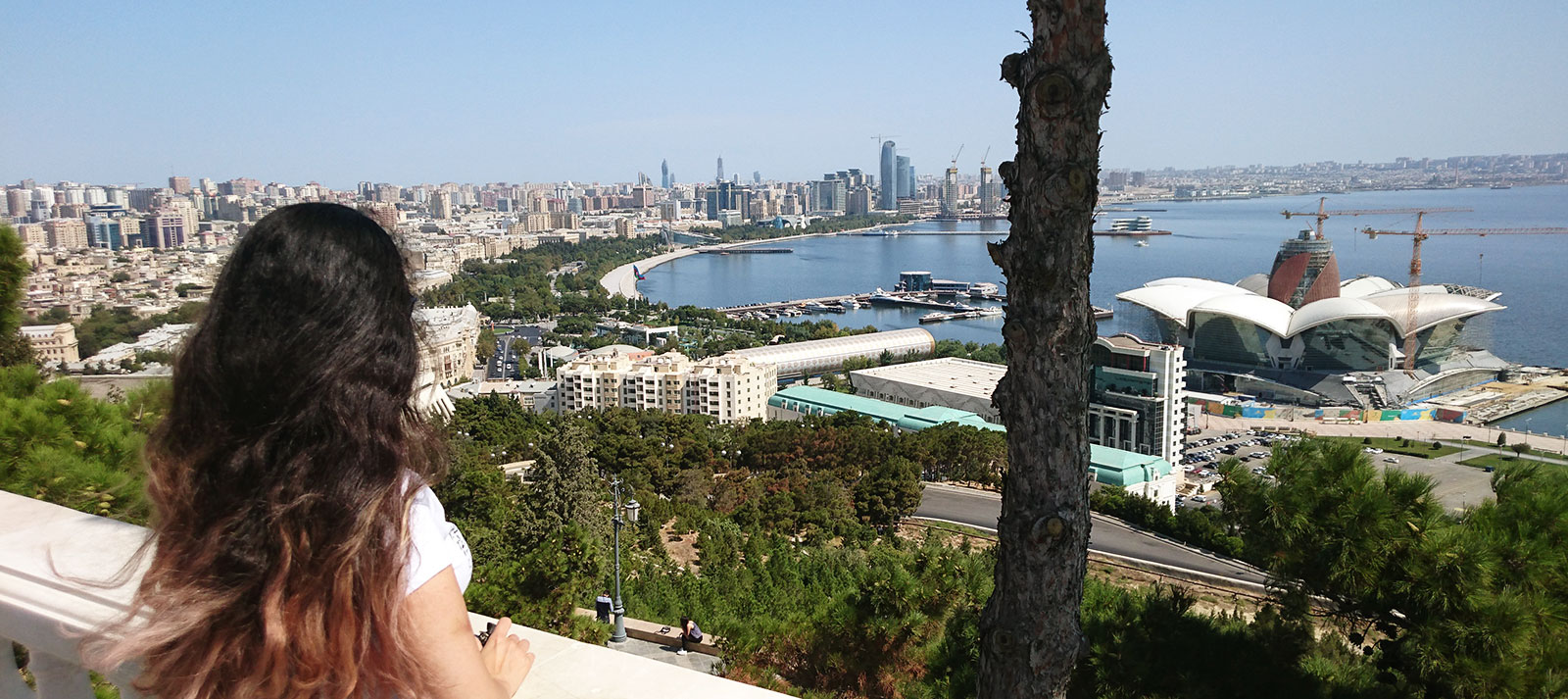
A small teahouse. Not the carpet museum, not the Flame Towers, not the Palace of the Shirvanshahs. Just a simple table, a few armudu glasses, a sugar bowl, a backgammon board, and a handful of men who have been, it seems, drinking tea for a very long time.
A scene like this offers what no museum can: the social time of Azerbaijan, unhurried and alive. And yet, to understand today's society, the bazaar tells its own story. At Baku's Yasil Market, people come for the daily ritual of buying—fruit, vegetables, fragrant herbs, spices, dried goods, jams, provisions. Sellers offer tastes of certain things, and haggling is folded into the experience, expected and understood. Between the teahouse and the market, a traveler glimpses how a country actually spends its days—not in monuments but in small, repeated gestures.
A scene like this offers what no museum can: the social time of Azerbaijan, unhurried and alive. And yet, to understand today's society, the bazaar tells its own story. At Baku's Yasil Market, people come for the daily ritual of buying—fruit, vegetables, fragrant herbs, spices, dried goods, jams, provisions. Sellers offer tastes of certain things, and haggling is folded into the experience, expected and understood. Between the teahouse and the market, a traveler glimpses how a country actually spends its days—not in monuments but in small, repeated gestures.
The Time That Is Not Lost
When is an hour of conversation not a waste of time?
When is an hour of conversation not a waste of time?
If two people sit down for tea and talk for an hour, a culture obsessed with productivity might call it lost time. But in Azerbaijan's tea culture, the conversation itself is the point—part of the social fabric. Tea is for making acquaintances, keeping friendships alive, hosting, negotiating, gathering family, marking rituals, even arranging marriages. What looks like idleness from the outside is, from the inside, the very thing that holds people together. Perhaps the opposite of wasted time is not efficiency but connection, and an hour over tea—unhurried, undirected—is precisely where that connection lives.
The Old Men Who Still Speak
How do ancient legends and collective memory continue to shape a people's identity and everyday behavior?
How do ancient legends and collective memory continue to shape a people's identity and everyday behavior?
1. Dede Qorqud; the old man who still has the last word
One of the deepest cultural layers of Azerbaijan is the legacy of Dede Qorqud. He appears across a cycle of twelve heroic tales—a wise elder present at births, marriages, deaths, wars, and all the hard decisions in between. The tradition has been carried not only through ancient literature but through music, oral storytelling, and social ritual. In 2018, UNESCO inscribed the heritage of Dede Qorqud as shared intangible heritage of Azerbaijan, Turkey, and Kazakhstan.
2. Molla Nasreddin; the hero who is cleverer than power
If one had to choose a single figure to unlock the humor and social subtext of Azerbaijan, Molla Nasreddin would be the key. His tales have been passed down for centuries through oral narrative, proverb, and literature. The structure of a Nasreddin joke is usually simple. UNESCO highlights this very quality: his humor often breaks accepted rules, and the protagonist escapes difficult situations through the power of words and wit. And now, a short story to sweeten the text: Molla Nasreddin's son asked him, "Father, how long does poverty last?" Molla Nasreddin said, "Forty days, my son." His son said, "So after forty days we'll be rich?" Molla replied, "No, my son—we'll get used to it."
One of the deepest cultural layers of Azerbaijan is the legacy of Dede Qorqud. He appears across a cycle of twelve heroic tales—a wise elder present at births, marriages, deaths, wars, and all the hard decisions in between. The tradition has been carried not only through ancient literature but through music, oral storytelling, and social ritual. In 2018, UNESCO inscribed the heritage of Dede Qorqud as shared intangible heritage of Azerbaijan, Turkey, and Kazakhstan.
2. Molla Nasreddin; the hero who is cleverer than power
If one had to choose a single figure to unlock the humor and social subtext of Azerbaijan, Molla Nasreddin would be the key. His tales have been passed down for centuries through oral narrative, proverb, and literature. The structure of a Nasreddin joke is usually simple. UNESCO highlights this very quality: his humor often breaks accepted rules, and the protagonist escapes difficult situations through the power of words and wit. And now, a short story to sweeten the text: Molla Nasreddin's son asked him, "Father, how long does poverty last?" Molla Nasreddin said, "Forty days, my son." His son said, "So after forty days we'll be rich?" Molla replied, "No, my son—we'll get used to it."
Khurshidbanu Natavan. On an ordinary journey, her name may be less familiar than a war hero’s, but she is essential to understanding Shusha and the culture of Karabakh. Natavan (1832–1897) was a poet, artist, and philanthropist of Shusha, and the last heir of the Karabakh khan dynasty. She built Shusha’s water supply and created a literary circle, Majlis-i Uns—the Assembly of Friends—where poets, musicians, and cultured minds gathered.
Mirza Jalil Mammadguluzadeh: a hero armed with satire. If Natavan represents the aristocratic, poetic culture of Shusha, Mirza Jalil represents a very different Azerbaijan—the Azerbaijan of satire, journalism, and social critique. The magazine Molla Nasreddin, first published in Tiflis in 1906, became one of the most important phenomena of social satire in the early twentieth-century Islamic world. And that is exactly why the figure of Molla Nasreddin remains essential to understanding contemporary culture.
Mirza Jalil Mammadguluzadeh: a hero armed with satire. If Natavan represents the aristocratic, poetic culture of Shusha, Mirza Jalil represents a very different Azerbaijan—the Azerbaijan of satire, journalism, and social critique. The magazine Molla Nasreddin, first published in Tiflis in 1906, became one of the most important phenomena of social satire in the early twentieth-century Islamic world. And that is exactly why the figure of Molla Nasreddin remains essential to understanding contemporary culture.
Off the Page
Which Local Hero Never Made It into the Books?
Which Local Hero Never Made It into the Books?
The Silences Beneath the Map
Which historical event has gone unspoken, yet still shapes the face of cities and villages?
Which historical event has gone unspoken, yet still shapes the face of cities and villages?
The central answer:
population displacement. You cannot understand twentieth-century Azerbaijan without it. One of the most important and tangled stories is the demographic reshaping of the Caucasus under the Russian Empire, the Soviet Union, and later the Karabakh war. But here one has to be careful. In official Azerbaijani memory, the expulsion and displacement of Azerbaijanis from what is now Armenia in several waves, including 1948–1953, is a vital part of national memory. Official Azerbaijani sources speak of more than 150,000 Azerbaijanis displaced in that period. By contrast, when it comes to the ethnic clashes and violence of the early twentieth century, academic sources and Armenian and Azerbaijani narratives diverge sharply over cause, scale, and responsibility. Yet whatever the dispute, one social fact remains: the human map of the Caucasus has been redrawn more than once.
Then there is Black January. In Baku, a far more tangible memory lives: 20 January 1990. On the night of the 19th, Soviet forces entered Baku, and in the suppression of the independence movement civilians were killed and wounded. Baku State University cites 133 dead and hundreds wounded. That date belongs to the story of the independent republic that exists today.
And the deepest wound:
Karabakh. To understand Azerbaijan now, you cannot pass over Karabakh and Khojaly. In Azerbaijani collective memory, Khojaly has become one of the most powerful symbols of civilian sacrifice in the first Karabakh war. Scholars of collective memory have shown that for many Azerbaijanis, the memory of Khojaly has turned into a collective traumatic memory.
population displacement. You cannot understand twentieth-century Azerbaijan without it. One of the most important and tangled stories is the demographic reshaping of the Caucasus under the Russian Empire, the Soviet Union, and later the Karabakh war. But here one has to be careful. In official Azerbaijani memory, the expulsion and displacement of Azerbaijanis from what is now Armenia in several waves, including 1948–1953, is a vital part of national memory. Official Azerbaijani sources speak of more than 150,000 Azerbaijanis displaced in that period. By contrast, when it comes to the ethnic clashes and violence of the early twentieth century, academic sources and Armenian and Azerbaijani narratives diverge sharply over cause, scale, and responsibility. Yet whatever the dispute, one social fact remains: the human map of the Caucasus has been redrawn more than once.
Then there is Black January. In Baku, a far more tangible memory lives: 20 January 1990. On the night of the 19th, Soviet forces entered Baku, and in the suppression of the independence movement civilians were killed and wounded. Baku State University cites 133 dead and hundreds wounded. That date belongs to the story of the independent republic that exists today.
And the deepest wound:
Karabakh. To understand Azerbaijan now, you cannot pass over Karabakh and Khojaly. In Azerbaijani collective memory, Khojaly has become one of the most powerful symbols of civilian sacrifice in the first Karabakh war. Scholars of collective memory have shown that for many Azerbaijanis, the memory of Khojaly has turned into a collective traumatic memory.
1. Ali and Nino — Kurban Said
If you read only one novel, make it this one. Set in Baku in the early twentieth century, it tells the love story of Ali, a young Azerbaijani Muslim, and Nino, a Georgian Christian girl. Even today, walking tours trace the places the novel made famous. The true identity of the author behind the pseudonym Kurban Said remains a matter of debate.
2. Leyli and Majnun — Uzeyir Hajibeyli
If novels aren’t your way in, listen to this instead. The opera Leyli and Majnun premiered in Baku in 1908, built on Fuzuli’s poetic version of the tale. It is usually regarded as the first opera of the Muslim East, and its music draws on the structures of mugham.
3. Mugham
Listen to Azerbaijani mugham. Not to tick “traditional music” off a list, but to hear something that reveals the country’s cultural fabric better than many museums do. Mugham is intensely improvisational, passed from master to student. It was once played at weddings and private gatherings, and it remains deeply tied to classical poetry.
4. O olmasın, bu olsun — “If Not That One, Then This One”
A classic musical comedy from 1965. It stands among the enduring works of Azerbaijani cinema, in the tradition of musical comedy. The film helps you see how family, marriage, money, class, and humor are represented in urban Azerbaijani culture.
5. The poetry of Fuzuli
If poetry speaks to you, take Muhammad Fuzuli seriously. He is essential for understanding the romantic and mystical tradition that later flowed into Azerbaijani music. Even Hajibeyli’s Leyli and Majnun is built on Fuzuli’s work.
If you read only one novel, make it this one. Set in Baku in the early twentieth century, it tells the love story of Ali, a young Azerbaijani Muslim, and Nino, a Georgian Christian girl. Even today, walking tours trace the places the novel made famous. The true identity of the author behind the pseudonym Kurban Said remains a matter of debate.
2. Leyli and Majnun — Uzeyir Hajibeyli
If novels aren’t your way in, listen to this instead. The opera Leyli and Majnun premiered in Baku in 1908, built on Fuzuli’s poetic version of the tale. It is usually regarded as the first opera of the Muslim East, and its music draws on the structures of mugham.
3. Mugham
Listen to Azerbaijani mugham. Not to tick “traditional music” off a list, but to hear something that reveals the country’s cultural fabric better than many museums do. Mugham is intensely improvisational, passed from master to student. It was once played at weddings and private gatherings, and it remains deeply tied to classical poetry.
4. O olmasın, bu olsun — “If Not That One, Then This One”
A classic musical comedy from 1965. It stands among the enduring works of Azerbaijani cinema, in the tradition of musical comedy. The film helps you see how family, marriage, money, class, and humor are represented in urban Azerbaijani culture.
5. The poetry of Fuzuli
If poetry speaks to you, take Muhammad Fuzuli seriously. He is essential for understanding the romantic and mystical tradition that later flowed into Azerbaijani music. Even Hajibeyli’s Leyli and Majnun is built on Fuzuli’s work.
Keys Before You Land
What film, novel, song, or poem should you experience before traveling?
What film, novel, song, or poem should you experience before traveling?
Our Stories from Azerbaijan
-
24 Easy and Quick Tips for Stunning Travel Portraits
-

The Art of Enough: Finding Joy in Simple Photography
-
Explore Magnificent Photographs: 20 Handpicked Online Galleries
-
Beyond Stereotypes: Unveiling the Enchantment of Iran
-
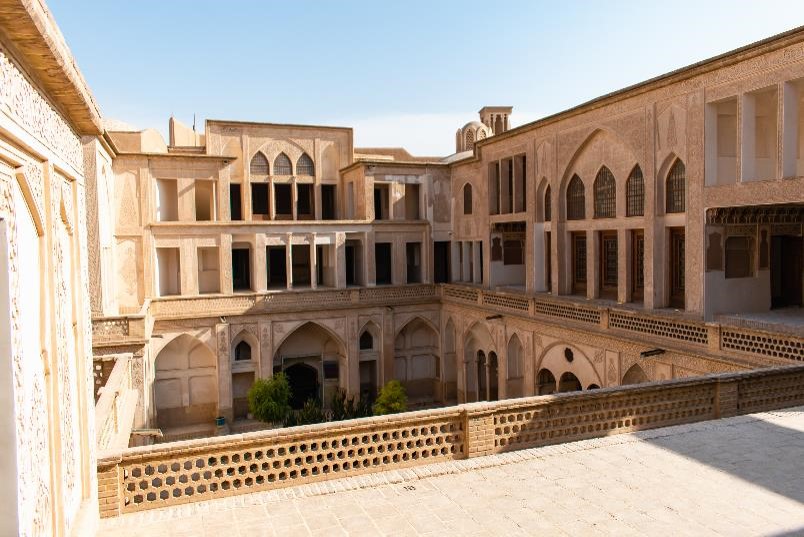
Sunken courtyards of Kashan
-
The Old Weaver's Hidden Smile
-
One Lens, One Pen: The Hatching of "Roam & Record"
The Worth and the Road Less Taken
Which famous attraction isn't worth the hype, and which hidden place deserves the journey?
Which famous attraction isn't worth the hype, and which hidden place deserves the journey?
Lower priority: Yanar Dag, compared to what its reputation promises
Yanar Dag is real and interesting, but if your mind's eye pictures a vast mountain breathing fire from the earth, you'll likely be disappointed. It's more a small geological phenomenon, a brief encounter. If time is limited, I'd place it after Icherisheher, Baku's oil-boom architecture, Gobustan, and at least one excursion beyond the capital.
Instead, if you're after something less postcard-ready:
Basqal
A historic village on the road through Shirvan, with cobbled lanes, traditional houses, a bathhouse, an old bazaar, craft workshops, and the living tradition of kelaghayi—Azerbaijan's silk headscarf. Basqal has been restored in recent years, but it still feels like a historic village, not a tourism theme park.
And a second choice: Lahich
Lahich is one of those places whose worth lies not in any single monument but in the texture of work and daily life. Coppersmiths, blacksmiths, carpet weavers, carpenters, tanners, and hatmakers still live and work in the village, some in workshops passed down through generations. Lahich's coppersmithing tradition is inscribed on UNESCO's intangible heritage list.
Yanar Dag is real and interesting, but if your mind's eye pictures a vast mountain breathing fire from the earth, you'll likely be disappointed. It's more a small geological phenomenon, a brief encounter. If time is limited, I'd place it after Icherisheher, Baku's oil-boom architecture, Gobustan, and at least one excursion beyond the capital.
Instead, if you're after something less postcard-ready:
Basqal
A historic village on the road through Shirvan, with cobbled lanes, traditional houses, a bathhouse, an old bazaar, craft workshops, and the living tradition of kelaghayi—Azerbaijan's silk headscarf. Basqal has been restored in recent years, but it still feels like a historic village, not a tourism theme park.
And a second choice: Lahich
Lahich is one of those places whose worth lies not in any single monument but in the texture of work and daily life. Coppersmiths, blacksmiths, carpet weavers, carpenters, tanners, and hatmakers still live and work in the village, some in workshops passed down through generations. Lahich's coppersmithing tradition is inscribed on UNESCO's intangible heritage list.
The Road That Outshines the Arrival
Which road is a destination in its own right?
Which road is a destination in its own right?
Quba → Khinalig
This is probably the best answer. As you climb from Quba district toward the highlands, the landscape changes by degrees—plains and town surrender to valleys and the Caucasus. The Galakhudat–Khinalig walking trail makes the point precisely: about 8.2 kilometers, at roughly 2,155 to 2,300 meters, with a direct view of the mountains around Khinalig. The Köç Yolu, the Khinaligis’ seasonal migration route, runs some 200 kilometers and binds villages, summer pastures, winter pastures, paths, springs, cemeteries, bridges, and old infrastructure into a single cultural landscape.
A less obvious route: Lankaran → Lerik
To me this is even more alluring than many of Azerbaijan’s famous roads. In a relatively short stretch you move through a quiet transformation: the Caspian, tea fields, citrus, forest, and the Talysh mountains. The Lankaran region lies between the sea and the Talysh range, and in one short journey you can go from the coast to the Hyrcanian forests and then up into the highlands.
This is probably the best answer. As you climb from Quba district toward the highlands, the landscape changes by degrees—plains and town surrender to valleys and the Caucasus. The Galakhudat–Khinalig walking trail makes the point precisely: about 8.2 kilometers, at roughly 2,155 to 2,300 meters, with a direct view of the mountains around Khinalig. The Köç Yolu, the Khinaligis’ seasonal migration route, runs some 200 kilometers and binds villages, summer pastures, winter pastures, paths, springs, cemeteries, bridges, and old infrastructure into a single cultural landscape.
A less obvious route: Lankaran → Lerik
To me this is even more alluring than many of Azerbaijan’s famous roads. In a relatively short stretch you move through a quiet transformation: the Caspian, tea fields, citrus, forest, and the Talysh mountains. The Lankaran region lies between the sea and the Talysh range, and in one short journey you can go from the coast to the Hyrcanian forests and then up into the highlands.
Small Capitals
Which small town is the true capital of something?
Which small town is the true capital of something?
Baku may be Azerbaijan's political and modern capital, but the country's smaller towns are its real capitals of cultural and artistic heritage.
Ganja is the culinary capital of Azerbaijan's west, known for its own pakhlava, dovga, qutab, and shah pilaf. Sheki, a jewel of traditional architecture and refinement, grew from the silk trade and a mingling of Safavid, Qajar, and Russian styles—an atmosphere where taste and nature, walnut, mulberry, and rose, are woven together. Beside these, Basqal is the original home of the traditional silk headscarf, the kelaghayi, and Lahich is the undisputed capital of coppersmithing, inscribed on UNESCO's intangible heritage list.
Ganja is the culinary capital of Azerbaijan's west, known for its own pakhlava, dovga, qutab, and shah pilaf. Sheki, a jewel of traditional architecture and refinement, grew from the silk trade and a mingling of Safavid, Qajar, and Russian styles—an atmosphere where taste and nature, walnut, mulberry, and rose, are woven together. Beside these, Basqal is the original home of the traditional silk headscarf, the kelaghayi, and Lahich is the undisputed capital of coppersmithing, inscribed on UNESCO's intangible heritage list.
When Light Shifts
Where should you go at an unexpected hour, season, or weather?
Where should you go at an unexpected hour, season, or weather?
The real experience of Azerbaijan's landscapes depends on choosing the right time and weather. See Gobustan not at the scorching noon of summer, but early morning or after rain—when the light shifts and the texture of the stones transforms, and more than 6,000 ancient petroglyphs come alive with greater depth.
For Khinalig, the shoulder seasons—late spring to early autumn—are ideal, when access is reliable and the mountain views at 2,300 meters open fully; harsh winters and slippery roads can make this fragile UNESCO heritage all but unreachable. And in Lankaran, don't strike rain from your plans. The humidity and clouded skies are the true identity of the place—the secret behind the lush Hyrcanian forests, the tea fields, the citrus groves—and exactly what sets it apart from Baku.
For Khinalig, the shoulder seasons—late spring to early autumn—are ideal, when access is reliable and the mountain views at 2,300 meters open fully; harsh winters and slippery roads can make this fragile UNESCO heritage all but unreachable. And in Lankaran, don't strike rain from your plans. The humidity and clouded skies are the true identity of the place—the secret behind the lush Hyrcanian forests, the tea fields, the citrus groves—and exactly what sets it apart from Baku.
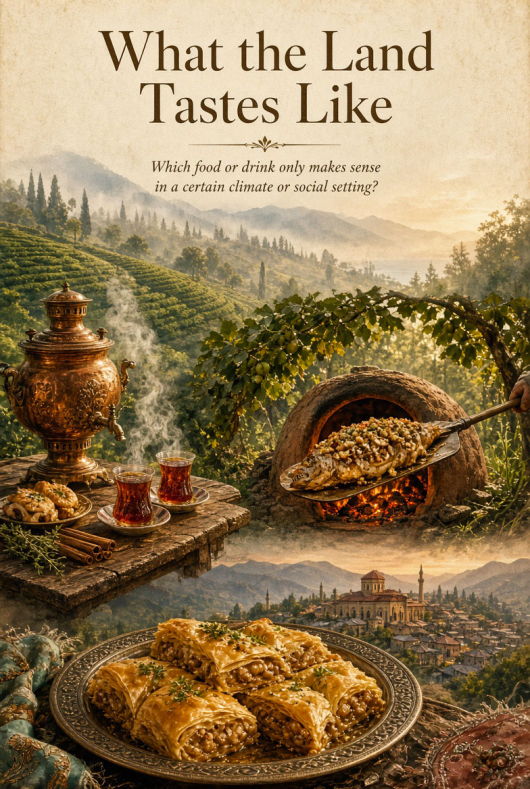
In Azerbaijan, some flavors are so deeply rooted in climate and history that they become more than food—they tell the story of a region's way of life. Lankaran tea, grown in the humid, subtropical south, crosses all class lines. It is a universal symbol of hospitality and daily ritual, recognized by UNESCO, and served with sweets, jams, or spices like cinnamon and thyme—less a beverage than a social event.
That same southern climate gives rise to lavangi, a dish that artfully embodies the bond between sea, forest, and the Talysh table. Fish or chicken is stuffed with mountain walnuts, onion, and local sour seasonings, then baked in a traditional tandoor until it holds the essence of the region's nature.
At the other end of the map, Sheki halva tells a different history. Layered and rich with nuts, it is the legacy of Sheki as a historic crossroads on the silk trade route—each bite reflecting the cultural splendor, refinement, and mercantile past of this mountain town.
So from the sociable tea of Lankaran and the nature-born lavangi of the south to the silken halva of Sheki, every taste in Azerbaijan carries a singular story of geography, history, and belonging.
That same southern climate gives rise to lavangi, a dish that artfully embodies the bond between sea, forest, and the Talysh table. Fish or chicken is stuffed with mountain walnuts, onion, and local sour seasonings, then baked in a traditional tandoor until it holds the essence of the region's nature.
At the other end of the map, Sheki halva tells a different history. Layered and rich with nuts, it is the legacy of Sheki as a historic crossroads on the silk trade route—each bite reflecting the cultural splendor, refinement, and mercantile past of this mountain town.
So from the sociable tea of Lankaran and the nature-born lavangi of the south to the silken halva of Sheki, every taste in Azerbaijan carries a singular story of geography, history, and belonging.
What the Land Tastes Like
Which food or drink only makes sense in a certain climate or social setting?
Which food or drink only makes sense in a certain climate or social setting?
Hands That Remember
Which craft is still alive?
Which craft is still alive?
Hand forging: Yes—and, contrary to expectation, not just for the tourist’s eye. Freehand Blacksmithing was inscribed on Austria’s list of intangible cultural heritage in 2022. Nearly a hundred workshops in Austria still practice the craft. Working with glowing iron, hammer, anvil, and hand tools remains part of real working life. More importantly, the blacksmith does not only make new objects; repair and maintenance are also part of the trade.
Glass, wood, and architectural ornament: Some of Austria’s traditional crafts continue in the form of specialized architectural techniques: historical painting, sgraffito, gilding, imitation wood and stone, and the decoration of architectural surfaces. These techniques are inscribed on Austria’s intangible heritage list, and passing on their knowledge usually requires years of training.
Glass, wood, and architectural ornament: Some of Austria’s traditional crafts continue in the form of specialized architectural techniques: historical painting, sgraffito, gilding, imitation wood and stone, and the decoration of architectural surfaces. These techniques are inscribed on Austria’s intangible heritage list, and passing on their knowledge usually requires years of training.
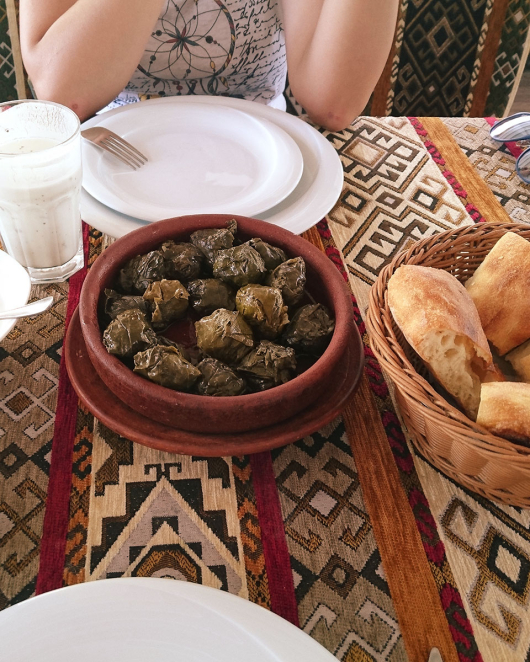
Dolma and flatbreads like lavash may look like simple local fare, but in Azerbaijani culture they are never merely consumed as a tourist attraction or an everyday meal. They are social rituals, their meaning lying far beyond the recipe.
UNESCO's 2017 inscription of the dolma-making and sharing tradition on its intangible heritage list—and the way collective bread-baking is woven into weddings, mourning, and family ties—shows that the true identity of these foods rests in the question of who is cooking, who is gathered, and who sits around the table.
So when you see a family gathered around fresh bread or dolma, you aren't watching street food. You're catching a glimpse of an ancient ritual of collective solidarity.
UNESCO's 2017 inscription of the dolma-making and sharing tradition on its intangible heritage list—and the way collective bread-baking is woven into weddings, mourning, and family ties—shows that the true identity of these foods rests in the question of who is cooking, who is gathered, and who sits around the table.
So when you see a family gathered around fresh bread or dolma, you aren't watching street food. You're catching a glimpse of an ancient ritual of collective solidarity.
The Table's Quiet Ritual
Which food do locals eat on a particular occasion, not as an attraction?
The Craft of Continuance
Which handicraft is still alive, and which is in danger of being forgotten?
Which handicraft is still alive, and which is in danger of being forgotten?
UNESCO inscription signals value, not necessarily survival. Many of Azerbaijan's traditional crafts, such as hand silk-weaving, face the fundamental challenge of the market—where a lack of demand severs the chain of skill from master to student. Traditional silk, from silkworm to loom, though considered intangible heritage, now competes with industrial mass production and depends on informed consumers for its survival.
Buying directly from local workshops at a fair price, then, is more than an economic exchange—it is a practical act that keeps a generations-old skill alive.
Buying directly from local workshops at a fair price, then, is more than an economic exchange—it is a practical act that keeps a generations-old skill alive.
To hold your bond with Azerbaijan after you return, skip the purely decorative and seek out souvenirs that are alive, useful, and fragrant. The lightest and most authentic choice is a piece of kelaghayi—a silk headscarf made for everyday wear, not for a drawer. If you cook, a small Lahich copper vessel will revive the story of master and apprentice every time you use it. For a more sensory keepsake, choose Lankaran tea or local foods—homemade jam, dried fruit, spices, pomegranate syrup. These things may run out, but each use calls back the aroma and memory of Azerbaijan's south. Finally, a small engraved spoon or tray with clear provenance is an affordable and intelligent choice—one that tells the story of your journey better than any expensive statue ever could.
What Comes Home With You
What should I buy that will keep me connected to Azerbaijan long after the journey ends?
What should I buy that will keep me connected to Azerbaijan long after the journey ends?
The Other Azerbaijan
Where can you see the "second country" that flips the official story?
Where can you see the "second country" that flips the official story?
If Azerbaijan's official narrative can be summed up in fire, oil, Baku, desert, and the Caucasus, then the Hyrcanian forests of the south—Lankaran and Astara—offer a startling, opposite image. In this corner of the country, instead of aridity, you meet rain, fog, rivers, tea fields, citrus, and the Talysh mountains. This ancient green strip along the Caspian is the great counter-image of Azerbaijani tourism: a place where, in the heart of the "Land of Fire," one of the oldest living forests of the region quietly breathes. For a traveler who has seen only Baku, this lush, misted south amounts to a journey into an entirely different country.
A Land for the Layered Traveler
What kind of traveler finds paradise in Azerbaijan?
What kind of traveler finds paradise in Azerbaijan?
Azerbaijan is a many-layered paradise for those who seek variety, authenticity, and the hidden strata of a culture. For lovers of geography, it is a dream: in one short journey you can move from sea coast to semi-desert, dense forest, and mountain peaks. For those drawn to border cultures, Azerbaijan is a startling meeting of Iran, Russia, the Caucasus, Turkey, and the Soviet inheritance—a land where ancient and modern architecture, traditional teahouses, the sound of mugham, and village life all blend together. For food travelers, it is a full-blown road adventure: the cuisines of the north, west, Sheki, Ganja, Talysh, and Nakhchivan offer a world of distinct flavors far beyond Baku. And for seekers of history and heritage, Azerbaijan keeps the past alive in the present—the traces of the Silk Road, historic towns, and living crafts like Lahich coppersmithing and the architecture of Sheki.
The Wrong Fit
For whom is Azerbaijan simply the wrong destination?
For whom is Azerbaijan simply the wrong destination?
Azerbaijan is a complete mistake for anyone looking for "Europe on the cheap." Baku may feel modern, even luxurious and European in places, but this is not budget Eastern Europe—and if you arrive expecting a fully walkable, café-lined, liberal, old-world European atmosphere, you'll leave with a partial picture.
If your plans are confined to Baku, you've seen only a fragment of the country; the capital is compelling, but Azerbaijan is far larger than its capital.
The journey also turns difficult for those unsettled by unpredictability: mountain roads, sudden shifts in weather, uneven infrastructure, deeply traditional villages, and the slow pulse of rural life can all grate. Azerbaijan suits curiosity better than it suits control.
If your plans are confined to Baku, you've seen only a fragment of the country; the capital is compelling, but Azerbaijan is far larger than its capital.
The journey also turns difficult for those unsettled by unpredictability: mountain roads, sudden shifts in weather, uneven infrastructure, deeply traditional villages, and the slow pulse of rural life can all grate. Azerbaijan suits curiosity better than it suits control.
The Calendar Beneath the Calendar
Which celebration or ritual isn't on the tourist calendar, but is the people's real calendar?
Which celebration or ritual isn't on the tourist calendar, but is the people's real calendar?
In Azerbaijan, the "real calendar of the people" reaches beyond tourism's official events into traditions that set the pulse of life itself. Foremost among them is Novruz—a celebration whose true splendor lies not so much in the day of the spring equinox as in the four Wednesdays before it: water, fire, wind, and earth, culminating in "Akhir Charshanba." In those days, spring cleaning, ritual cooking, the lighting of fires, and the gathering of families—with women at the heart of safeguarding the traditions and children participating fervently—bind past and future together.
But perhaps deeper still is the Köç Yolu, the migration route of the Khinalig people. This is not a conventional festival but a living calendar dictated by nature. The seasonal movement of people and their livestock along a 200-kilometer path between summer and winter pastures is so woven into the identity, economy, and cultural landscape of the region—villages, springs, and sacred sites included—that UNESCO has inscribed it as a living heritage. These two phenomena, one in the warmth of the family hearth and the other in the heart of the mountains, represent the true, unpolished pulse of life in Azerbaijan.
But perhaps deeper still is the Köç Yolu, the migration route of the Khinalig people. This is not a conventional festival but a living calendar dictated by nature. The seasonal movement of people and their livestock along a 200-kilometer path between summer and winter pastures is so woven into the identity, economy, and cultural landscape of the region—villages, springs, and sacred sites included—that UNESCO has inscribed it as a living heritage. These two phenomena, one in the warmth of the family hearth and the other in the heart of the mountains, represent the true, unpolished pulse of life in Azerbaijan.
The Sound of Azerbaijan
Lost in the Desert Sky
Keyhan Kalhor
Flower’s Reward
Mehran Mobini
Konj-e-Kharabat
Gholam Hossein Fathi
Keep Roaming
Contact@roamandrecord.com
We are waiting for your kind messages